AI estimate as of August 15, 2025 · verify with a professional before acting
AI-Generated · Verify before acting
Everything on this page is generated by AI for informational purposes only. AI can make mistakes — the AI may misidentify items or misattribute them (artist, maker, brand, designer, origin, era). This is not an official valuation and should not be used for insurance, sale, tax, estate, legal, or lending purposes — or any decision requiring a certified appraisal. It is not an authoritative claim about any person, brand, or rights holder — do not share or rely on it as a factual statement about a third party. Always consult qualified professionals before making financial decisions.
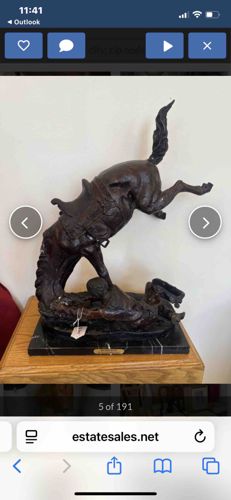
This is a bronze sculpture depicting a dynamic scene of a horse rearing, possibly a bronco, with a person, likely a rider, on the ground or fallen. The sculpture is rendered in a dark, likely patinated bronze, showcasing a detailed and expressive quality. The horse is depicted with intricate musculature and a saddle, suggesting its use for riding. The person on the ground appears to be in an active struggle or perhaps injured, adding to the drama of the composition. The entire bronze assembly is mounted on a substantial black marble base, which features elegant white veining, providing a stable and contrasting platform for the artwork. The base itself sits upon a lighter-colored wooden stand or pedestal. The details on the horse's tack and the person's attire suggest a Western or equestrian theme, possibly from the late 19th or early 20th century, a period known for its dynamic bronze portrayals of similar subjects. There appears to be a small tag, likely a price or lot number tag, hanging from the sculpture, indicating it may be part of an estate sale or auction. The craftsmanship appears to be of high quality, with visible texture and form that bring the figures to life, suggesting it is a well-executed piece of art. No obvious major damage or repairs are visible, though the dark patina makes it difficult to assess minor surface imperfections. A small plaque or label is visible on the front of the marble base, which might contain the artist's signature, title of the piece, or foundry mark, but it is not legible in the provided image.
AI Appraisal Report
I have carefully examined the provided image of the Bronze Equestrian Sculpture of Rearing Horse with Fallen Rider. The sculpture's dynamic composition, intricate detailing of the musculature and tack, and the expressive depiction of both horse and rider suggest a high level of craftsmanship. The dark patina appears consistent and well-maintained, indicating good overall condition with no obvious major damage or repairs visible. The substantial black marble base with white veining provides an excellent, contrasting foundation, enhancing the sculpture's presentation.
From the visual evidence, this piece strongly aligns with bronze sculptures of the late 19th or early 20th century, a period highly regarded for Western-themed and equestrian bronzes. The quality of execution points towards a potentially significant artist or foundry. The small, illegible plaque on the base is crucial; without clear identification of the artist or foundry, a definitive attribution and pricing are challenging. Authenticity cannot be fully verified from images alone; an in-person examination would be necessary to assess the bronze's quality, casting methods, and to read any hidden marks. Provenance documentation and, if warranted, scientific testing of the bronze composition could confirm age and authenticity.
Considering market conditions, well-executed bronze sculptures of this period and subject matter are consistently sought after. Demand for Western art and equestrian bronzes remains strong. Rarity depends heavily on the artist's identity; a known artist would significantly increase value. Given the visible quality, even if unattributed, it holds considerable decorative and artistic merit. However, the lack of a legible signature or foundry mark, and the inability to physically inspect the piece, necessitates a conservative appraisal.
Factors significantly impacting value include the artist's identity, the foundry, the specific edition (if any), and the physical condition. The presence of a tag suggests an auction or estate sale context, which can sometimes lead to favorable acquisition prices for buyers. Without physical inspection and clear identification, it's impossible to rule out it being a later cast or a decorative piece inspired by the period rather than a period piece itself.