AI estimate as of July 22, 2026 · verify with a professional before acting
AI-Generated · Verify before acting
Everything on this page is generated by AI for informational purposes only. AI can make mistakes — the AI may misidentify items or misattribute them (artist, maker, brand, designer, origin, era). This is not an official valuation and should not be used for insurance, sale, tax, estate, legal, or lending purposes — or any decision requiring a certified appraisal. It is not an authoritative claim about any person, brand, or rights holder — do not share or rely on it as a factual statement about a third party. Always consult qualified professionals before making financial decisions.
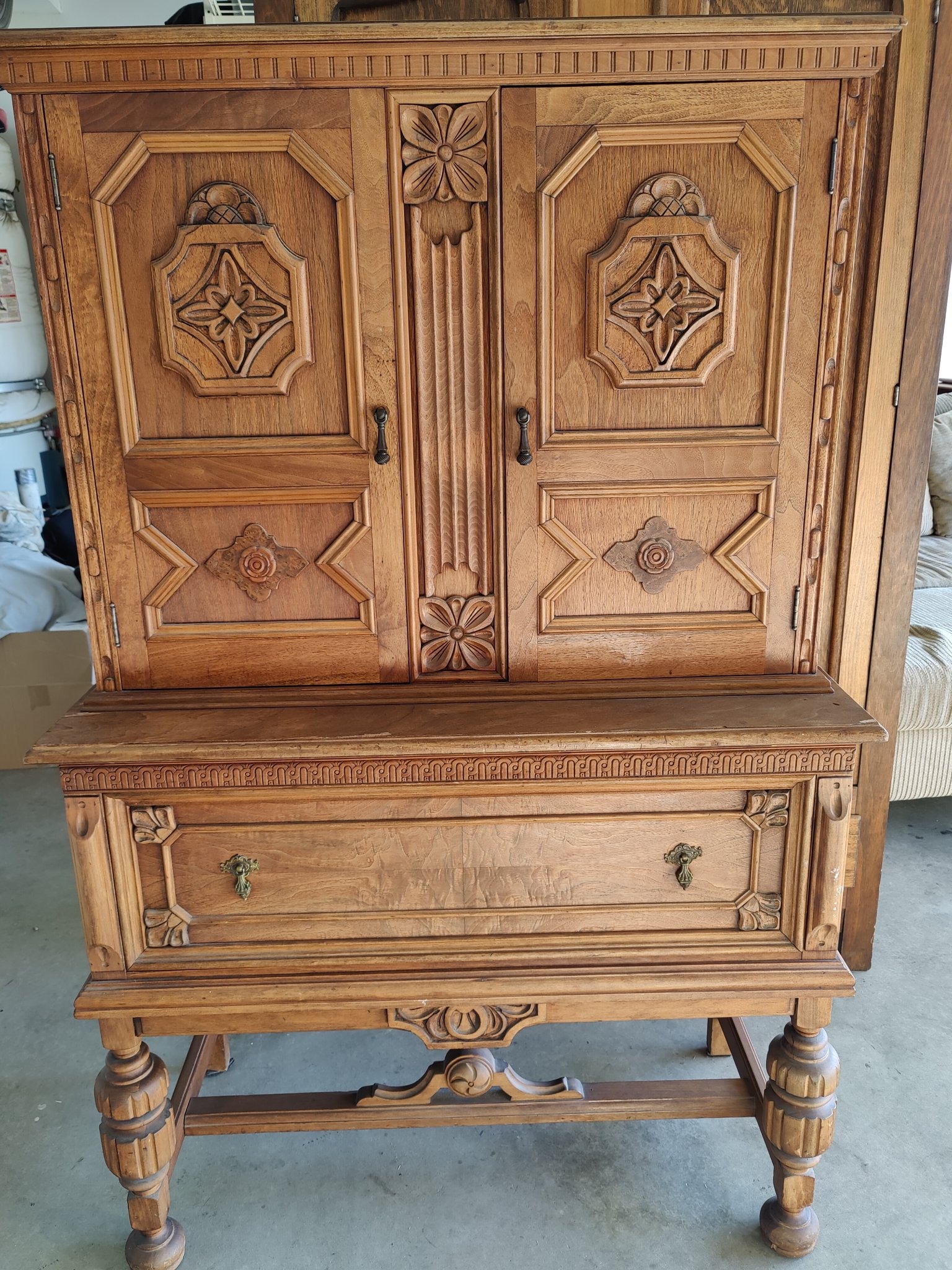
This large, two-piece wooden cabinet appears to be constructed from a light-to-medium toned hardwood, such as walnut or pecan, and features elaborate carved decorative details consistent with Spanish Colonial Revival or Jacobean Revival furniture styles. The upper cabinet section consists of two panel doors decorated with raised geometric moldings, carved flower motifs, rosette appliqués, and fluted central stiles. Small dark metal tear-drop or pendant handles are attached to the doors. The lower section features a wide base with a single large drawer, trimmed with egg-and-dart moulding along the upper border, corner leaf carvings, and brass drop handles. The entire unit rests on heavy turned and carved legs connected by an ornate, carved stretcher base.
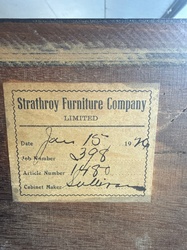
No visible maker's marks, stamps, or labels are apparent in the image. Hedged language is used for the attribution as specific maker and exact age cannot be confirmed without physical examination or visible labeling; the design elements are stylistically consistent with mid-to-late 20th-century revivalist wooden furniture. The piece shows minor visible surface wear, small scuffs along the ledge edge, and slight unevenness in the wood stain patina, consistent with age and previous use. Overall craftsmanship appears solid with intricate relief carving and substantial joinery.
AI Appraisal Report
Based on my visual examination of the provided photograph, I have evaluated this two-piece carved wooden armoire cabinet. The piece displays prominent Spanish Colonial Revival and Jacobean Revival stylistic influences, featuring raised geometric moldings, carved rosette appliqués, egg-and-dart borders, turned legs, and an ornate stretcher base. Based on what I can see, the craftsmanship appears solid with substantial relief carving and heavy joinery. However, I cannot verify the exact wood species, full construction methods, or precise age from a photo alone; a physical inspection would be needed to confirm these details.
No visible maker's marks or labels are apparent in the image. Stylistically, this piece appears consistent with mid-to-late 20th-century revivalist furniture rather than a period antique. Minor surface wear, scuffs along edges, and light patina variation are visible, which align with normal use and age for vintage furniture.
Assuming this is a mid-to-late 20th-century revivalist cabinet of good quality construction, I estimate its current fair market value in the range of $600 to $1,000. Demand for large revivalist case goods remains moderately steady among vintage decor enthusiasts, though the market for bulky brown furniture can be selective due to transport and sizing constraints.
To establish a firmer attribution, an in-person examination by a furniture specialist, inspection for hidden maker stamps, and documentation of provenance would be required. Should physical examination reveal that the piece is a modern, mass-produced veneer reproduction rather than solid hardwood construction, the estimated market value would likely drop to the $200 to $400 range. Conversely, if evidence were discovered attributing it to a highly desirable high-end workshop, the market interest could increase toward the higher end of the estimate.