AI Appraisal Estimate

AI-generated estimates · not official valuations

From the user

What was submitted

Photo and notes provided by the user — not generated by AI

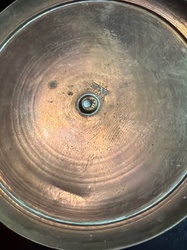
Submitted item photo
Submitted photo · June 15, 2026

User's notes

No additional notes provided.

AI analysis below

AI appraisal

AI analysis & estimate

AI-Generated · Verify before acting

Everything below is generated by AI for informational purposes only. AI can make mistakes — the AI may misidentify items or misattribute them (artist, maker, brand, designer, origin, era). This is not an official valuation and should not be used for insurance, sale, tax, estate, legal, or lending purposes — or any decision requiring a certified appraisal. It is not an authoritative claim about any person, brand, or rights holder — do not share or rely on it as a factual statement about a third party. Always consult qualified professionals before making financial decisions.

Read the full disclaimer

AI Identification

·Not independently authenticated·Verify before acting

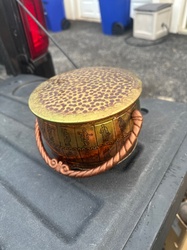
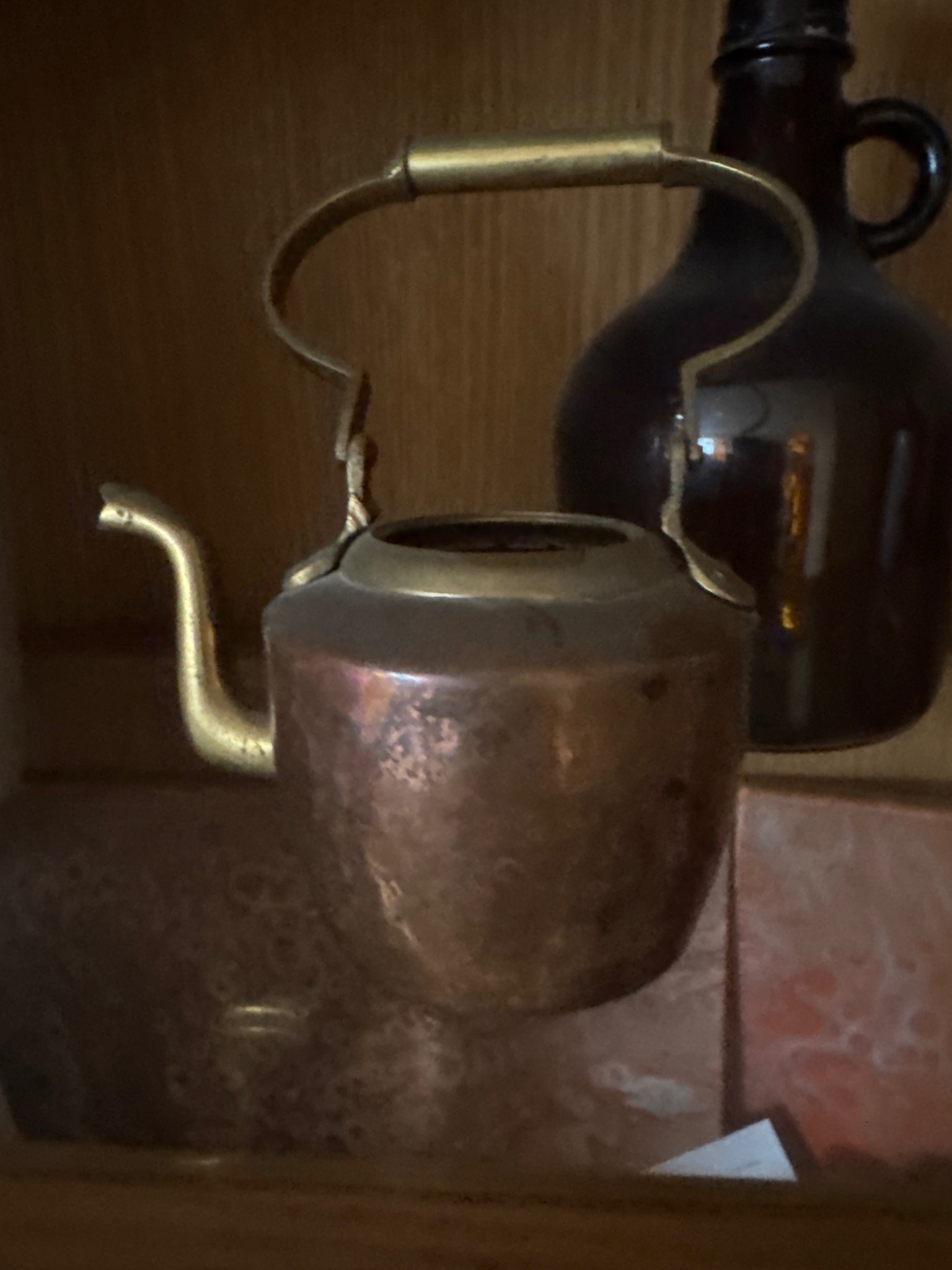
Vintage Copper and Brass Miniature Tea Kettle

Antique Metalware

AI Estimated Value

·Not an official valuation·Verify before acting

$45 - $75

As of June 15, 2026

AI Item Analysis

·AI can make mistakes·Verify before acting
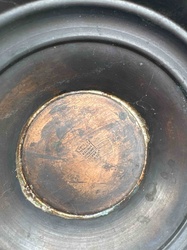
This item is a small-scale miniature tea kettle or spirit kettle, likely intended for decorative purposes or as part of a fireplace accessory set. The main body of the vessel is constructed from copper, exhibiting a deep, aged patina with significant oxidation and surface mottling, giving it a characteristic reddish-brown hue. The spout, rim, and swan-neck style handle are made from contrasting brass. The craftsmanship features a flat-bottomed, slightly tapered cylindrical body that transitions into a sloped shoulder towards the lid opening. The brass handle is fixed to the body with simple hinge-like brackets, showing a functional but utilitarian design. Notable condition issues include heavy surface tarnish, several small dark oxidation spots across the copper surface, and some visible wear on the brass components. The spout has a slightly irregular tip, which may be a result of original casting or subsequent wear. This piece stylistically resembles late 19th to early 20th-century European metalware, specifically in the Arts and Crafts or rustic folk art traditions. There are no visible maker's marks or stamps in the current view, but the joinery between the brass and copper suggests manual assembly. The overall aesthetic is one of aged charm and domestic utility in a miniature format.
AI Appraisal Report

·AI can make mistakes·Verify before acting
Based on my visual examination of this miniature mixed-metal tea kettle, I have assessed it as an early 20th-century decorative piece, possibly of English or Dutch origin. The construction highlights the contrasting appeal of copper and brass, typical of the late Arts and Crafts movement or regional folk art. The 'swan-neck' brass handle and manual assembly of the brackets suggest mid-range quality production rather than high-end bespoke craftsmanship. The condition is consistent with its age; the heavy oxidation and surface mottling on the copper body are expected, while the tarnish on the brass hardware indicates it has not been over-polished, which preserves its historical character. In the current market, miniature metalware of this type is widely available and primarily appeals to collectors of 'salesman samples' or hearth-side décor. Comparable sales for unsigned, mixed-metal miniatures of this scale generally fall within the $40 to $80 range depending on the venue. The lack of a maker’s mark limits its premium potential. Several factors impact this valuation: while the patina is desirable, the irregularity of the spout tip and heavy oxidation spots may deter some collectors. It is important to note that this appraisal is based on image analysis alone. A physical inspection is required to check for internal corrosion, lead-soldering (common in early 20th-century pieces), and to search for obscured stamps on the base that could identify a specific foundry. Provenance documenting its history within a specific collection would be necessary to verify it as a true antique rather than a mid-century reproduction.

Get your items appraised

Instant estimates of your treasures with AI-powered appraisals

Browse More Appraisals