AI Appraisal Estimate

AI-generated estimates · not official valuations

From the user

What was submitted

Photo and notes provided by the user — not generated by AI

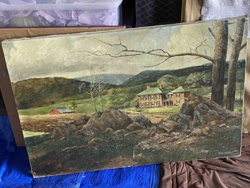
Submitted item photo
Submitted photo · May 19, 2026

User's notes

Signed John Steuart Curry

AI analysis below

AI appraisal

AI analysis & estimate

AI-Generated · Verify before acting

Everything below is generated by AI for informational purposes only. AI can make mistakes — the AI may misidentify items or misattribute them (artist, maker, brand, designer, origin, era). This is not an official valuation and should not be used for insurance, sale, tax, estate, legal, or lending purposes — or any decision requiring a certified appraisal. It is not an authoritative claim about any person, brand, or rights holder — do not share or rely on it as a factual statement about a third party. Always consult qualified professionals before making financial decisions.

Note

This analysis also relies on unverified notes provided by the user, which may be incomplete or inaccurate and could affect the result.

Read the full disclaimer

AI Identification

·Not independently authenticated·Verify before acting

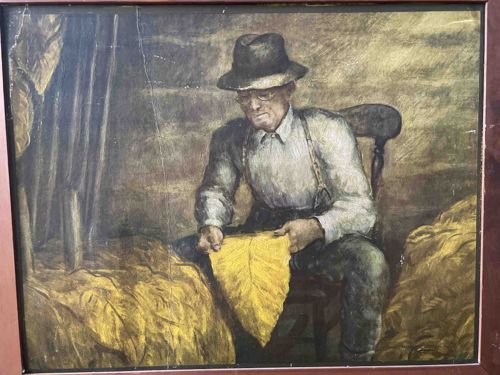
Our Good Earth: The Tobacco Grader by John Steuart Curry

Fine Art - American Regionalist Painting/Print

AI Estimated Value

·Not an official valuation·Verify before acting

$400 - $600

As of May 19, 2026

AI Item Analysis

·AI can make mistakes·Verify before acting
This artwork is a regionalist style painting attributed to John Steuart Curry, depicting an elderly man in a wide-brimmed felt hat, spectacles, and suspenders, seated while inspecting a large, golden tobacco leaf. The palette is dominated by earthy tones—ochres, browns, and muted grays—characteristic of American Regionalism. The composition captures a moment of solemn labor, with hay or tobacco piles flanking the central figure against a rustic wooden background. The brushwork appears textured and gestural, particularly in the rendering of the fabric and the highlights of the tobacco leaf. The piece is housed in a simple, dark wood frame. Notable condition issues are visible, including a prominent vertical crease or crack running down the left-center of the image, as well as multiple minor surface scratches and abrasions throughout the upper right quadrant. This degradation suggests the piece may be a print on board or a work on paper that has sustained significant structural wear. The style suggests a mid-20th-century origin, likely the late 1930s or early 1940s, consistent with Curry's prolific years documenting rural American life.
AI Appraisal Report

·AI can make mistakes·Verify before acting
Based on my examination of this work attributed to John Steuart Curry, the piece displays the thematic and stylistic hallmarks of American Regionalism. However, several physical markers significantly impact its valuation and classification. The prominent vertical crease and surface abrasions are highly characteristic of a lithograph or print on paper that has been mounted to board or improperly stored, rather than an original oil on canvas. Curry's original paintings from the 'Our Good Earth' series are held in major museum collections; a discovery of a new original would command five to six figures, but the visible damage and texture here strongly suggest a mid-century mass-produced reproduction or a lower-tier lithographic edition. The condition issues—specifically the structural crack and surface loss—severely detract from the secondary market appeal. Collectors of Regionalism seek pristine examples of Curry’s work, which typically feature his signature in the stone or hand-signed in pencil. This valuation reflects the item's status as a decorative period piece with significant condition distress. Please note that a definitive determination of authenticity cannot be made via digital images. A physical inspection is required to identify the printing process (lithography vs. offset) and to examine the paper for watermarks or plate marks. To elevate this valuation, I would require documented provenance linking the piece to the artist’s estate or a reputable gallery, as well as a conservator's report to determine if the vertical damage is a tear in the substrate or a fracture in the pigment layer.

Get your items appraised

Instant estimates of your treasures with AI-powered appraisals

Browse More Appraisals