AI Appraisal Estimate

AI-generated estimates · not official valuations

From the user

What was submitted

Photo and notes provided by the user — not generated by AI

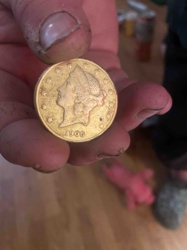
Submitted item photo
Submitted photo · June 22, 2026

User's notes

No additional notes provided.

AI analysis below

AI appraisal

AI analysis & estimate

AI-Generated · Verify before acting

Everything below is generated by AI for informational purposes only. AI can make mistakes — the AI may misidentify items or misattribute them (artist, maker, brand, designer, origin, era). This is not an official valuation and should not be used for insurance, sale, tax, estate, legal, or lending purposes — or any decision requiring a certified appraisal. It is not an authoritative claim about any person, brand, or rights holder — do not share or rely on it as a factual statement about a third party. Always consult qualified professionals before making financial decisions.

Read the full disclaimer

AI Identification

·Not independently authenticated·Verify before acting

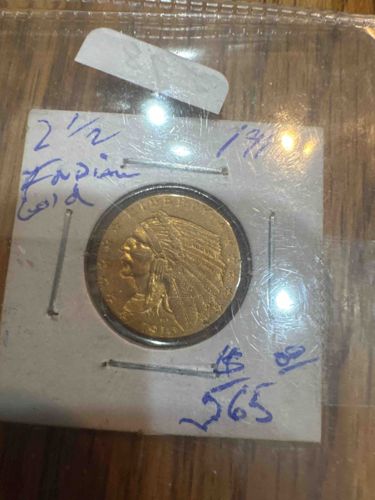
1913 Indian Head Quarter Eagle ($2.50 Gold Coin)

Numismatics / Rare Coins

AI Estimated Value

·Not an official valuation·Verify before acting

$450 - $525

As of June 22, 2026

AI Item Analysis

·AI can make mistakes·Verify before acting
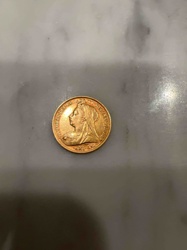
This item is a 1913 US Indian Head Quarter Eagle gold coin, which has a face value of $2.50. This series is famous in American numismatics for its unique incuse (sunken) design, where the details are stamped below the surface of the coin rather than raised above it. The obverse features a realistic profile of a Native American wearing a feathered headdress, surrounded by thirteen stars and the word 'LIBERTY' at the top, with the date '1913' at the bottom. The coin is composed of 90% gold and 10% copper, measuring approximately 18mm in diameter with a weight of roughly 4.18 grams. This specific specimen shows signs of moderate circulation, with visible surface abrasions, minor scratches, and slight softening of the high points of the feathered headdress. There is no visible mint mark, indicating it was likely struck at the Philadelphia Mint. While it retains its warm, original gold luster, some dirt or residue is visible within the recessed areas of the incuse design. The coin is currently housed in a standard 2x2 cardboard and plastic 'flip' holder, with handwritten notations indicating '2 1/2 Indian Gold' and a price of '565'. Authentic Indian Head gold coins are highly sought after by collectors due to their revolutionary design by Bela Lyon Pratt and their historical significance from the early 20th-century 'Golden Age' of US coinage.
AI Appraisal Report

·AI can make mistakes·Verify before acting
I have completed a visual examination of the 1913 Indian Head Quarter Eagle ($2.50 gold). This specimen exhibits the characteristic incuse relief designed by Bela Lyon Pratt. The absence of a mint mark confirms it as a Philadelphia Mint product. I observe moderate surface abrasions and localized softening of the high points on the Native American’s cheekbone and the eagle’s shoulder, suggesting a grade in the Extremely Fine (XF-45) to About Uncirculated (AU-50) range. While the original luster remains evident, the presence of dark residue in the recessed lettering is a common trait for coins that have seen light circulation. The current market for 'common date' Indian Quarter Eagles is driven by both numismatic demand and the spot price of gold. While 1913 is not a key date, the revolutionary sunken design ensures constant liquidity among collectors. This piece faces valuation pressure from its 'raw' state; uncertified gold coins often trade at a discount compared to those graded by PCGS or NGC due to the high prevalence of historical counterfeits in this series. The price of '565' noted on the holder appears to be a retail asking price slightly above current wholesale market levels for a raw, circulated specimen. Final verification of authenticity is impossible from images alone. A physical inspection is required to confirm weight (4.18g), diameter (18mm), and the specific 'reeded edge' characteristics. To achieve full valuation and confirm the strike is not a sophisticated period cast or transfer-die counterfeit, I would recommend professional third-party grading or a high-magnification microscopic analysis of the field-to-device transitions.

Get your items appraised

Instant estimates of your treasures with AI-powered appraisals

Browse More Appraisals