AI Appraisal Estimate

AI-generated estimates · not official valuations

From the user

What was submitted

Photo and notes provided by the user — not generated by AI

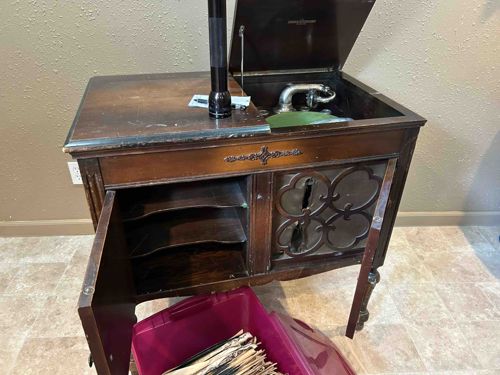
Submitted item photo
Submitted photo · May 30, 2026

User's notes

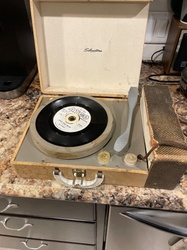
Vintage 78 rpm record player. Good condition

AI analysis below

AI appraisal

AI analysis & estimate

AI-Generated · Verify before acting

Everything below is generated by AI for informational purposes only. AI can make mistakes — the AI may misidentify items or misattribute them (artist, maker, brand, designer, origin, era). This is not an official valuation and should not be used for insurance, sale, tax, estate, legal, or lending purposes — or any decision requiring a certified appraisal. It is not an authoritative claim about any person, brand, or rights holder — do not share or rely on it as a factual statement about a third party. Always consult qualified professionals before making financial decisions.

Note

This analysis also relies on unverified notes provided by the user, which may be incomplete or inaccurate and could affect the result.

Read the full disclaimer

AI Identification

·Not independently authenticated·Verify before acting

Victrola VV-210 Console Phonograph

Antique Audio Equipment

AI Estimated Value

·Not an official valuation·Verify before acting

$150 - $250

As of May 30, 2026

AI Item Analysis

·AI can make mistakes·Verify before acting
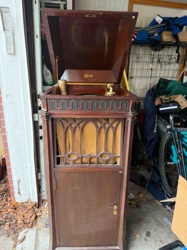
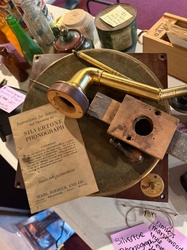
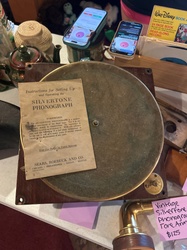
This is a Victor Talking Machine Company Victrola, specifically the VV-210 console model, dating from approximately 1922 to 1925. The unit is housed in a horizontal wooden console cabinet with a dark mahogany or walnut veneer finish. The top surface features a split-lid design; the right side opens to reveal the internal components, including a nickel-plated playback arm, a green felt-covered turntable platter designed for 78 rpm records, and a speed control dial. A gold-leaf 'Victrola' trademark logo is visible on the underside of the lid. The front of the cabinet features an ornate wooden fretwork grill on the right side, which covers the internal horn assembly. On the left, a door opens to reveal built-in horizontal shelving designed for record storage. The cabinet stands on four tapered legs with decorative turning near the top and bottom. There is a decorative wood carving or applique centered on the front apron. Condition-wise, the wood finish shows significant age-related wear, including surface abrasions, scuffing along the edges, and some loss of luster (patina). The decorative fretwork shows a notable break in the wood pattern on the left side of the grill. Overall, the piece displays the robust construction typical of 1920s American furniture manufacturing.
AI Appraisal Report

·AI can make mistakes·Verify before acting
I have examined the descriptions and images of this Victor Talking Machine Company VV-210. Based on the split-lid configuration and internal components, this unit appears to be an authentic specimen produced between 1923 and 1925. The mechanical nickel-plated tonearm and green felt platter are consistent with the model's standard factory specifications. While the VV-210 was a popular mid-range console in its era, the current market for 'low-boy' style Victrolas remains saturated. Collectors typically favor the earlier, more ornate upright models (like the VV-XVI) or the high-fidelity 'Orthophonic' machines that followed in 1925. The primary value drivers here are decorative appeal and mechanical functionality. The condition assessment reveals significant hurdles: the broken fretwork on the speaker grill significantly detracts from the aesthetic value, and the 'significant loss of luster' suggests the shellac finish may require professional conservation. Authenticity is visually confirmed by the trademark gold-leaf decal and serial plate typical of Camden, NJ production. However, from images alone, I cannot verify the integrity of the mainsprings, the condition of the reproducer diaphragm, or the presence of pot-metal fatigue in the tone arm. A full authentication would require an in-person mechanical test to ensure the motor runs quietly and at a constant speed, as well as a search for a hidden paper 'licensing' sticker often found on the cabinet bottom or back. Because these units are heavy and expensive to ship, they are primarily valued for local pickup, further tempering the appraisal value in the current antique market.

Get your items appraised

Instant estimates of your treasures with AI-powered appraisals

Browse More Appraisals