AI identification & appraisal estimate

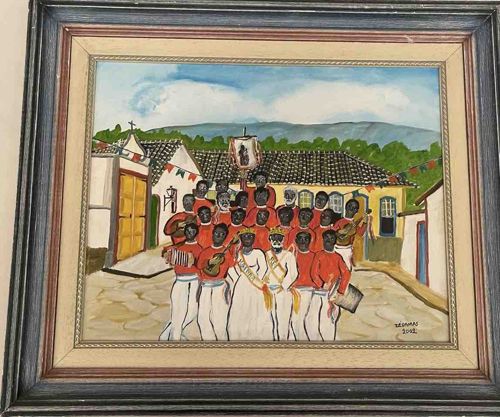
Zé Damas Naive Art Folk Painting, 2002

Submitted photo of Zé Damas Naive Art Folk Painting, 2002
Photo submitted by the user — not generated by AI

User's notes

Ze Damas, 2002

These notes were written by the person who submitted this item. Appraiser.AI has not verified them, and the AI's identification and estimate may rely on them.

AI Estimated Value

Not an official valuation

$1,200 - $1,800

AI estimate as of February 16, 2026 · verify with a professional before acting

AI-Generated · Verify before acting

Everything on this page is generated by AI for informational purposes only. AI can make mistakes — the AI may misidentify items or misattribute them (artist, maker, brand, designer, origin, era). This is not an official valuation and should not be used for insurance, sale, tax, estate, legal, or lending purposes — or any decision requiring a certified appraisal. It is not an authoritative claim about any person, brand, or rights holder — do not share or rely on it as a factual statement about a third party. Always consult qualified professionals before making financial decisions.

This analysis also relies on unverified notes provided by the user, which may be incomplete or inaccurate and could affect the result.

Read the full disclaimer

AI Item Analysis

This is an original naive-style painting by the Brazilian artist Zé Damas, dated 2002. The artwork depicts a vibrant celebratory scene, likely a Congada or similar Afro-Brazilian cultural festival. The composition features a central group of figures, with many wearing red shirts and white trousers, and many playing traditional musical instruments such as the accordion, guitar, and drums. A primary figure in white, possibly a queen, is centrally located, adorned with a sash and crown, standing alongside a male figure in ceremonial attire. The background showcases traditional colonial-style architecture with a small chapel, tiled roofs, and decorative flags (bandeirinhas) strung across the courtyard, set against a backdrop of rolling hills and a blue sky with soft white clouds. The painting is executed in a folk art style characterized by flat perspectives, bold colors, and simplified anatomical details. The surface appears to be oil or acrylic on canvas or board. The piece is housed in a multi-tiered wooden frame featuring a dark-stained outer molding, a neutral linen-textured inner liner, and a thin gold-tone fillet. The artist's signature 'Zé Damas' and the year '2002' are clearly visible in the lower right corner. The condition appears to be excellent, with well-preserved pigments and no visible cracking or losses to the paint layer, while the frame shows minor age-related wear but remains structurally sound.


AI Appraisal Report

I have virtually examined this vibrant 2002 work by Zé Damas. The painting is a high-quality example of Brazilian Naive art, capturing an Afro-Brazilian 'Congada' celebration with the artist's signature use of rhythmic composition and saturated palettes. Based on high-resolution visual analysis, the paint layer appears stable with excellent pigment retention. The 'Zé Damas' signature and date are consistent with known examples of his work from the early 2000s. The market for Brazilian Folk Art remains robust, particularly for scenes depicting cultural heritage and traditional festivals. Zé Damas is a recognized name in this genre; his works are valued for their ability to convey complex social narratives through simplified, accessible forms. Comparables for works of this scale and detail typically range between $1,000 and $2,500 at specialized galleries and regional auctions. The inclusion of the multi-tiered frame adds decorative value, though its minor wear is negligible to the overall appraisal. Factors favoring this piece include the high figure count and the architectural detail, which are more desirable than his simpler landscapes. However, valuation is limited by the digital nature of this inspection. A physical examination is required to confirm the substrate (canvas vs. board) and rule out overpainting or restoration. To fully authenticate the work, documentation of provenance—such as a gallery receipt or exhibition history—is recommended. Scientific testing, such as UV fluorescence to check for consistent varnish and pigment aging, would be necessary to definitively verify the 2002 origin if documentation is unavailable.

Keep exploring

More fine art - painting appraisals

Get your items appraised

Instant AI-powered appraisal estimates from a photo

Browse More Appraisals