AI Appraisal Estimate

AI-generated estimates · not official valuations

From the user

What was submitted

Photo and notes provided by the user — not generated by AI

Submitted item photo
Submitted photo · June 8, 2026

User's notes

Inoshishi

AI analysis below

AI appraisal

AI analysis & estimate

AI-Generated · Verify before acting

Everything below is generated by AI for informational purposes only. AI can make mistakes — the AI may misidentify items or misattribute them (artist, maker, brand, designer, origin, era). This is not an official valuation and should not be used for insurance, sale, tax, estate, legal, or lending purposes — or any decision requiring a certified appraisal. It is not an authoritative claim about any person, brand, or rights holder — do not share or rely on it as a factual statement about a third party. Always consult qualified professionals before making financial decisions.

Note

This analysis also relies on unverified notes provided by the user, which may be incomplete or inaccurate and could affect the result.

Read the full disclaimer

AI Identification

·Not independently authenticated·Verify before acting

Japanese Majolica-Glazed Ceramic Inoshishi (Wild Boar) Okimono

Asian Decorative Arts - Japanese Ceramics

AI Estimated Value

·Not an official valuation·Verify before acting

$450 - $650

As of June 8, 2026

AI Item Analysis

·AI can make mistakes·Verify before acting
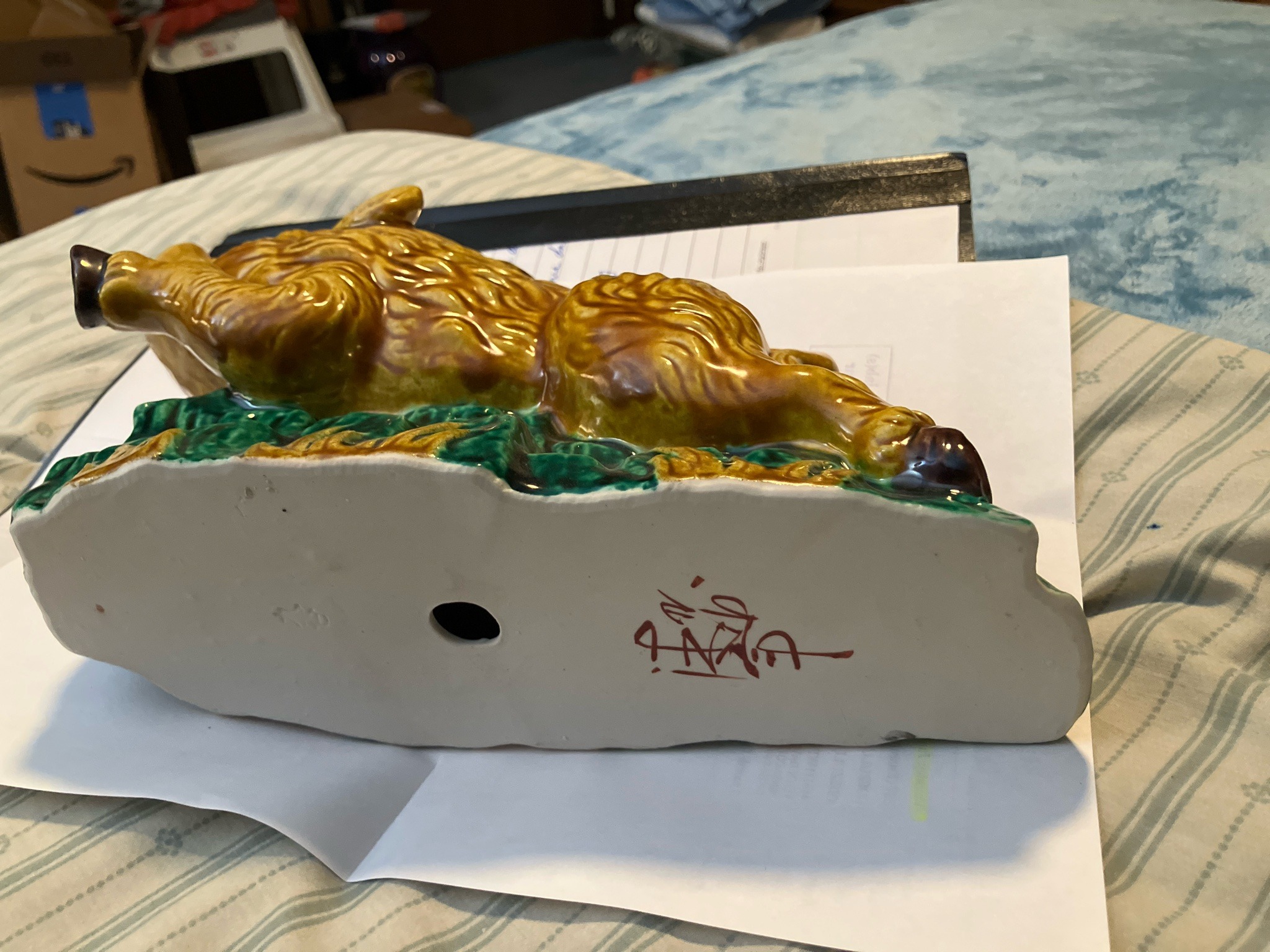
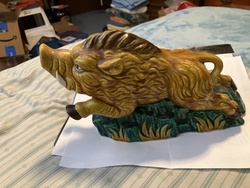
This item is a slip-cast ceramic okimono representing an Inoshishi, or Japanese wild boar, depicted in a recumbent or charging low profile atop a stylized grassy base. The sculpture features a vibrant majolica-style glaze technique (Sancai-influenced), characterized by a deep ochre and honey-brown body with dark chocolate-brown accents on the snout and hooves, and a rich emerald green base. The texture of the boar's hide is highly articulated with molded fur patterns that create a sense of movement. On the flat, unglazed underside, there is a prominent hand-painted calligraphic signature or maker's mark in iron-red pigment, accompanied by a single ventilation/firing hole. The quality of the glaze is high, showing consistent coverage and a glossy finish, though common age-related crazing may be present upon micro-inspection. This piece likely dates to the mid-20th century (Showa era) and is characteristic of decorative ceramic production intended for the export or high-end domestic gift market. The condition appears excellent with no visible chips or repairs on the upper glazed surfaces, though the base shows minor shelf wear consistent with age. This zodiac-related figure represents bravery and strength in Japanese culture.
AI Appraisal Report

·AI can make mistakes·Verify before acting
I have carefully examined the provided images of this Japanese majolica-glazed Inoshishi (Wild Boar) okimono. The sculpture displays high-quality slip-casting and an impressive Sancai-style polychrome glaze. The use of emerald greens and deep ochre tones is consistent with Showa-era (mid-20th century) decorative arts intended for both the domestic Shinto-zodiac market and international export. The modeling of the fur texture is exceptionally crisp, and the iron-red calligraphic mark on the unglazed base suggests a reputable workshop of the period, possibly associated with regional kilns in Seto or Kyoto. Visually, the piece appears in excellent vintage condition with no evidence of structural restoration or significant glaze loss. The current market for Japanese zodiac figures remains steady, particularly for examples with vibrant majolica finishes which appeal to mid-century modern collectors. Recent auction comparables for similarly sized okimono from the 1950s-1960s typically fall within the $400 to $700 range. The specific 'charging' posture adds a dynamic quality that slightly elevates its desirability over more static seated versions. Limitations: This appraisal is based on photographic evidence only. A physical inspection is required to confirm the absence of 'invisible' professional repairs under UV light and to verify the tactile nature of the glaze crazing. To fully authenticate the maker's mark, further research into specific kiln registries or original 'tomobako' (signed wooden box) provenance would be necessary. Without the original box, the value remains in the mid-range of its category.

Get your items appraised

Instant estimates of your treasures with AI-powered appraisals

Browse More Appraisals