These notes were written by the person who submitted this item. Appraiser.AI has not verified them, and the AI's identification and estimate may rely on them.
AI Estimated Value
Not an official valuation
$600-800
AI estimate as of July 26, 2025 · verify with a professional before acting
AI-Generated · Verify before acting
Everything on this page is generated by AI for informational purposes only. AI can make mistakes — the AI may misidentify items or misattribute them (artist, maker, brand, designer, origin, era). This is not an official valuation and should not be used for insurance, sale, tax, estate, legal, or lending purposes — or any decision requiring a certified appraisal. It is not an authoritative claim about any person, brand, or rights holder — do not share or rely on it as a factual statement about a third party. Always consult qualified professionals before making financial decisions.
This analysis also relies on unverified notes provided by the user, which may be incomplete or inaccurate and could affect the result.
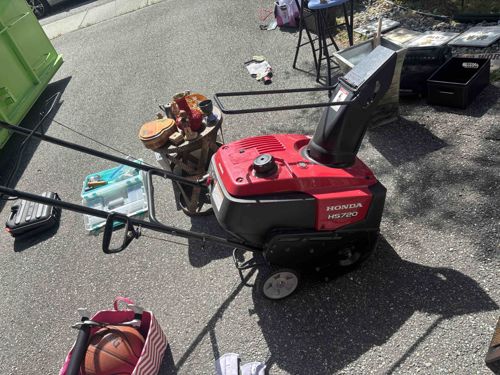
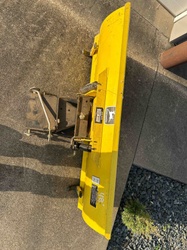
The item is a Honda HS720 single-stage snowblower, designed for clearing snow. It features a compact design, primarily constructed from metal and high-impact plastic components. The main body and engine housing are prominently red, with black accents for the engine base, auger housing, and discharge chute. The handles are black-painted metal, typical of snowblower construction. The overall dimensions suggest it's a walk-behind model, suitable for residential use, with two relatively small, black plastic wheels visible on the left side of the auger housing providing mobility.
Notable features include the prominent 'HONDA HS720' branding in white lettering on a red background section of the engine cover, indicating the manufacturer and model number. A black, adjustable discharge chute is located at the front, designed to direct snow. The engine is air-cooled, as evidenced by the ventilation grates on the red engine cover. It appears to be gasoline-powered, with a fuel cap visible on the top of the red engine housing.
No significant visible condition issues such as major dents, cracks, or heavy corrosion are apparent from the image. There may be minor scuffs or dirt consistent with outdoor use, but the paint finish appears largely intact. The absence of heavy rust suggests it has been stored appropriately or is relatively well-maintained. The craftsmanship appears to be of good quality, as expected from a Honda product, with robust materials and construction for durability in harsh winter conditions. The estimated age would be within the last 5-10 years, given its modern design and the 'HS720' model designation which is a current or recently past model.
AI Appraisal Report
Based on my examination of the provided image and the owner's description, this Honda HS720 snowblower appears to be in very good condition. The prominent 'HONDA HS720' branding, consistent design elements, and quality of construction align perfectly with authentic Honda products. I note the absence of major dents, cracks, or significant corrosion, suggesting proper maintenance and storage. Minor scuffs or dirt are typical for outdoor power equipment but do not detract from its overall appeal. The modern design and 'HS720' model designation place its estimated age within the last 5-10 years.
From a market perspective, Honda snowblowers are highly regarded for their reliability and durability, maintaining strong resale values. The HS720 is a popular single-stage model, known for its efficiency in residential settings. Demand for well-maintained snowblowers, especially from a reputable brand like Honda, remains consistent, particularly in regions prone to snowfall. This model is readily available new, meaning it isn't rare, but its appeal lies in its proven performance and longevity.
The key factors impacting its value are its excellent apparent condition, the strong brand reputation of Honda, and its utility. Were there significant rust, engine issues, or major cosmetic damage, the value would be considerably lower.
It is important to state the limitations of this appraisal. While visually authentic, full authentication would require an in-person examination to verify engine serial numbers against Honda's records, confirm engine compression, and check for any internal operational issues not visible externally. A physical inspection would also allow for a more precise assessment of wear on components like the auger and paddles. Provenance documentation, such as original purchase receipts or service records, would also add to its verified history.