AI Appraisal Estimate

AI-generated estimates · not official valuations

From the user

What was submitted

Photo and notes provided by the user — not generated by AI

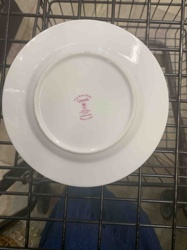
Submitted item photo
Submitted photo · May 30, 2026

User's notes

No additional notes provided.

AI analysis below

AI appraisal

AI analysis & estimate

AI-Generated · Verify before acting

Everything below is generated by AI for informational purposes only. AI can make mistakes — the AI may misidentify items or misattribute them (artist, maker, brand, designer, origin, era). This is not an official valuation and should not be used for insurance, sale, tax, estate, legal, or lending purposes — or any decision requiring a certified appraisal. It is not an authoritative claim about any person, brand, or rights holder — do not share or rely on it as a factual statement about a third party. Always consult qualified professionals before making financial decisions.

Read the full disclaimer

AI Identification

·Not independently authenticated·Verify before acting

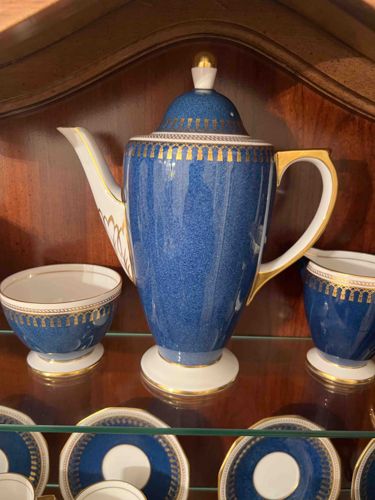
Tsarina Blue Bone China Coffee Pot

Fine China and Porcelain Tableware

AI Estimated Value

·Not an official valuation·Verify before acting

$350.00 - $475.00

As of May 30, 2026

AI Item Analysis

·AI can make mistakes·Verify before acting
This is a fine bone china coffee pot featuring a distinctive tapered cylindrical body with a flared pedestal base, accompanied by a matching sugar bowl and creamer shown in the foreground. The design is characterized by a rich, textured deep blue glaze that mimics a stippled or lapis lazuli-like effect across the main body and lid. Contrasting this blue are crisp white accents on the spout, handle, base, and the shoulder of the pot. Decorative elements include heavy gilding with 22-karat gold, most notably a series of ornate neoclassical 'tassel' or 'drapery' patterns bordering the upper rims. The lid is topped with a domed finial finished in gold. The handle is an elegant angular 'D' shape, fully gilded along the outer edge. The style is heavily influenced by Russian Empire aesthetic or Neoclassical revival, reminiscent of high-end porcelain manufacturers seperti Lomonosov or Bernardaud. The construction shows high-quality glaze application with no visible crazing, though there is a small white speck (possibly a glaze pop or minor nick) visible on the right side of the blue dome on the lid. The gilding appears well-preserved with minimal rubbing, suggesting a 20th-century manufacture date, likely late 1980s to early 2000s based on the crispness of the transfer-printed guilding and form.
AI Appraisal Report

·AI can make mistakes·Verify before acting
Based on my visual examination of this 'Tsarina Blue' coffee set, which includes the primary coffee pot, sugar bowl, and creamer, I find the set to be a high-quality example of late 20th-century neoclassical revival chinaware. The piece exhibits a sophisticated stippled cobalt glaze that successfully evokes the luxury of the Russian Imperial Porcelain Factory. The 22-karat gold gilding is applied with precision, particularly the neoclassical drapery motifs, which appear in excellent condition with no significant rubbing. A minor surface anomaly—likely a small glaze pop—is noted on the lid, but it does not severely detract from the aesthetic value. The market for fine bone china has stabilized, with decorative 'Empire style' pieces remaining popular for traditional interior design. Comparables from similar manufacturers like Lomonosov (Imperial Porcelain) or high-end European houses typically fetch mid-range prices for service pieces. The value is bolstered by the presence of the accompanying creamer and sugar bowl, as a complete set is significantly more desirable to collectors than an isolated pot. Limitations of this appraisal include the inability to verify the maker's mark on the base or perform a 'ring test' to check for internal hairline fractures. For a definitive authentication, I would require a physical inspection to verify the backstamp, confirm the weight and translucency of the bone china, and review any original provenance or purchase documentation. Scientific testing is generally not required for contemporary porcelain of this era unless there is reason to suspect a modern counterfeit of an 18th-century original.

Get your items appraised

Instant estimates of your treasures with AI-powered appraisals

Browse More Appraisals