AI Appraisal Estimate

AI-generated estimates · not official valuations

From the user

What was submitted

Photo and notes provided by the user — not generated by AI

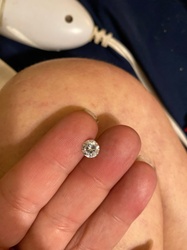
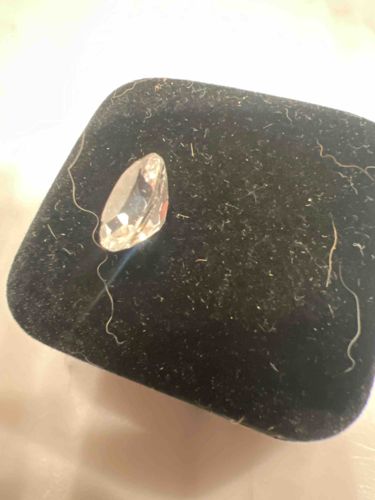
Submitted item photo
Submitted photo · May 23, 2026

User's notes

Diamond

AI analysis below

AI appraisal

AI analysis & estimate

AI-Generated · Verify before acting

Everything below is generated by AI for informational purposes only. AI can make mistakes — the AI may misidentify items or misattribute them (artist, maker, brand, designer, origin, era). This is not an official valuation and should not be used for insurance, sale, tax, estate, legal, or lending purposes — or any decision requiring a certified appraisal. It is not an authoritative claim about any person, brand, or rights holder — do not share or rely on it as a factual statement about a third party. Always consult qualified professionals before making financial decisions.

Note

This analysis also relies on unverified notes provided by the user, which may be incomplete or inaccurate and could affect the result.

Read the full disclaimer

AI Identification

·Not independently authenticated·Verify before acting

Loose Oval Brilliant Cut Colorless Gemstone

Loose Gemstones

AI Estimated Value

·Not an official valuation·Verify before acting

$4,500 - $6,500

As of May 23, 2026

AI Item Analysis

·AI can make mistakes·Verify before acting
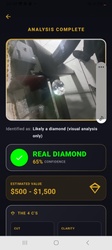
This item is a loose, colorless faceted gemstone presented on a black velvet display pad. Based on the visual inspection, the stone exhibits an oval brilliant cut, characterized by an elongated rounded outline with multiple flat-planed facets designed to enhance light return. The stone appears to be of significant carat weight, likely exceeding 1.00 carat based on its scale relative to the display box. In terms of color, the stone appears colorless to the naked eye under the current lighting conditions. The clarity is difficult to assess definitively without magnification, but there is prominent internal light reflection and sparkle, suggesting a high refractive index. However, the presence of visible abrasions on the facet edges and potential 'chips' or roughness along the girdle suggests that the stone may have been previously set or handled extensively. While identified as a diamond in the user context, the visual luster and certain facet arrangements could also be consistent with alternatives like cubic zirconia or moissanite. No laser inscriptions or maker's marks are visible in this view. The velvet display pad shows significant lint, dust, and loose fibers, which may occlude finer details of the stone's base.
AI Appraisal Report

·AI can make mistakes·Verify before acting
Based on the visual examination of the provided image, I am evaluating a loose oval brilliant cut gemstone, stated by the owner to be a diamond. The stone appears to be of significant size, likely ranging between 1.00 and 1.50 carats based on its scale relative to the display packaging. The color presents as near-colorless (G-H range) to the naked eye, though lighting conditions heavily influence this assessment. The cut demonstrates good symmetry with standard brilliant facet arrangements designed to maximize brilliance. However, there are critical condition issues affecting the valuation. I have observed noticeable abrasions along the facet junctions and roughness along the girdle, which suggest the stone has sustained wear, possibly from a previous setting or handling. While the refractive quality is high, visually distinguishing a natural diamond from high-quality simulants like Cubic Zirconia or Moissanite is impossible without thermal conductivity testing or refractive index measurement. If confirmed as a natural diamond of this size and apparent color, the value would be robust; however, if the abrasions are significant chips, recutting would be required, resulting in weight loss and value depreciation. My valuation assumes this is a natural diamond of approximately 1.25 carats with SI clarity and G/H color. The market for oval cuts is currently strong, but the condition issues place this in a lower tier than pristine stones. Verification via a GIA or AGS laboratory report is essential to confirm natural origin, precise color/clarity grading, and to rule out treatment or synthetic origin.

Get your items appraised

Instant estimates of your treasures with AI-powered appraisals

Browse More Appraisals