AI identification & appraisal estimate

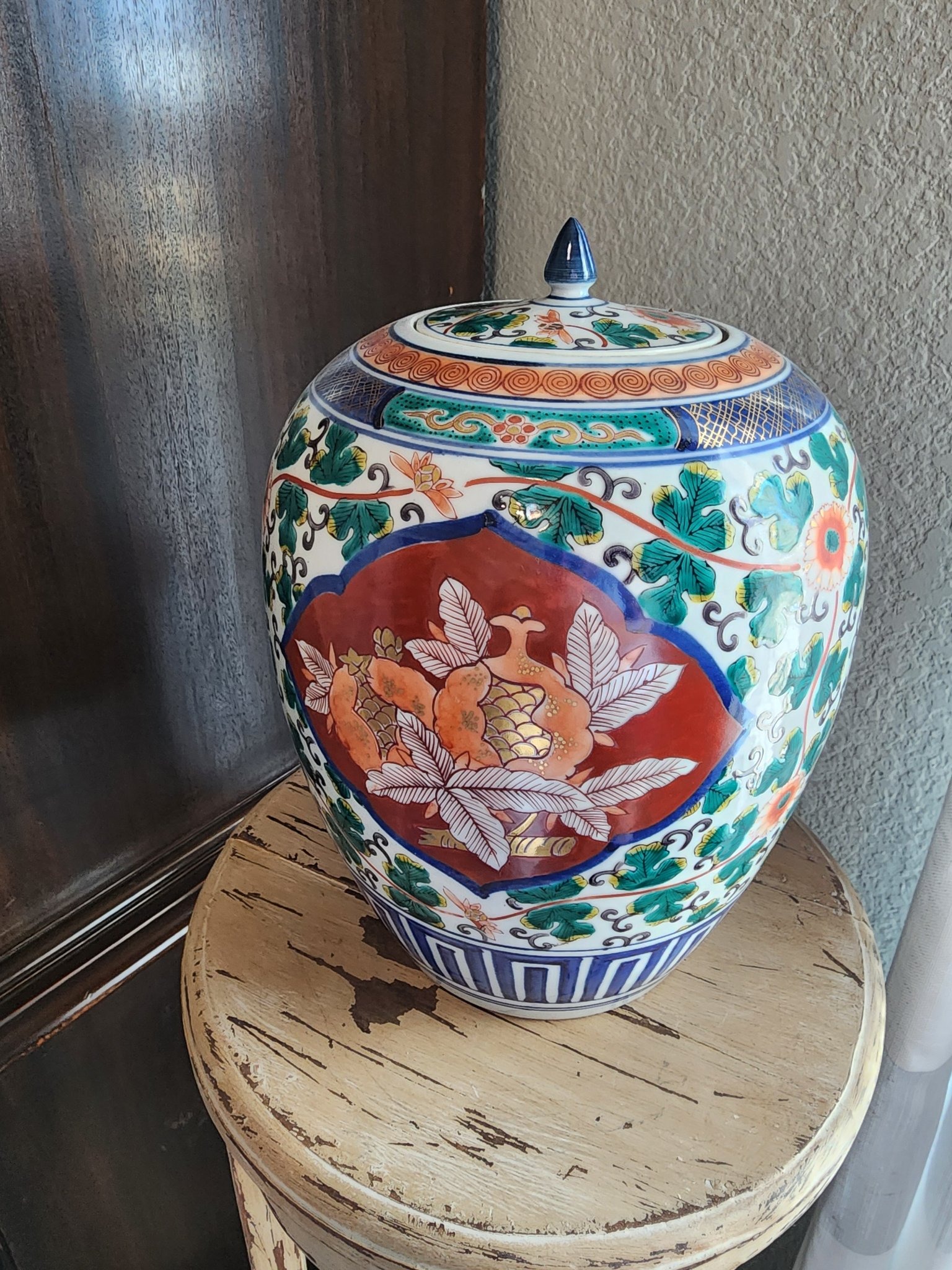
Japanese Imari-Style Porcelain Ginger Jar with Lid

Submitted photo of Japanese Imari-Style Porcelain Ginger Jar with Lid
Photo submitted by the user — not generated by AI

User's notes

Category: Collectible purchased in Singapore back in the late 1970's.

These notes were written by the person who submitted this item. Appraiser.AI has not verified them, and the AI's identification and estimate may rely on them.

AI Estimated Value

Not an official valuation

$300-500

AI estimate as of August 29, 2026 · verify with a professional before acting

AI-Generated · Verify before acting

Everything on this page is generated by AI for informational purposes only. AI can make mistakes — the AI may misidentify items or misattribute them (artist, maker, brand, designer, origin, era). This is not an official valuation and should not be used for insurance, sale, tax, estate, legal, or lending purposes — or any decision requiring a certified appraisal. It is not an authoritative claim about any person, brand, or rights holder — do not share or rely on it as a factual statement about a third party. Always consult qualified professionals before making financial decisions.

This analysis also relies on unverified notes provided by the user, which may be incomplete or inaccurate and could affect the result.

Read the full disclaimer

AI Item Analysis

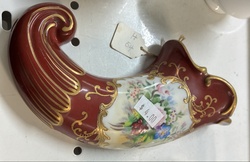
This is a substantial ceramic lidded vessel, identifiable stylistically as a Japanese Imari-type porcelain ginger jar featuring a fitted matching lid with a pointed finial. The physical construction consists of a heavily potted white ceramic body decorated in a vibrant polychrome palette dominated by iron red, cobalt blue, emerald green, and accented with gilt detailing. The exterior surface is elaborately patterned, featuring a prominent central cartouche framing a stylized botanical or fruit motif (likely pomegranates with scrolling leaves) set against a deep red background. The surrounding body displays dense scrolling foliage, floral motifs, and geometric borders near the shoulder and base, including a stylized blue and white vertical stripe border at the lower register and a scrolling orange wave or scroll pattern near the rim. The lid is similarly decorated with coordinating floral and geometric motifs centering around the small cobalt-accented finial. There are no clearly visible maker's marks, reign marks, or signatures in the provided photograph, so the attribution is based entirely on the characteristic color palette, decorative vocabulary, and glazing style consistent with traditional Japanese Imari export wares. The piece displays a glossy glaze finish with rich color saturation and gilt highlights, suggesting careful hand-painted craftsmanship, although quality and exact period remain unverified from the image alone. The owner provides the unverified context that this item was purchased in Singapore back in the late 1970s. The overall condition appears well-preserved with no obvious structural damage, chips, or major glaze losses visible in the photograph, maintaining a clean and vibrant appearance typical of well-kept decorative ceramics.
AI Appraisal Report

Based on what I can see in the photograph, this lidded vessel is presented in the style of Japanese Imari-type porcelain, featuring a vibrant polychrome palette with iron red, cobalt blue, emerald green, and gilt detailing. The owner identifies this as an item purchased in Singapore back in the late 1970s. I cannot verify from a photo whether the piece represents traditional Japanese export ware from a specific historical period or a later decorative reproduction made in the manner of Imari ceramics, as physical inspection is required to evaluate paste, glaze characteristics, and age indicators. Assuming the attribution to traditional Imari-style export porcelain is correct, comparable decorative ginger jars of this size and visual quality typically trade in the $300 to $500 range within the current secondary antiques market, where demand for traditional blue, red, and gilt export ceramics remains steady but modest. If the piece turns out to be a mid-to-late 20th-century decorative replica or made strictly 'in the style of' rather than an antique export piece, the value would likely decrease to the $75 to $150 range. To establish authenticity, dating, and precise market value, this vessel would need in-person examination by a ceramics expert, hallmark verification if any marks are hidden beneath the glaze, and potentially scientific testing to assess the ceramic body and glaze composition.

Keep exploring

More ceramics appraisals

Get your items appraised

Instant AI-powered appraisal estimates from a photo

Browse More Appraisals