AI estimate as of December 4, 2025 · verify with a professional before acting
AI-Generated · Verify before acting
Everything on this page is generated by AI for informational purposes only. AI can make mistakes — the AI may misidentify items or misattribute them (artist, maker, brand, designer, origin, era). This is not an official valuation and should not be used for insurance, sale, tax, estate, legal, or lending purposes — or any decision requiring a certified appraisal. It is not an authoritative claim about any person, brand, or rights holder — do not share or rely on it as a factual statement about a third party. Always consult qualified professionals before making financial decisions.
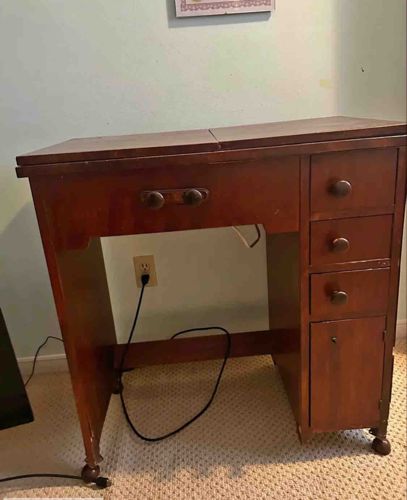
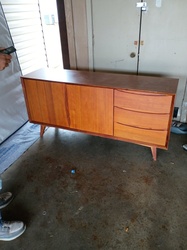
This is a vintage sewing machine cabinet crafted from what appears to be a reddish-brown stained hardwood, likely oak or mahogany, given its grain and dark reddish hue. The overall design suggests a functional piece of furniture from the mid-20th century. The top surface of the cabinet is a solid slab with a visible seam, indicating a hinged section designed to open and reveal a hidden sewing machine, which is typical for such cabinets. The cabinet features a right-hand bank of four drawers, each fitted with a round wooden knob as a pull. Below the drawers is a small cabinet door, also with a round wooden knob, presumably for storage of sewing accessories. To the left, there is a single, wider drawer in the apron of the table, featuring two matching round wooden knobs. The left side of the cabinet is open, forming a knee-hole space for the user, with a stretcher connecting the left and right sides for structural support. The cabinet stands on four turned wooden legs, ending in small, bun-style feet, visible on the right foot and partially on the left. The finish shows signs of wear consistent with age and use, including minor scuffs, scratches, and possibly some fading or discoloration, indicative of a well-used item rather than significant damage. There are no obvious repairs or major structural issues visible. The craftsmanship appears to be sturdy and utilitarian, characteristic of furniture designed for practical household use. The aesthetic points to a transitional style, blending functional design with basic decorative elements.
AI Appraisal Report
I've examined the provided image of this vintage sewing machine cabinet. It appears to be constructed from a stained hardwood, likely oak or mahogany, exhibiting a characteristic reddish-brown hue and grain. The design, with its hinged top, multiple drawers, and knee-hole space, is typical of mid-20th-century functional furniture for housing sewing machines. The piece's overall condition, based solely on the image, suggests normal wear and tear consistent with its age and intended use. I observe minor scuffs, scratches, and slight discoloration on the finish, indicating it has been a well-loved and utilized item. There are no apparent structural damages or major repairs visible, which is a positive factor. The hardware (round wooden knobs) appears original and intact.
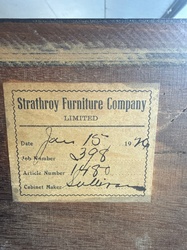
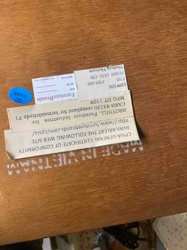
Authenticity, in terms of its age and purpose, seems evident from its design and construction style. However, without a physical inspection, I cannot verify the exact wood species, internal structural integrity, or whether any components have been replaced. Provenance documentation, such as original sales receipts or manufacturer marks, would be invaluable for full authentication and precise dating.
In terms of market conditions, vintage sewing machine cabinets, especially those without the original machine, generally fall into a niche market. While functional, many modern sewing enthusiaSSTS prefer more ergonomic and adjustable setups. Demand is moderate, typically from those seeking a specific aesthetic, a utilitarian piece, or for upcycling projects. Rarity is low; many such cabinets were produced. Comparables typically sell in the $100-$400 range, depending on condition, wood quality, and location.
The most significant factors impacting its value are its good, albeit worn, condition, and its functional design. The absence of the actual sewing machine reduces its value as a complete historical unit. Given these considerations, I appraise this vintage sewing machine cabinet to be in the range of $150-$300.