AI Appraisal Estimate

AI-generated estimates · not official valuations

From the user

What was submitted

Photo and notes provided by the user — not generated by AI

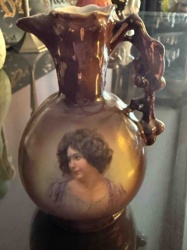
Submitted item photo
Submitted photo · May 19, 2026

User's notes

No additional notes provided.

AI analysis below

AI appraisal

AI analysis & estimate

AI-Generated · Verify before acting

Everything below is generated by AI for informational purposes only. AI can make mistakes — the AI may misidentify items or misattribute them (artist, maker, brand, designer, origin, era). This is not an official valuation and should not be used for insurance, sale, tax, estate, legal, or lending purposes — or any decision requiring a certified appraisal. It is not an authoritative claim about any person, brand, or rights holder — do not share or rely on it as a factual statement about a third party. Always consult qualified professionals before making financial decisions.

Read the full disclaimer

AI Identification

·Not independently authenticated·Verify before acting

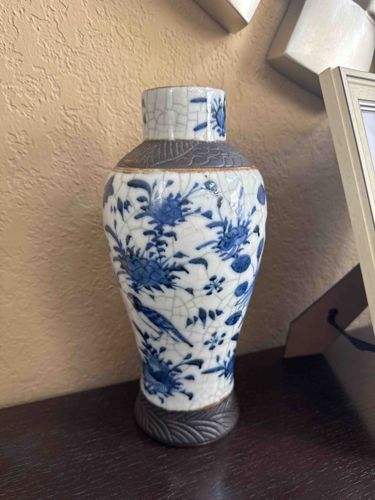
Chinese Crackle Glazed Blue and White Bird and Floral Vase with Etched Bronze-Clad Trim

Antique Ceramics & Porcelain

AI Estimated Value

·Not an official valuation·Verify before acting

$250 - $450

As of May 19, 2026

AI Item Analysis

·AI can make mistakes·Verify before acting
This item is an elegant ceramic vase featuring a classic baluster-inspired form with a cylindrical neck and a slightly flared base. It is finished in a heavy, intentional crackle glaze (ge-type style) over a white porcelain or stoneware body. The decorative motif consists of hand-painted cobalt blue underglaze designs depicting traditional Chinese themes, including a bird perched among blossoming peonies and floral sprigs. A distinctive feature of this piece is the contrasting dark bronze or brownish-black textured bands around the shoulder and base, which are etched with scrolling or wave-like patterns. These metallic-looking bands are characteristic of the Late Qing Dynasty to early 20th-century 'Chenghua' marked revival styles, often referred to as Nanking crackle ware. The crazing is wide and prominent, with dark lines highlighting the patterns of the glaze. Physically, the item appears medium-sized. The visible condition shows significant surface wear, particularly around the shoulder where the dark finish appears rubbed or pitted. Small dark spots or firing imperfections are visible on the white glazed surface, and there is a general patina suggestive of age, though it likely dates from the late 19th century to the mid-20th century. The craftsmanship is of a commercial decorative grade typical for regional export markets of that era.
AI Appraisal Report

·AI can make mistakes·Verify before acting
I have examined this Chinese Crackle Glazed Blue and White Bird and Floral Vase. This piece is a classic example of 'Nanking' crackle-glaze porcelain, produced primarily in the Late Qing Dynasty to the early Republic period for the export market. The use of hand-painted cobalt blue underglaze depicting the 'bird and flower' motif, combined with the distinctive 'etched bronze' bands (faux-bronze glaze), suggests a late 19th to early 20th-century origin. The wide, stained crazing is characteristic of 'Ge' type revival wares popular during this era. Regarding condition, the vase exhibits notable surface wear on the shoulder bands and typical firing imperfections, such as kiln grits and pitting, which are common for this grade of production. The market for Nanking crackle ware remains steady among decorative collectors, though value is tempered by its mass-produced nature compared to imperial-grade porcelains. Similar examples in this size and condition frequently hammer between $200 and $500 at auction. Significant value limitations include the visible rubbing on the metallic-effect trim and the lack of a verifiable reign mark. It is important to note that a definitive authentication is limited by the digital nature of this examination. A physical inspection is necessary to verify the composition of the clay body, check for professional restorations under UV light, and examine the foot rim for authentic historical Wear. Scientific testing, such as thermoluminescence, would only be recommended if there was suspicion the item was an older Ming original, which the stylized 'Chenghua' markings (implied) usually contradict in this context.

Get your items appraised

Instant estimates of your treasures with AI-powered appraisals

Browse More Appraisals