AI Appraisal Estimate

AI-generated estimates · not official valuations

From the user

What was submitted

Photo and notes provided by the user — not generated by AI

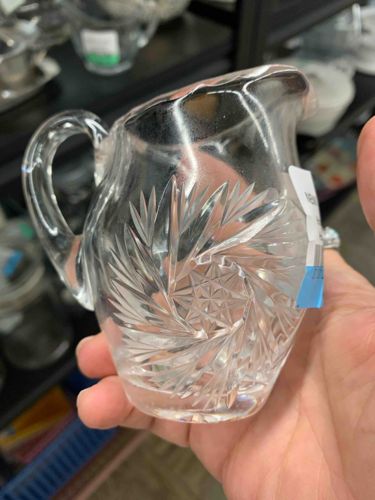
Submitted item photo
Submitted photo · May 28, 2026

User's notes

No additional notes provided.

AI analysis below

AI appraisal

AI analysis & estimate

AI-Generated · Verify before acting

Everything below is generated by AI for informational purposes only. AI can make mistakes — the AI may misidentify items or misattribute them (artist, maker, brand, designer, origin, era). This is not an official valuation and should not be used for insurance, sale, tax, estate, legal, or lending purposes — or any decision requiring a certified appraisal. It is not an authoritative claim about any person, brand, or rights holder — do not share or rely on it as a factual statement about a third party. Always consult qualified professionals before making financial decisions.

Read the full disclaimer

AI Identification

·Not independently authenticated·Verify before acting

Cut Glass Creamer

Glassware

AI Estimated Value

·Not an official valuation·Verify before acting

$40-$75

As of May 28, 2026

AI Item Analysis

·AI can make mistakes·Verify before acting
This is a small, clear glass creamer or milk jug, characterized by its intricate cut glass pattern. The item is handheld, appearing to be approximately 3-4 inches in height, fitting comfortably within an adult's palm. It features a traditional pitcher-like shape with a flared rim, a pouring spout, and an applied handle. The handle is D-shaped and appears to be solid glass, offering a clear grip. The most distinctive feature is the brilliant cut glass design, which covers the majority of the body. The pattern is a complex starburst or pinwheel motif, with deeply cut facets creating a spiral effect, radiating from a central point on the side of the creamer. The cuts are sharp and precise, indicating good craftsmanship, likely from the American Brilliant Period (1876-1917) or a later reproduction inspired by this style. The base of the creamer is thick and solid, providing stability. There are no obvious chips, cracks, or significant damage visible. The surface is reflective and clear, though there might be some minor surface dust or smudges visible from handling, which are not indicative of damage. No manufacturer's marks or signatures are discernible from the provided image. The quality of the glass appears high, with excellent clarity and brilliance, suggesting lead crystal or a high-quality leaded glass.

AI Appraisal Report

·AI can make mistakes·Verify before acting
Upon visual examination of the Cut Glass Creamer, I assess it to be a fine example of craftsmanship, likely originating from the American Brilliant Period (ABP), circa 1876-1917, or a high-quality 20th-century revival piece. The intricate, deeply cut pinwheel or starburst pattern exhibits the precision and brilliance characteristic of ABP glassware, which utilized high-lead-content glass for exceptional clarity and light refraction. The creamer appears to be in excellent condition, with no discernible chips, cracks, or repairs from the images provided. The market for ABP cut glass remains steady, particularly for well-executed, undamaged pieces. Small creamers like this are common forms, but the complexity of the cut pattern elevates its appeal. Similar unsigned creamers in excellent condition typically sell in the range of $40 to $75 at auction or in antique marketplaces. The primary factor limiting a higher valuation is the absence of a discernible manufacturer's signature (e.g., Libbey, Hawkes, or Clark). Signed pieces by renowned makers command significantly higher prices. It is crucial to note the limitations of this appraisal, as it is based solely on images. Full authentication would require a physical, in-person examination. This would allow me to feel the sharpness of the cuts—a key indicator of true ABP quality—and to properly test the glass for its lead content, typically done by observing its refractive properties or its characteristic bell-like ring when tapped. Furthermore, a blacklight test could help identify potential repairs or distinguish older glass from modern reproductions. Without such tests, the possibility of it being a later, albeit high-quality, reproduction cannot be entirely ruled out.

Get your items appraised

Instant estimates of your treasures with AI-powered appraisals

Browse More Appraisals