AI estimate as of October 18, 2026 · verify with a professional before acting
AI-Generated · Verify before acting
Everything on this page is generated by AI for informational purposes only. AI can make mistakes — the AI may misidentify items or misattribute them (artist, maker, brand, designer, origin, era). This is not an official valuation and should not be used for insurance, sale, tax, estate, legal, or lending purposes — or any decision requiring a certified appraisal. It is not an authoritative claim about any person, brand, or rights holder — do not share or rely on it as a factual statement about a third party. Always consult qualified professionals before making financial decisions.
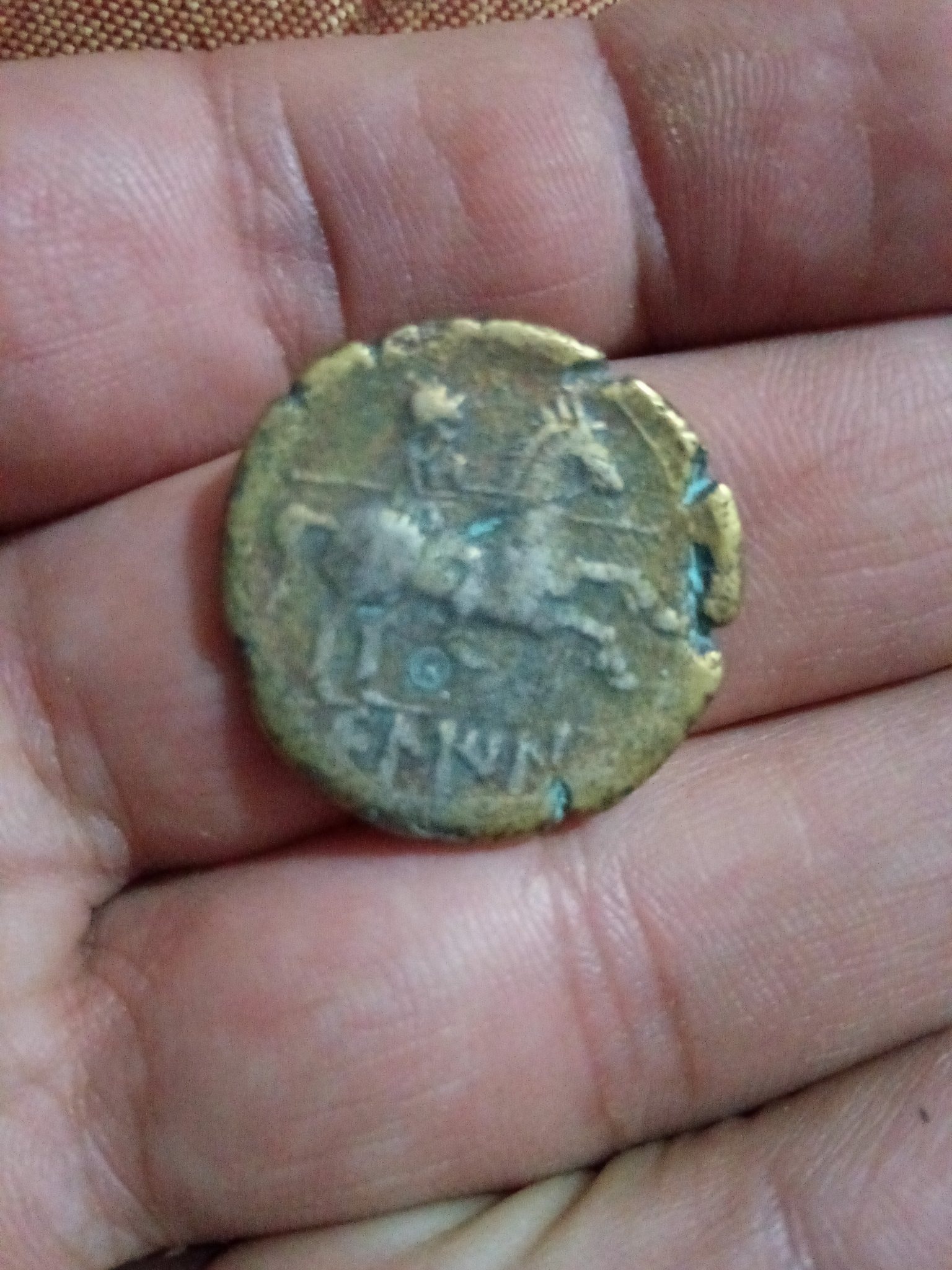
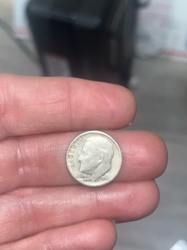
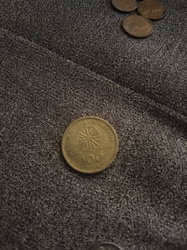
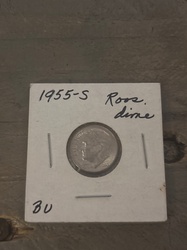
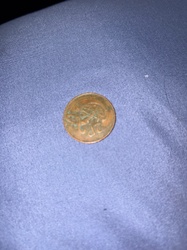
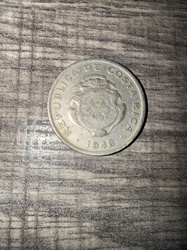
This is a small, thick, round metal coin or coin-like object shown resting in the palm of a hand, suggesting it is relatively compact in size. The physical characteristics include a metallic composition that appears to be a copper alloy, specifically bronze or brass, displaying a heavily weathered, oxidized surface with a dull golden-brown patina and subtle hints of greenish corrosion, often referred to as bronze disease or verdigris, particularly around the edges and recessed areas. The construction suggests a struck or cast manufacturing process typical of ancient or medieval numismatic items, featuring irregular edges and a somewhat uneven, worn flan. Notable features include a prominent raised relief design on the visible side depicting a figure on horseback, appearing to hold a spear or staff, rendered in a stylized, ancient artistic manner. Below the central equestrian motif, there is a distinct line of legible, blocky text or characters reading 'EPIN' or a similar ancient script, which serves as a key distinguishing element. Visible condition issues include extensive surface wear, pitting, edge chipping, and a heavy patina that obscures finer details, rendering the exact denomination, issuing authority, and specific historical era unverified. The stylistic elements are consistent with ancient Greek, Roman provincial, or medieval coinage, though no definitive manufacturing details or dates can be reliably ascertained from the image alone without professional metallurgical and numismatic testing. The identification is based purely on the visible iconography and epigraphy.
AI Appraisal Report
Based on what I can see in the provided image, this small, thick, round bronze coin-like object features a raised relief depicting an equestrian figure and legible blocky text resembling ancient script. However, I can't verify the true nature, age, or issuing authority from a photograph alone, and would need physical inspection to confirm its metallurgical composition and manufacture. The current value estimate of $100 to $300 assumes the hypothesis that this piece is an ancient or medieval coin consistent with the visual style observed. General market demand for ancient provincial and medieval coinage remains steady among collectors, though heavily oxidized surfaces, pitting, and edge chipping negatively impact market desirability. If this item were to undergo professional numismatic testing, it might be found to be a modern reproduction, replica, copy, or a piece simply struck in the style of antiquity, in which case the commercial value would drop significantly to a nominal novelty or collector-reprint range of $10 to $30. To establish an unhedged valuation and determine true authenticity, a comprehensive in-person examination, provenance documentation, and scientific testing such as X-ray fluorescence (XRF) or metallurgical assay by a qualified numismatist would be strictly necessary.