AI Appraisal Estimate

AI-generated estimates · not official valuations

From the user

What was submitted

Photo and notes provided by the user — not generated by AI

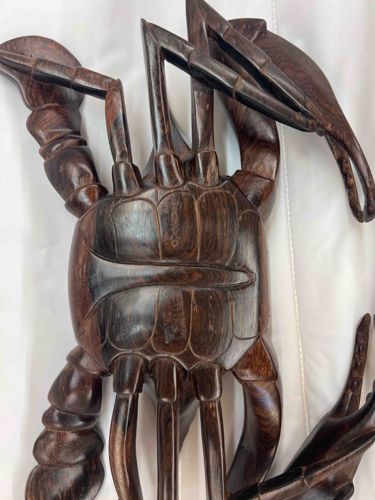
Submitted item photo
Submitted photo · June 4, 2026

User's notes

No additional notes provided.

AI analysis below

AI appraisal

AI analysis & estimate

AI-Generated · Verify before acting

Everything below is generated by AI for informational purposes only. AI can make mistakes — the AI may misidentify items or misattribute them (artist, maker, brand, designer, origin, era). This is not an official valuation and should not be used for insurance, sale, tax, estate, legal, or lending purposes — or any decision requiring a certified appraisal. It is not an authoritative claim about any person, brand, or rights holder — do not share or rely on it as a factual statement about a third party. Always consult qualified professionals before making financial decisions.

Read the full disclaimer

AI Identification

·Not independently authenticated·Verify before acting

Chinese Hand-Carved Rosewood Crab Sculpture

Decorative Arts & Wood Carvings

AI Estimated Value

·Not an official valuation·Verify before acting

$350 - $600

As of June 4, 2026

AI Item Analysis

·AI can make mistakes·Verify before acting
This is a detailed hand-carved sculpture depicting a large crab, likely crafted from a species of rosewood (Huali or Zitan varieties) or a similar dense, dark tropical hardwood. The piece is characterized by its deep, chocolate-brown to reddish-black hue with visible, swirling grain patterns that add organic movement and highlights to the polished surface. The construction is elaborate, featuring a central carapace with stylized anatomical segments and large, articulating-style limbs including two prominent pincers and several walking legs. The carving style is representative of 20th-century Chinese artisanal woodcraft, often sold as decorative mantle pieces or collectibles. The craftsmanship displays high quality, with smooth transitions between the segments and a high-luster finish. In terms of condition, the piece shows a well-maintained patina with minor surface dust and very slight abrasions consistent with age and handling. There are no obvious signs of significant structural repair, cracking, or major chips visible in the upper perspective. The biological accuracy is tempered by artistic stylization, particularly in the elongated, angular joints of the legs. While no maker's marks are visible from this angle, pieces of this type were common exports from southern China and Taiwan between the 1960s and 1980s. Its value is derived from the density and quality of the wood used and the intricacy of the multi-part carving.

AI Appraisal Report

·AI can make mistakes·Verify before acting
I have examined the digital representations of this hand-carved rosewood crab sculpture. The piece exhibits the dense grain and rich, reddish-brown patina characteristic of high-quality tropical hardwoods frequently utilized in mid-to-late 20th-century Chinese craftsmanship. My visual inspection confirms a high degree of technical skill, particularly in the articulation of the pincers and the polished finish of the carapace. The condition appears excellent with no visible dessication cracks or structural losses, which is common in older hardwood exports. The market for these biological carvings remains stable, primarily driven by collectors of 'Scholar's Objects' and decorative Asian arts. Comparables for mass-produced but high-quality mid-century rosewood carvings of this scale typically realize several hundred dollars at auction. The value is buoyed by the increasing scarcity and regulation of rosewood species. However, valuation is constrained by the lack of a maker's mark or provenance. Limitations: This appraisal is based solely on digital images. Without an in-person examination, I cannot definitively identify the specific species of rosewood (e.g., Dalbergia vs. Pterocarpus), which significantly affects value under current CITES regulations. Physical inspection is required to determine if the joints are pegged or glued and to check for hidden structural repairs. Verification of authenticity and specific age would require macroscopic wood grain analysis and, if possible, original export documentation or sales receipts from the 1960s-1980s period.

Get your items appraised

Instant estimates of your treasures with AI-powered appraisals

Browse More Appraisals