AI estimate as of August 15, 2025 · verify with a professional before acting
AI-Generated · Verify before acting
Everything on this page is generated by AI for informational purposes only. AI can make mistakes — the AI may misidentify items or misattribute them (artist, maker, brand, designer, origin, era). This is not an official valuation and should not be used for insurance, sale, tax, estate, legal, or lending purposes — or any decision requiring a certified appraisal. It is not an authoritative claim about any person, brand, or rights holder — do not share or rely on it as a factual statement about a third party. Always consult qualified professionals before making financial decisions.
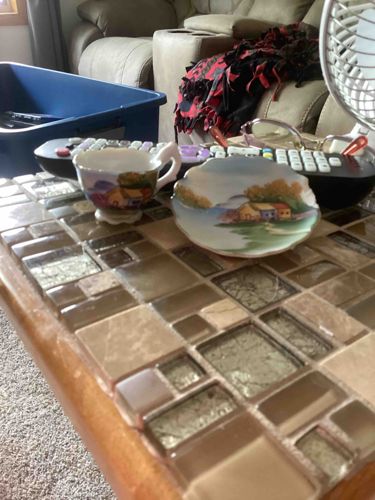
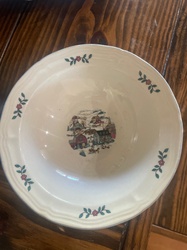
The item appears to be a miniature decorative teacup and saucer set, likely crafted from porcelain or fine ceramic. The teacup is small, with a fluted rim and a delicate handle that has a slight scallop or wave pattern along its top edge. It stands on a raised, circular foot. Both the teacup and the saucer are adorned with a hand-painted or transfer-printed landscape scene, depicted in muted, earthy tones. The scene features rolling hills or mountains in the background, a body of water (possibly a lake or river) in the mid-ground, and a cluster of buildings, presumably houses or a small village, near the water's edge. Trees with autumnal colors are also visible in the landscape. The colors used include various shades of brown, green, blue, and yellow. The overall palette suggests a bucolic, serene setting. The saucer is scallop-edged, complementing the fluted design of the teacup. Given its small size, it is most likely a souvenir piece, a child's tea set item, or part of a miniature collection rather than a functional tea set for adult use. It appears to be in good condition with no obvious chips, cracks, or significant wear visible from the image, although the light glinting off the surface makes it difficult to assess minor imperfections. The craftsmanship appears to be of decent quality, consistent with mass-produced decorative ceramics from the mid-to-late 20th century. No specific maker's marks or signatures are discernible from the provided image.
AI Appraisal Report
I have examined the image provided of this miniature decorative teacup and saucer set. Based on the visual evidence, the set appears to be in good overall condition, with no visible chips, cracks, or significant wear. The fluted rim of the cup and scallop-edged saucer are consistent with decorative ceramic pieces. The hand-painted or transfer-printed landscape scene, executed in muted autumnal tones, suggests a mass-produced decorative item rather than a unique artisan piece. The craftsmanship appears decent for its category, aligning with typical decorative ceramics from the mid-to-late 20th century.
Authenticity verification from an image alone is inherently limited. I cannot confirm the material definitively (porcelain vs. fine ceramic) or discern any faint maker's marks, which are crucial for precise dating and provenance. Without physical inspection, it's impossible to detect hairline cracks, crazing, or repairs, or to assess the tactile quality of the ceramic. Establishing true rarity or higher value would significantly benefit from an in-person examination to confirm material, detect hidden flaws, and definitively identify any manufacturer's marks. Provenance documentation, if available, would further enhance authentication and value.
Considering market conditions for similar decorative miniatures, demand is niche, catering primarily to collectors of miniature items, decorative ceramics, or souvenir ware. There is no indication of exceptional rarity. Comparable items in this category typically sell for modest amounts. Factors impacting value are primarily condition, aesthetic appeal of the decoration, and, if present, identification of a reputable manufacturer. Given the lack of discernible marks and the mass-produced aesthetic, its market value is reflective of a common decorative collectible.
Key limitations: I cannot verify material, hidden flaws, or manufacturer marks without direct physical examination.