AI Appraisal Estimate

AI-generated estimates · not official valuations

From the user

What was submitted

Photo and notes provided by the user — not generated by AI

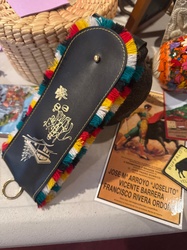
Submitted item photo
Submitted photo · June 17, 2026

User's notes

No additional notes provided.

AI analysis below

AI appraisal

AI analysis & estimate

AI-Generated · Verify before acting

Everything below is generated by AI for informational purposes only. AI can make mistakes — the AI may misidentify items or misattribute them (artist, maker, brand, designer, origin, era). This is not an official valuation and should not be used for insurance, sale, tax, estate, legal, or lending purposes — or any decision requiring a certified appraisal. It is not an authoritative claim about any person, brand, or rights holder — do not share or rely on it as a factual statement about a third party. Always consult qualified professionals before making financial decisions.

Read the full disclaimer

AI Identification

·Not independently authenticated·Verify before acting

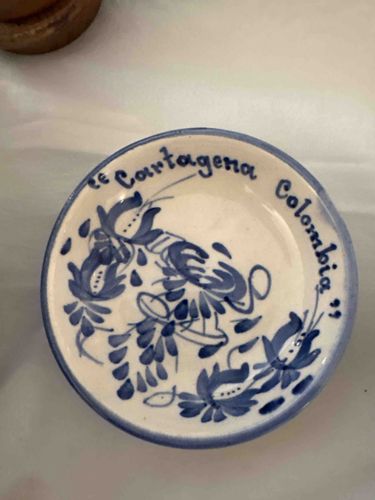
Hand-painted Blue and White Souvenir Ceramic Dish from Cartagena, Colombia

Artisan Ceramics / Souvenir Collectibles

AI Estimated Value

·Not an official valuation·Verify before acting

$15.00 - $25.00

As of June 17, 2026

AI Item Analysis

·AI can make mistakes·Verify before acting
A small, circular ceramic dish featuring a hand-painted blue and white glazed design, likely intended as a decorative souvenir or trinket tray. The dish is crafted from a light-colored earthenware or stoneware clay and finished with an off-white tin glaze. The central motif consists of stylized floral patterns and foliage executed in a cobalt blue pigment with visible, fluid brushstrokes. A blue band highlights the outer rim of the plate. Notable hand-lettering along the interior upper curve reads "Cartagena Colombia," bracketed by double quotation marks. The craftsmanship displays a folk-art aesthetic, characterized by its hand-painted charm rather than precision manufacturing. Physically, the item appears to be in good vintage condition; however, there is visible wear around the edge, including minor glaze thinning and small flea bites or chips on the rim, which are typical for utilitarian or souvenir ceramics of this age. The glaze exhibits some surface irregularities and tiny pinholes consistent with artisanal kilning processes. Based on its style and intended purpose, the item likely dates from the late 20th century. The piece serves as a cultural artifact representing the regional ceramic traditions often found in Colombian port cities.
AI Appraisal Report

·AI can make mistakes·Verify before acting
I have examined the digital representation of this hand-painted ceramic souvenir dish from Cartagena, Colombia. The item exhibits the characteristics of late 20th-century regional folk art, utilizing a cobalt blue decorative technique on an off-white glaze. My assessment of the physical condition reveals moderate wear consistent with age, specifically noting glaze thinning and 'flea bite' chips along the rim. These imperfections are typical for earthenware souvenir pieces and reflect their utilitarian nature rather than a defect in craftsmanship. The market for mid-to-late 20th-century South American souvenir ceramics is currently saturated, with high supply and limited collector demand. Similar items frequently appear in secondary markets and estate sales, typically serving as decorative accents rather than high-value investments. The 'Cartagena' inscription identifies it as a production piece for the tourism trade, which limits its rarity. While the hand-painted nature adds charm, the lack of a known artist's signature or studio mark keeps the valuation within the modest range of decorative collectibles. A significant limitation of this appraisal is the inability to physically inspect the clay body for porosity or verify the glaze chemistry. To provide a definitive authentication of age and origin, an in-person examination would be required to check for basal wear patterns and any impressed maker's marks on the underside. Provenance documentation, such as original purchase receipts from Colombia, would further solidify its history but would not significantly alter the market value given the mass-produced nature of such tourist wares.

Get your items appraised

Instant estimates of your treasures with AI-powered appraisals

Browse More Appraisals