Paleolithic Bifacial Chert Hand Axe and Scraper Effigy
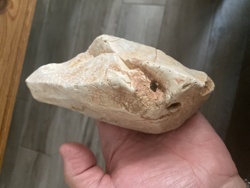
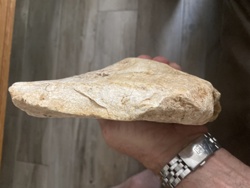
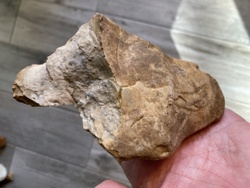
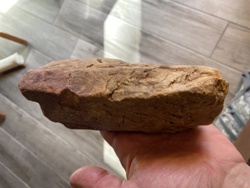
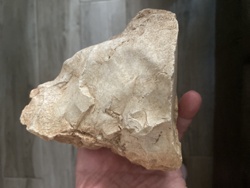
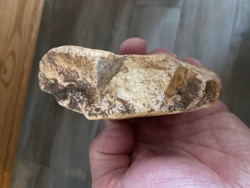
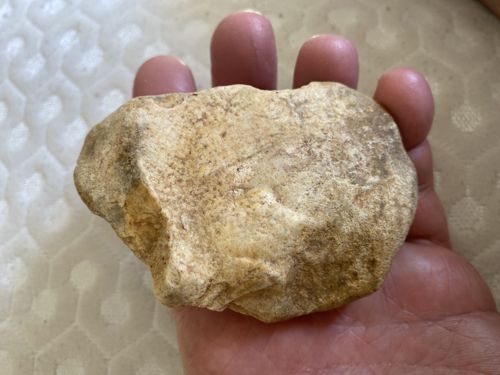
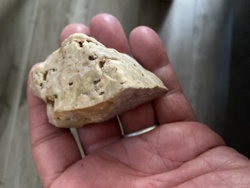
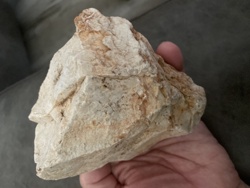
This artifact is a lithic specimen of chert, presenting as an oval-to-sub-rectangular bifacial hand axe and scraper. Hand-held for scale, it measures approximately 8-10 centimeters in width. The material exhibits a tan to ochre coloration with a heavily patinated, textured surface indicative of significant age and chemical weathering. In terms of construction, the object shows evidence of percussion flaking along the margins to create functional edges, a hallmark of Paleolithic tool-making techniques. The visible surface features several concavities and ridges that, combined with the natural contours of the stone, may suggest a 'portable rock art' effigy, where the natural form was intentionally altered or selected to resemble a head or animal profile. The condition shows smoothed edges which may be a result of either alluvial wear or intentional utilization as a scraper. There are no modern manufacture marks, and the craftsmanship reflects a utilitarian but deliberate lithic reduction strategy consistent with prehistoric stone tool production. The heavy mineralization and patina suggest an extremely old, potentially Lower or Middle Paleolithic age.
AI-Generated Appraisal Disclaimer
Estimated Value
$150 - $350
Basic Information
Category
Prehistoric Lithic Artifacts
Appraised On
February 23, 2026
Estimated Value
$150 - $350
Additional Details Provided By Owner
User Provided Information
Paleolithic Chert bi face hand axe, scraper/ portable rock art effigy
Item Description
This artifact is a lithic specimen of chert, presenting as an oval-to-sub-rectangular bifacial hand axe and scraper. Hand-held for scale, it measures approximately 8-10 centimeters in width. The material exhibits a tan to ochre coloration with a heavily patinated, textured surface indicative of significant age and chemical weathering. In terms of construction, the object shows evidence of percussion flaking along the margins to create functional edges, a hallmark of Paleolithic tool-making techniques. The visible surface features several concavities and ridges that, combined with the natural contours of the stone, may suggest a 'portable rock art' effigy, where the natural form was intentionally altered or selected to resemble a head or animal profile. The condition shows smoothed edges which may be a result of either alluvial wear or intentional utilization as a scraper. There are no modern manufacture marks, and the craftsmanship reflects a utilitarian but deliberate lithic reduction strategy consistent with prehistoric stone tool production. The heavy mineralization and patina suggest an extremely old, potentially Lower or Middle Paleolithic age.
Related Tags
Explore similar items and categories:
Get Your Items Appraised
Instant estimates of your treasures with AI-powered instant appraisals