AI estimate as of October 14, 2025 · verify with a professional before acting
AI-Generated · Verify before acting
Everything on this page is generated by AI for informational purposes only. AI can make mistakes — the AI may misidentify items or misattribute them (artist, maker, brand, designer, origin, era). This is not an official valuation and should not be used for insurance, sale, tax, estate, legal, or lending purposes — or any decision requiring a certified appraisal. It is not an authoritative claim about any person, brand, or rights holder — do not share or rely on it as a factual statement about a third party. Always consult qualified professionals before making financial decisions.
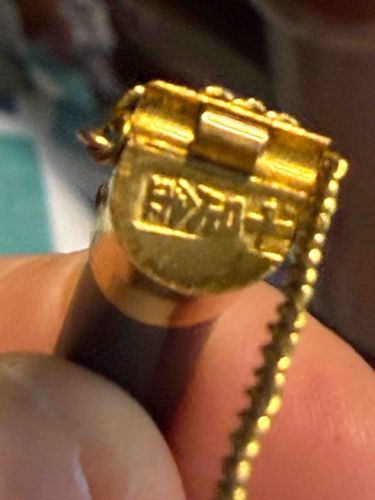
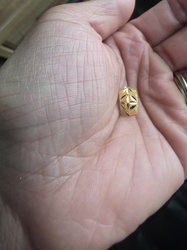
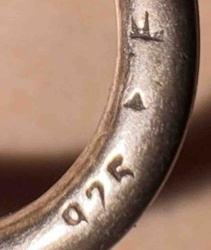
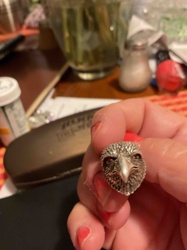
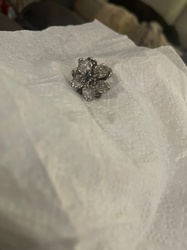
The item captured in the image is a gold-toned jewelry clasp, likely part of a necklace or bracelet, along with a fragment of its accompanying chain and the attachment point to the main body of the jewelry. The clasp mechanism appears to be a box clasp, characterized by a tongue that slides into a rectangular opening and locks into place, secured by a small push-button release. The color is a consistent bright yellow gold, suggesting either solid gold, gold-filled, gold-plated metal, or a brass alloy. There are visible markings on the top surface of the clasp, appearing to be Asian characters, possibly Japanese, Chinese, or Korean, which could indicate the maker or the gold purity. While the specific characters are not perfectly clear due to resolution and angle, they are deeply etched into the metal, suggesting quality manufacturing. The small segment of chain visible is a delicate, tightly linked style, possibly a snake chain or similar flexible design, also in a matching gold tone. The attachment to the main piece of jewelry is a cylindrical, dark brown or black component, potentially made of wood, bakelite, or a similar opaque material, with a gold-toned cap securing it to the clasp. Visible condition issues include some minor surface wear and a slight patina consistent with age and use, particularly around the edges and raised areas of the clasp. There are no obvious signs of significant damage, repairs, or discoloration beyond expected wear. The craftsmanship appears to be of good quality, with precise articulation of the clasp and clear, defined markings. The style is classic and functional, suggesting an estimated age from mid to late 20th century, though without clearer markings or context, a more precise period is difficult to ascertain.
AI Appraisal Report
I have examined the provided image of this gold-toned jewelry clasp with Asian markings. The item appears to be a functional box clasp, likely from a necklace or bracelet, accompanied by a small fragment of chain and a decorative attachment point. The consistent bright yellow gold tone suggests it could be solid gold, gold-filled, gold-plated, or a brass alloy. Without direct testing, specific metal composition cannot be definitively determined from an image alone. The Asian characters deeply etched into the surface are intriguing and are key to potential identification of maker or purity, but their clarity in the image is insufficient for translation.
The condition appears good, with minor surface wear and a slight patina consistent with age, likely mid to late 20th century. There are no major damages or repairs visible. Authenticity-wise, the visible craftsmanship and markings suggest it is a genuine, well-made jewelry component. However, verifying the precious metal content and exact origin (country and maker) would require in-person examination, including scratch testing or XRF analysis for metal purity, and detailed macro photography or direct viewing of the hallmarks for precise translation.
Market conditions for jewelry components vary greatly based on material. If solid gold, the value would be significantly higher, primarily based on gold weight. If gold-filled or plated, the value is more aesthetic and craft-based. Comparables for gold-toned clasps, without confirmed precious metal content, typically fall into a modest range. The unique Asian markings add some distinction and potential rarity, potentially appealing to collectors of ethnic or marked jewelry. However, without knowing what the markings mean or the specific artist/origin, this uplift in value is limited.
Factors significantly impacting value are primarily the metal composition, the exact meaning and rarity of the Asian markings (which could identify a renowned maker), and the overall weight if solid gold. Demand for unverified jewelry components is generally moderate, unless they are high purity precious metals or from a famous designer. A full authentication would require hands-on inspection to determine metal content, precise identification of the characters, and an assessment of its historical or artistic significance.