AI Appraisal Estimate

AI-generated estimates · not official valuations

From the user

What was submitted

Photo and notes provided by the user — not generated by AI

Submitted item photo
Submitted photo · June 30, 2026

User's notes

No additional notes provided.

AI analysis below

AI appraisal

AI analysis & estimate

AI-Generated · Verify before acting

Everything below is generated by AI for informational purposes only. AI can make mistakes — the AI may misidentify items or misattribute them (artist, maker, brand, designer, origin, era). This is not an official valuation and should not be used for insurance, sale, tax, estate, legal, or lending purposes — or any decision requiring a certified appraisal. It is not an authoritative claim about any person, brand, or rights holder — do not share or rely on it as a factual statement about a third party. Always consult qualified professionals before making financial decisions.

Read the full disclaimer

AI Identification

·Not independently authenticated·Verify before acting

Anglo-Indian Moorish Style Bone Inlay Mirror

Home Decor / Furniture

AI Estimated Value

·Not an official valuation·Verify before acting

$450 - $700

As of June 30, 2026

AI Item Analysis

·AI can make mistakes·Verify before acting
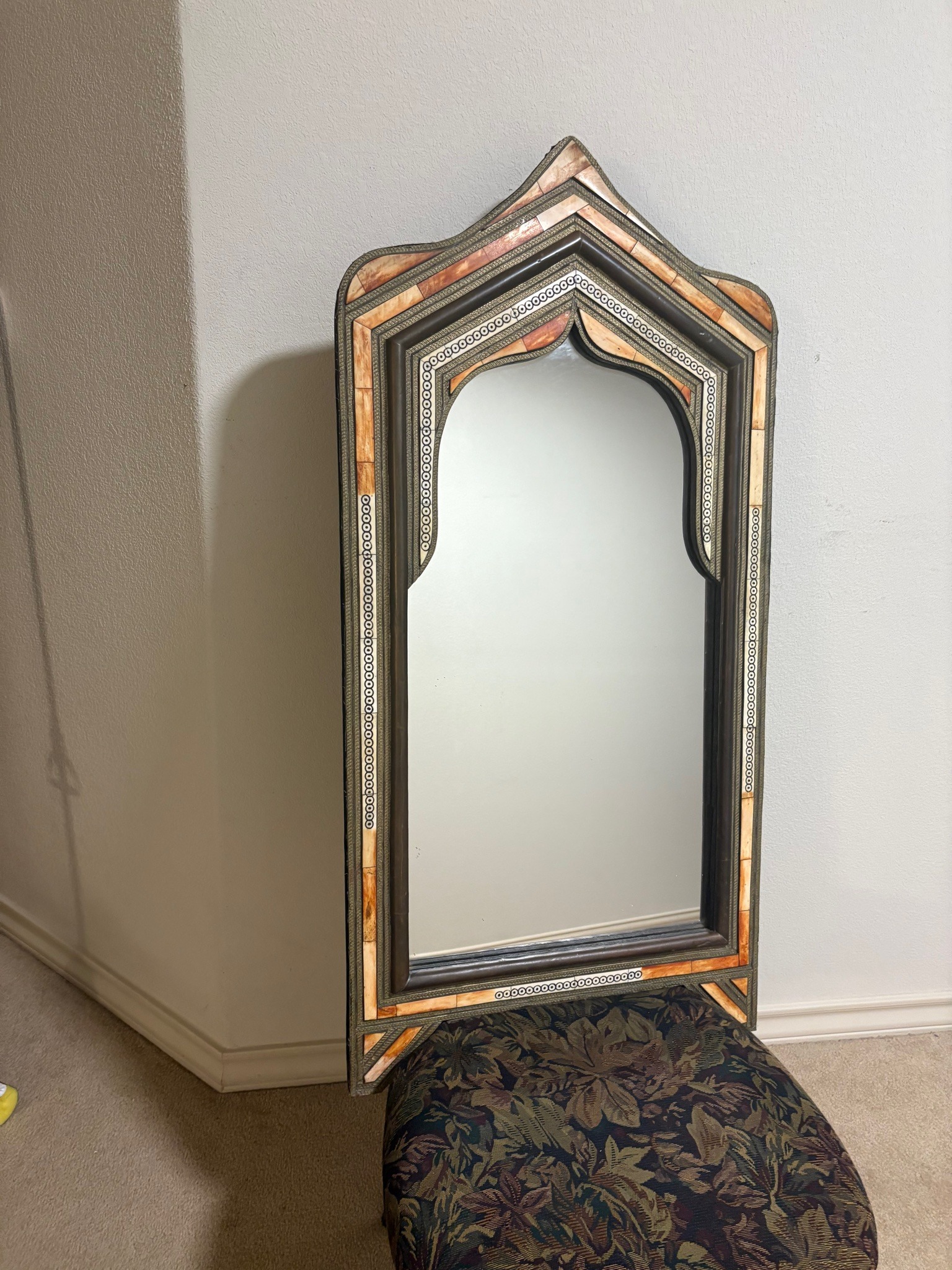
This is a wall-mounted mirror featuring a distinct Moorish arched frame, indicative of the Anglo-Indian or Middle Eastern decorative style, likely dating from the mid-to-late 20th century. The frame is constructed from a dark wood base, possibly teak or rosewood, and is extensively decorated with hand-inlaid materials. The primary decorative elements include rectangular panels of polished bone or camel bone in natural cream and light amber tones, creating a variegated mosaic effect. Thin borders of brass wire or metal filigree separate the sections, adding a metallic luster and architectural definition. An inner border features circular bone inlays, resembling a pearl-and-bead motif, which follows the delicate ogival or horseshoe arch at the top. The craftsmanship shows high detail with tight joinery, though minor irregularities in the inlay placement suggest hand-finishing rather than mass machine production. The condition appears fair to good: there is visible age-related patina on the metal elements, and the bone panels show natural variations in color. No significant chips or missing inlay sections are immediately apparent, though there is some light wear at the corners and edges commensurate with age. This piece reflects the 'Exoticism' movement and is a fine example of traditional intarsia techniques adapted for domestic decor.
AI Appraisal Report

·AI can make mistakes·Verify before acting
I have virtually examined this Anglo-Indian Moorish-style bone inlay mirror. The piece showcases classic Sadaf craftsmanship, utilizing hand-cut bone sections inlaid into a dark hardwood substrate, likely teak. Based on the patina and the specific 'pearl-and-bead' motif, I estimate this piece dates to the second half of the 20th century. The condition appears sound; however, I noted minor oxidation on the brass wire borders and slight discoloration in the organic bone panels, which is expected and adds to the vintage character. The market for Anglo-Indian decorative arts remains steady, particularly for mirrors that serve as architectural focal points. Comparable pieces of several decades' age typically achieve mid-hundred dollar ranges at boutique auctions. Its value is buoyed by the handcrafted nature of the intarsia, though it lacks the rarity of 19th-century Hoshiarpur examples which would command thousands. Factors positively impacting the value include the integrity of the horseshoe arch and the lack of missing inlay. Conversely, mass-produced modern reproductions from Rajasthan can saturate the lower market. Note that this appraisal is based on photographic evidence. A physical inspection is required to confirm the density of the wood and the stability of the adhesive used for the bone panels. I cannot definitively distinguish between camel bone and bovine bone without a microscopic check for osteon symmetry. Verification of provenance or a maker’s mark, though rare for such pieces, would further solidify this valuation.

Get your items appraised

Instant estimates of your treasures with AI-powered appraisals

Browse More Appraisals