AI identification & appraisal estimate

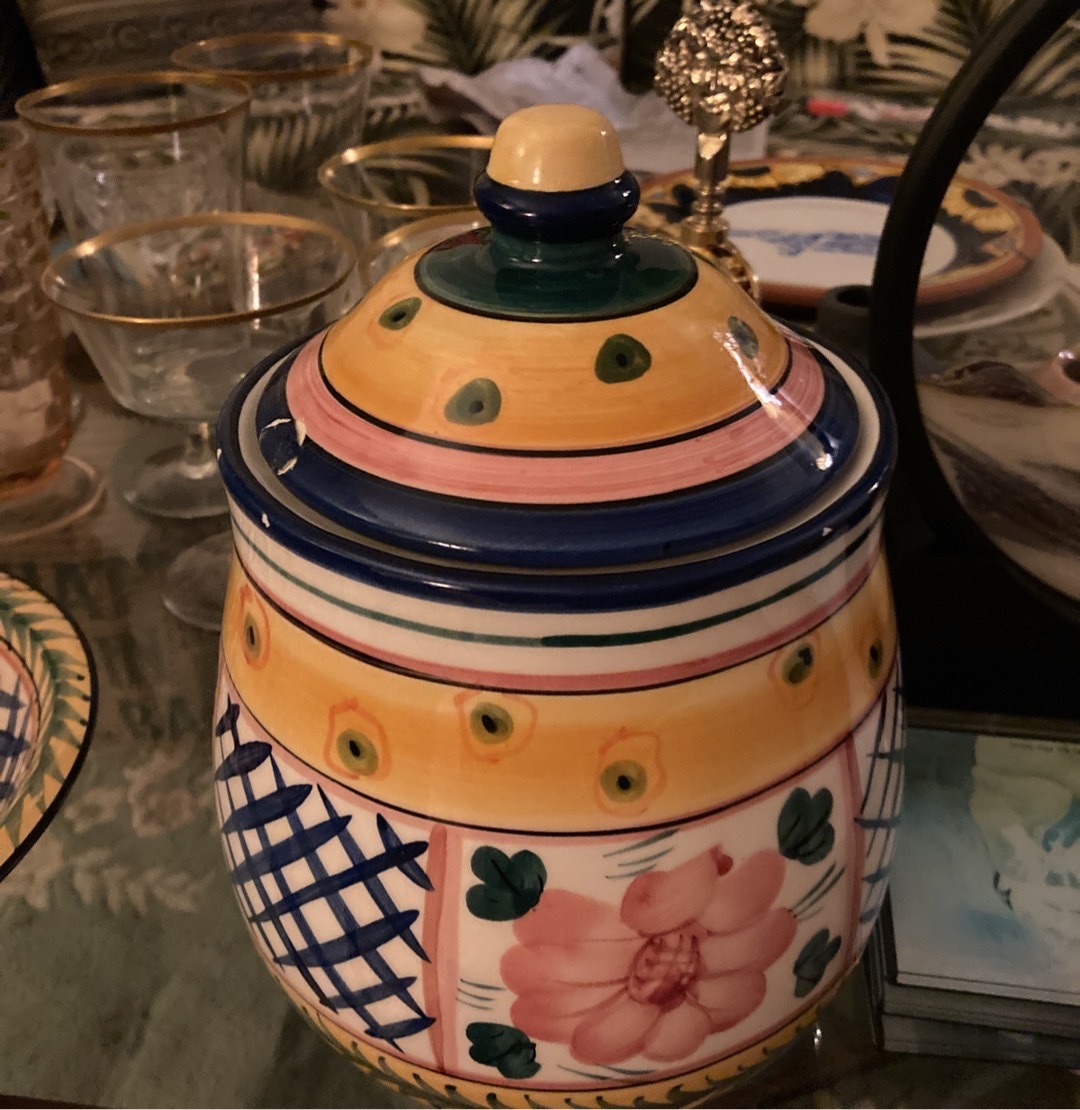
ceramic canister in a hand-painted majolica style

This name is the AI's identification of the item — it may be incorrect.

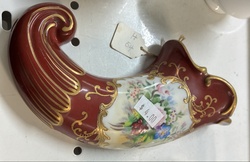
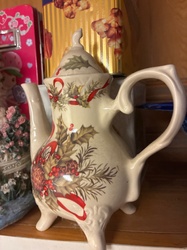
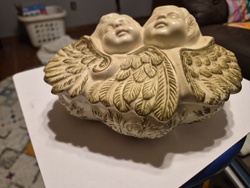
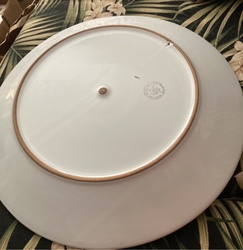
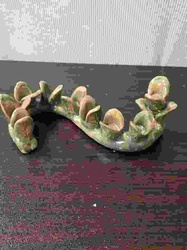
Submitted photo of ceramic canister in a hand-painted majolica style
Photo submitted by the user — not generated by AI

User's notes

not a teapot

These notes were written by the person who submitted this item. Appraiser.AI has not verified them, and the AI's identification and estimate may rely on them.

AI Estimated Value

Not an official valuation

$150-$300

AI estimate as of July 31, 2026 · verify with a professional before acting

AI-Generated · Verify before acting

Everything on this page is generated by AI for informational purposes only. AI can make mistakes — the AI may misidentify items or misattribute them (artist, maker, brand, designer, origin, era). This is not an official valuation and should not be used for insurance, sale, tax, estate, legal, or lending purposes — or any decision requiring a certified appraisal. It is not an authoritative claim about any person, brand, or rights holder — do not share or rely on it as a factual statement about a third party. Always consult qualified professionals before making financial decisions.

This analysis also relies on unverified notes provided by the user, which may be incomplete or inaccurate and could affect the result.

Read the full disclaimer

AI Item Analysis

This is a decorative ceramic lidded container, featuring a robust, rounded body and a domed matching lid topped with a small knob handle. The piece is hand-painted in a vibrant palette of mustard yellow, soft pink, deep cobalt blue, forest green, and white. The surface is decorated with a segmented pattern that includes geometric cross-hatching, stylized floral motifs resembling large pink blossoms with green leaves, and dotted banding around both the body and the lid. There are visible condition issues, specifically chipping along the rim of the lid where the glaze and ceramic have sustained minor impacts. The style of the decoration appears consistent with traditional Italian majolica or earthenware pottery techniques, though no maker's mark or signature is clearly visible in the image to confirm a specific origin or maker. Hedged language is used in the item name because there is an absence of legible hallmarks, stamps, or signatures directly on the piece to verify its precise maker or era. Additionally, the owner provides unverified context noting that the item is 'not a teapot', which aligns with the physical observation that the vessel functions as a storage jar or canister rather than a pouring vessel. All stylistic attributions and era assessments remain hypotheses subject to in-person physical inspection and expert authentication.
AI Appraisal Report

Based on what I can see in the photograph, this decorative ceramic lidded container exhibits a hand-painted majolica-style aesthetic with a vibrant palette and segmented geometric and floral patterns. Per user submission, the vessel functions as a storage jar or canister rather than a pouring vessel. I can't verify from a photo whether the piece is a traditional Italian import or a later decorative reproduction, as no maker's mark or signature is clearly visible. Furthermore, I note visible condition issues, specifically chipping along the rim of the lid where the glaze and ceramic have sustained minor impacts, which negatively affects the overall value. Assuming the attribution to traditional majolica-style earthenware is correct, items of this decorative type generally trade within the $150 to $300 range in secondary markets, depending on scale and regional demand. However, would need physical inspection to confirm the clay body, glaze composition, and age. If the piece is determined to be a modern reproduction, replica, or made simply 'in the style of' rather than a period-appropriate earthenware piece, the value would likely drop significantly to the $40 to $80 range, purely as a decorative accessory. To establish a more precise valuation and test hypotheses regarding its origin, an in-person examination by a ceramics expert, hallmark verification if any hidden stamps exist, and potential scientific or stylistic authentication would be required.

Keep exploring

More ceramics appraisals

Get your items appraised

Instant AI-powered appraisal estimates from a photo

Browse More Appraisals