AI estimate as of August 6, 2025 · verify with a professional before acting
AI-Generated · Verify before acting
Everything on this page is generated by AI for informational purposes only. AI can make mistakes — the AI may misidentify items or misattribute them (artist, maker, brand, designer, origin, era). This is not an official valuation and should not be used for insurance, sale, tax, estate, legal, or lending purposes — or any decision requiring a certified appraisal. It is not an authoritative claim about any person, brand, or rights holder — do not share or rely on it as a factual statement about a third party. Always consult qualified professionals before making financial decisions.
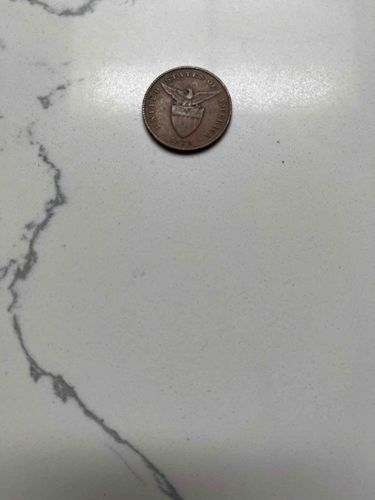
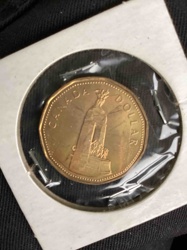
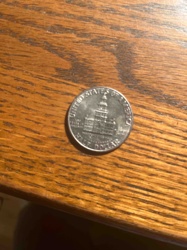
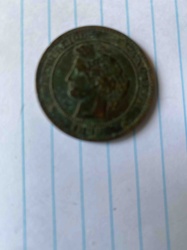
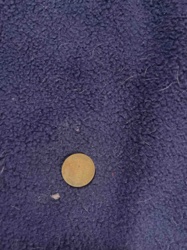
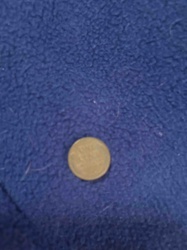
The item is a circular metal coin, appearing to be made of a copper or bronze alloy due to its reddish-brown color and visible patina. Its size appears to be consistent with a common circulation coin, though exact measurements are not possible from the image. The obverse side clearly displays a central motif featuring an eagle with outstretched wings perched atop a shield. This eagle design is characteristic of many national or official emblems. Surrounding the central design is text inscribed along the rim, which is partially legible. The visible portions of the text suggest words like "STATES" and "AMERICA", strongly indicating its origin as a U.S. coin. Below the shield, the year "1923" is clearly visible, dating the coin to the early 20th century. The surface of the coin exhibits significant wear, consistent with prolonged circulation. Details are softened, and the higher points of the design show considerable abrasion. There is a noticeable dark patina covering the entire surface, suggesting age and environmental exposure. No specific mint marks are discernible, nor are any unique manufacturing defects or repairs evident. The craftsmanship appears to be standard for a circulating coin of its era, indicating mass production rather than bespoke artistry. The overall condition is good to fair, with wear being the primary condition characteristic, rather than severe damage like bends or holes.
AI Appraisal Report
Based on my visual examination of the provided image, this is a United States 1923 Circulating Coin, likely a Peace Dollar (given the eagle and 'STATES OF AMERICA' inscription typical of that series for the year). The reddish-brown color suggests a copper/bronze alloy, however, Peace Dollars are silver, so this color would indicate significant toning or environmental exposure, or potentially a base metal forgery. The obverse clearly shows the year "1923" and the characteristic eagle design. The condition is fair to good, exhibiting considerable wear consistent with prolonged circulation. Details are softened, and higher points show abrasion, which aligns with common circulated examples of coins from this era. The noticeable dark patina suggests age and environmental exposure. No mint marks are discernible from the image, which impacts a more precise valuation. \n\nIn terms of market conditions, 1923 Peace Dollars are not considered rare, especially in circulated grades. Demand is consistent among collectors, but high-grade examples command the most attention. The significant wear on this coin limits its collectible premium. \n\nThe primary factor impacting value is the heavily circulated condition. While the coin is old, its common date and wear prevent it from achieving high values. The uncertainty of the true metal composition based on the image's color is a significant concern. If this is indeed a silver Peace Dollar, the color is anomalous. If it's a base metal copy, its numismatic value would be negligible.\n\nLimitations in authenticity verification are significant. From an image alone, I cannot definitively confirm the coin's authenticity or its metallic composition. A physical, in-person examination is crucial to verify its weight, diameter, thickness, and metallic composition (e.g., specific gravity test, XRF analysis) to rule out counterfeiting or base metal slugs. Examination under magnification would also reveal details not visible here, such as die cracks, contact marks, and true surface characteristics. Provenance documentation, if available, would further enhance confidence in its legitimacy.