AI identification & appraisal estimate

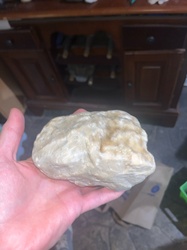
Rough mineral specimen consistent with quartz or citrine

This name is the AI's identification of the item — it may be incorrect.

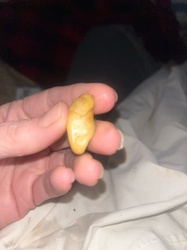
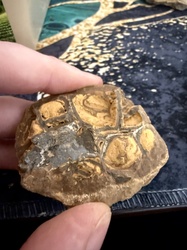
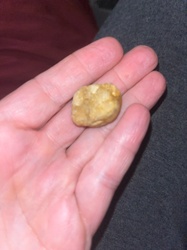
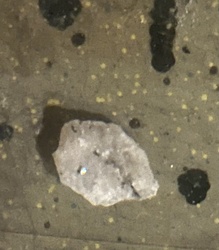
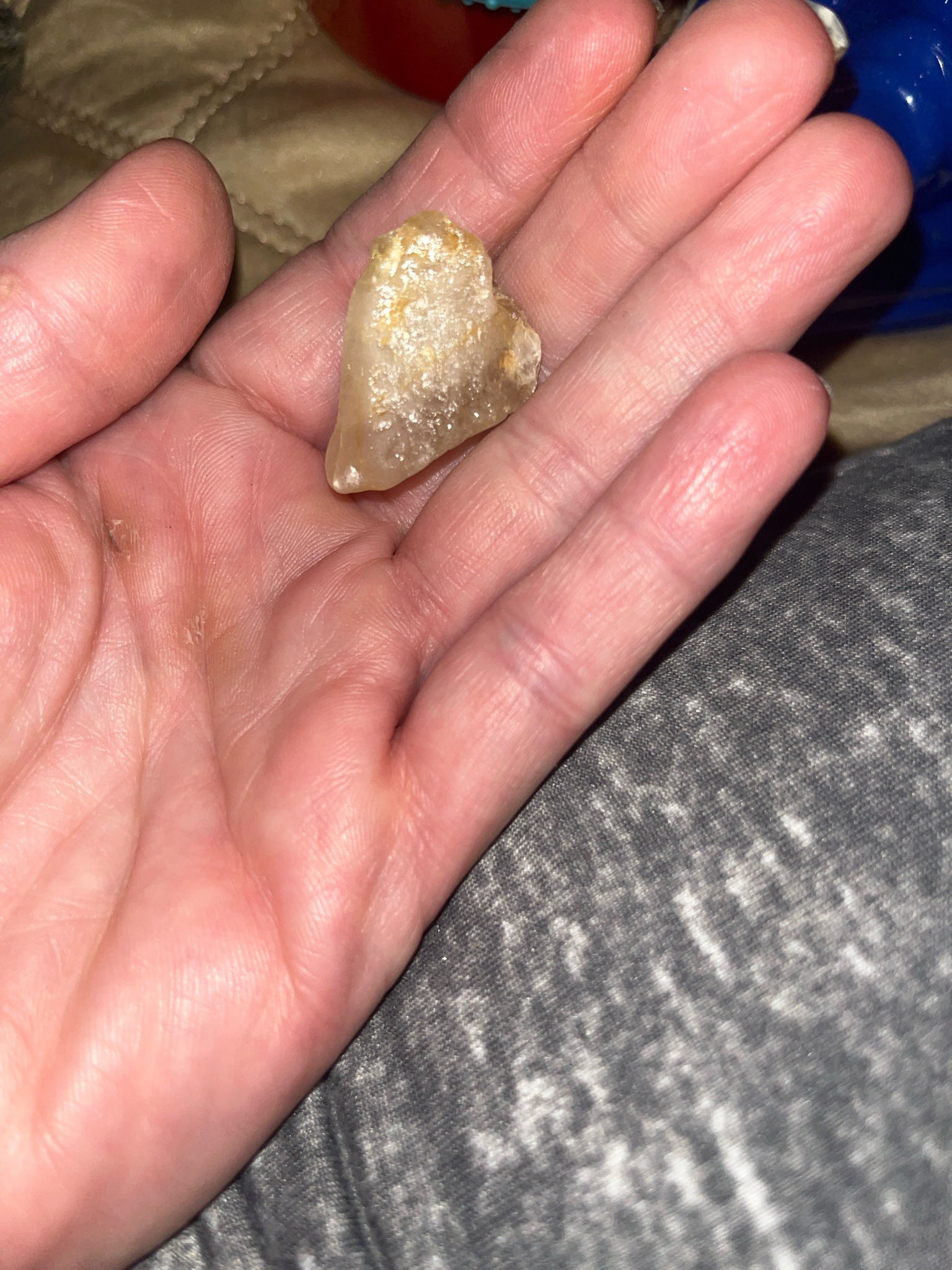
Submitted photo of Rough mineral specimen consistent with quartz or citrine
Photo submitted by the user — not generated by AI

AI Estimated Value

Not an official valuation

$5 - $15

AI estimate as of June 12, 2026 · verify with a professional before acting

AI-Generated · Verify before acting

Everything on this page is generated by AI for informational purposes only. AI can make mistakes — the AI may misidentify items or misattribute them (artist, maker, brand, designer, origin, era). This is not an official valuation and should not be used for insurance, sale, tax, estate, legal, or lending purposes — or any decision requiring a certified appraisal. It is not an authoritative claim about any person, brand, or rights holder — do not share or rely on it as a factual statement about a third party. Always consult qualified professionals before making financial decisions.

Read the full disclaimer

AI Item Analysis

This item is a small, rough mineral specimen, approximately 2 to 2.5 centimeters in length, held in a person's palm for scale. It exhibits a pale yellow to light amber coloration that is translucent in some areas and opaque in others, with a sugary or crystalline surface texture consistent with macrocrystalline quartz. The overall shape is irregular and somewhat triangular or heart-like, appearing to be a natural fragment rather than a cut gemstone. The surface shows a slightly vitreous to greasy luster with visible internal fractures and surface irregularities typically found in raw minerals. Some areas appear slightly frosted or have iron-staining, which results in darker brownish-yellow patches. Its appearance is stylistically consistent with common quartz variants such as citrine or possibly a weathered piece of quartzite. No specific locality, age, or chemical composition can be identified from the image alone, as physical tests for hardness and cleavage are required for an accurate geological determination. The identification is based purely on visible color and crystalline habit.
AI Appraisal Report

Based on my visual analysis of the provided image, I have examined this rough mineral specimen, which measues approximately 2 to 2.5 centimeters. The specimen exhibits characteristics consistent with a pale yellow macrocrystalline quartz, possibly citrine or iron-stained quartz. I can observe a sugary surface texture and a vitreous luster, though I cannot verify the mineral's hardness, specific gravity, or chemical composition without a physical inspection. This identification remains a hypothesis based on visible color and habit. The value estimate of $5 to $15 reflects the current retail market for small, unrefined mineral samples of this size and quality. In the general market for lapidary rough and mineral specimens, similar items often sell at low price points unless they possess exceptional transparency or rare provenance. Because this piece appears to be a natural fragment with visible internal fractures and surface irregularities, its value is primarily as a decorative or educational sample. To move beyond this working assumption, scientific testing such as a Mohs hardness test or refractive index measurement would be required. If this specimen were found to be a synthetic material or common glass imitation—which I cannot rule out from a photo alone—the value would be negligible, likely under $2. Conversely, should it be identified as a rare variety or from a specific sought-after locality, the value might slightly exceed this range, though the current condition suggests it is a common geological occurrence. My estimate assumes the item is a natural mineral as described, but final value depends on physical authentication.

Keep exploring

More rocks and minerals appraisals

Get your items appraised

Instant AI-powered appraisal estimates from a photo

Browse More Appraisals