AI Appraisal Estimate

AI-generated estimates · not official valuations

From the user

What was submitted

Photo and notes provided by the user — not generated by AI

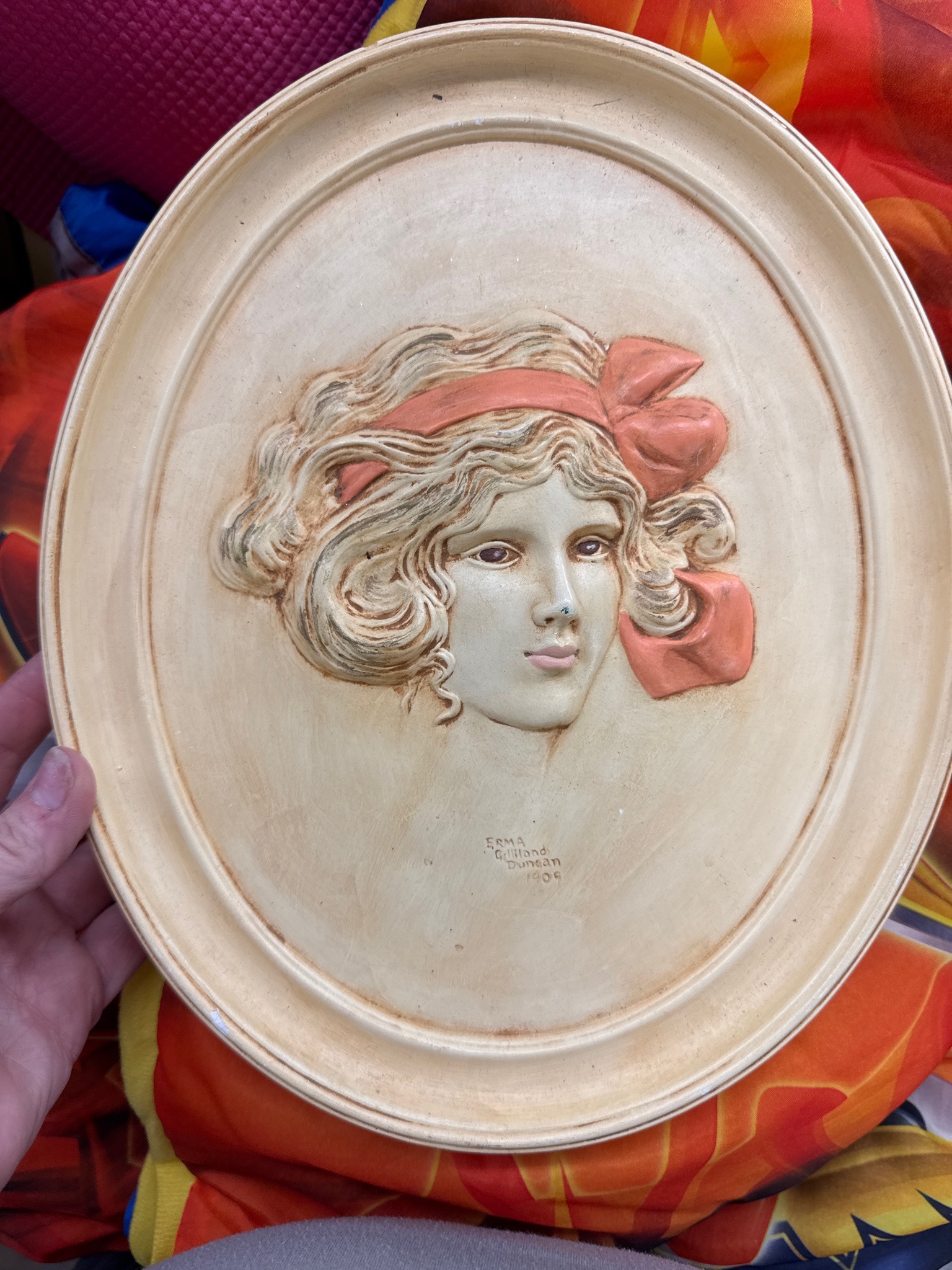
Submitted item photo
Submitted photo · July 18, 2026

User's notes

No additional notes provided.

AI analysis below

AI appraisal

AI analysis & estimate

AI-Generated · Verify before acting

Everything below is generated by AI for informational purposes only. AI can make mistakes — the AI may misidentify items or misattribute them (artist, maker, brand, designer, origin, era). This is not an official valuation and should not be used for insurance, sale, tax, estate, legal, or lending purposes — or any decision requiring a certified appraisal. It is not an authoritative claim about any person, brand, or rights holder — do not share or rely on it as a factual statement about a third party. Always consult qualified professionals before making financial decisions.

Read the full disclaimer

AI Identification

·Not independently authenticated·Verify before acting

Oval bas-relief wall plaque bearing the signature 'Erma Gilliland Duncan'

Decorative Arts

AI Estimated Value

·Not an official valuation·Verify before acting

$150 - $350

As of July 18, 2026

AI Item Analysis

·AI can make mistakes·Verify before acting
This item is an oval-shaped bas-relief plaque featuring the bust of a young woman with wavy hair and a large pink bow, stylistically consistent with early 20th-century decorative arts. The plaque appears to be made of a molded material, such as plaster, chalkware, or a similar composite, with a painted or glazed finish in cream, peach, and muted brown tones. It bears a handwritten or inscribed signature that reads 'ERMA Gilliland Duncan 1909' toward the bottom of the central field. The girl depicted has large, stylized eyes and a gentle expression, characteristic of the 'Gibson Girl' aesthetic popular during that era. The construction includes a molded integral frame with concentric oval ribbing. Visible condition issues include minor surface scuffing, particularly on the tip of the nose where a small green mark is present, and some edge wear consistent with age. This item is consistent with Duncan’s known works from the early 1900s, though the presence of the signature and date are considered hypotheses and would require physical inspection to determine if they were applied at the time of manufacture or later. Without physical testing of the material composition and back-side construction, this remains a stylistic attribution.
AI Appraisal Report

·AI can make mistakes·Verify before acting
Based on the provided imagery, I have examined this oval bas-relief plaque featuring a bust in the early 20th-century aesthetic. The item bears a signature and date consistent with the name 'Erma Gilliland Duncan 1909'. While this marking suggests a specific historical creator, I cannot verify its validity from a photograph alone; it remains a hypothesis that would require physical inspection to determine if the signature was inscribed during manufacture or added post-production. The material appears to be a molded composite such as chalkware or plaster, though I cannot definitively identify the substrate without examining the weight and back-side construction. The value of $150-$350 is based on the assumption that the piece is a period-correct work from the early 1900s. Visible condition issues, including surface scuffing on the nose and edge wear, suggest minor degradation that is factored into this estimate. The market for Edwardian-era decorative plaques remains niche, with demand driven primarily by collectors of aesthetic movement ephemera. If this item were discovered to be a later reproduction or a contemporary piece executed in an older style, the value would likely decrease to a decorative range of $25-$50. To refine this estimate, an in-person examination by a specialist in American decorative arts would be necessary to confirm the material composition and evaluate the depth of the inscribed signature. Documentation of provenance or scientific testing of the pigments and binder would also be required to support the 1909 dating hypothesis. As it stands, this appraisal reflects a stylistic attribution based on visual characteristics and common market behavior for similarly marked items of the period.

Related Tags

Explore similar items and categories

Get your items appraised

Instant estimates of your treasures with AI-powered appraisals

Browse More Appraisals