AI estimate as of October 20, 2025 · verify with a professional before acting
AI-Generated · Verify before acting
Everything on this page is generated by AI for informational purposes only. AI can make mistakes — the AI may misidentify items or misattribute them (artist, maker, brand, designer, origin, era). This is not an official valuation and should not be used for insurance, sale, tax, estate, legal, or lending purposes — or any decision requiring a certified appraisal. It is not an authoritative claim about any person, brand, or rights holder — do not share or rely on it as a factual statement about a third party. Always consult qualified professionals before making financial decisions.
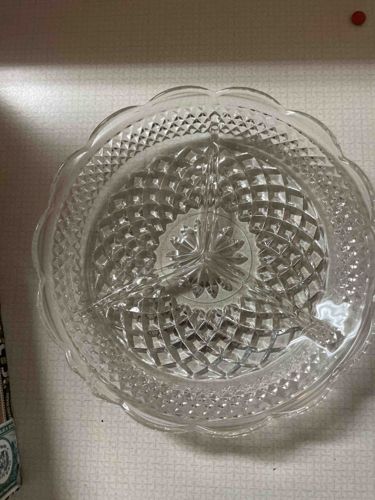
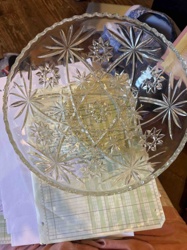
This item is a clear, colorless pressed glass serving dish, characterized by its circular shape and three-section division. The dish features a decorative scalloped or ruffled edge around its perimeter, indicating a deliberate design choice often seen in vintage glassware. The entire surface of the dish, both the base and the dividing walls, is adorned with an intricate diamond point or hobnail pattern, which creates a multifaceted, light-reflecting texture. In the very center, where the three sections converge, there is a distinct starburst or floral motif, providing a focal point and additional aesthetic appeal. The material appears to be standard pressed glass, which, while durable, can sometimes show molding lines or slight imperfections from the manufacturing process, though none are clearly visible in the provided image. The overall construction suggests a sturdy, utilitarian piece intended for serving appetizers, candies, or relishes. The style points to an estimated age from the mid-20th century, a popular period for patterned pressed glass. There are no readily visible chips, cracks, or significant wear markings, suggesting it is in good, used condition. No specific maker's marks or signatures are discernable from the image. The craftsmanship is typical of mass-produced pressed glass, focusing on decorative patterns achieved through molds.
AI Appraisal Report
I have visually examined this clear, colorless pressed glass serving dish. Its circular form, three divisions, scalloped edge, and diamond point/hobnail pattern with a central starburst motif are characteristic of mid-20th century pressed glass. Based on the image, the condition appears good, with no visible chips, cracks, or significant wear, which is positive for its value as a used item. The authenticity is consistent with mass-produced pressed glass of the era; the design elements align with common patterns from that period.
Market conditions for vintage pressed glass of this type are generally stable but modest. Comparables often include similar divided dishes from makers like Anchor Hocking, Federal Glass, or Duncan & Miller, which typically sell in the $10-$30 range, depending on pattern, condition, and specific mold. Demand for such utilitarian yet decorative pieces is consistent among collectors of vintage glassware and those seeking functional entertaining pieces for a retro aesthetic. This particular pattern, while attractive, is not exceptionally rare or from a highly sought-after manufacturer (no maker's mark is visible), which limits its top-end value. Factors impacting value positively include its good condition; negatively, the commonality of the design and lack of a definitive maker.
A limitation in this remote appraisal is the inability to physically inspect for subtle flaws such as manufacturing imperfections (mold lines, air bubbles), minor scratches not obvious in images, or subtle signs of wear that would only be apparent upon handling. A physical examination could also confirm the glass type precisely. Provenance documentation could enhance value if it linked the piece to a known collection or specific historical context, though this is rare for this type of item. Scientific testing is not typically applied to items of this market value for authentication purposes.