AI Appraisal Estimate

AI-generated estimates · not official valuations

From the user

What was submitted

Photo and notes provided by the user — not generated by AI

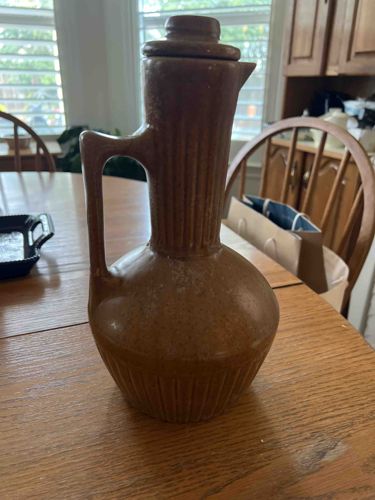
Submitted item photo
Submitted photo · May 28, 2026

User's notes

No additional notes provided.

AI analysis below

AI appraisal

AI analysis & estimate

AI-Generated · Verify before acting

Everything below is generated by AI for informational purposes only. AI can make mistakes — the AI may misidentify items or misattribute them (artist, maker, brand, designer, origin, era). This is not an official valuation and should not be used for insurance, sale, tax, estate, legal, or lending purposes — or any decision requiring a certified appraisal. It is not an authoritative claim about any person, brand, or rights holder — do not share or rely on it as a factual statement about a third party. Always consult qualified professionals before making financial decisions.

Read the full disclaimer

AI Identification

·Not independently authenticated·Verify before acting

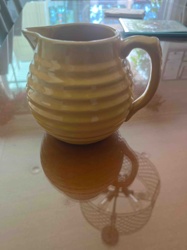
Mid-Century Modern Red Wing Pottery 'Village' Teapot/Pitcher with Lid

Vintage American Art Pottery

AI Estimated Value

·Not an official valuation·Verify before acting

$45.00 - $65.00

As of May 28, 2026

AI Item Analysis

·AI can make mistakes·Verify before acting
This item is a vintage ceramic pitcher or lidded teapot from the 'Village' pattern line produced by Red Wing Pottery, likely dating from the 1960s. The piece features a distinct bulbous body that tapers into a vertical neck decorated with vertical ribbing, a design motif that is mirrored at the base for visual balance. It is crafted from heavy stoneware or earthen pottery and finished in a characteristic speckled brown or 'Rust' matte glaze, which was a hallmark of the Mid-Century Modern rustic aesthetic. The vessel includes an integrated, angular handle that connects the body to the upper neck and a short, triangular pouring spout. It is topped with a matching flat-domed lid that sits flush within the rim. Physically, the item exhibits the heavy, durable construction typical of American art pottery from this era. The surface shows some white calcification or light surface residue, common with age and use, but otherwise appears free of significant chips or structural cracks. This pattern was designed under the creative direction of Eva Zeisel or Charles Murphy, representing a transition from high-style modernism to more organic, earth-toned 'casual' dining ware popular in the post-war era.
AI Appraisal Report

·AI can make mistakes·Verify before acting
Based on my visual examination of this Red Wing Pottery 'Village' lidded pitcher, I find it to be a genuine example of the pattern's mid-century production. The 'Village' line, designed by Charles Murphy and released in 1963, is characterized by its earthy, hand-thrown appearance and the 'Rust' speckled glaze seen here. The condition appears structurally sound; I have noted the white mineral deposits on the surface which suggest use with hard water. While these do not diminish the value significantly, a professional cleaning would be required to restore the matte finish to its optimal aesthetic state. The market for Red Wing pottery remains stable, though 'Village' is considered one of the more common 'casual' lines compared to the highly sought-after Eva Zeisel designs. Recent sales of similar lidded pitchers in the secondary market typically fall within the $45 to $65 range. The value is supported by the presence of the original lid, which is frequently lost or damaged. However, the current trend toward 'Grandmillennial' and rustic MCM decor keeps demand for this specific pattern steady among utilitarian collectors. Note: This appraisal is based strictly on photographic evidence. A full authentication would require a physical inspection to verify the 'Red Wing USA' incised mark on the base, which is often partially obscured by the thick glaze. I would also need to check for 'flea bites' along the inner rim and any professional restorations that may be invisible in photographs. In-person examination is the only way to confirm the absence of hairline fractures that can occur in heavy stoneware due to thermal shock.

Get your items appraised

Instant estimates of your treasures with AI-powered appraisals

Browse More Appraisals