Antique Post Drill
Antique Tools & Hardware

Antique Post Drill

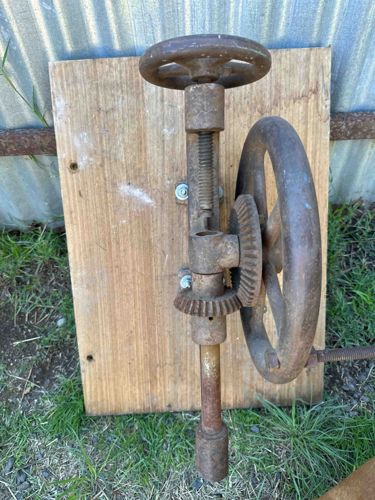
This is a vintage manual post drill, commonly used in blacksmithing or general metalwork during the late 19th to early 20th centuries. The tool is primarily constructed from heavy cast iron and steel, featuring a prominent flywheel and a handwheel at the top intended for adjusting the feed mechanism. The mechanism utilizes bevel gears to translate the horizontal rotation of the hand crank (not fully visible) into the vertical rotation of the spindle. The device is currently mounted to a weathered wooden board which serves as its 'post' for stability. Physically, the entire unit exhibits significant surface rust and a heavily oxidized patina, which is typical for industrial tools of this age that have been stored in non-climate-controlled environments. There are no clearly visible maker's marks in the image, though they were often stamped into the main casting or the flywheel spokes. The gears appear to have all teeth intact, though the presence of oxidation suggests that the mechanical movement may be seized or stiff and would require thorough cleaning and lubrication to restore functionality. The tool represents a rugged example of pre-electric industrial craftsmanship, designed for durability and high-torque drilling tasks in a shop setting.
Estimated Value

$100.00 - $175.00

Basic Information

Category

Antique Tools & Hardware

Appraised On

March 7, 2026

Estimated Value

$100.00 - $175.00

Item Description

This is a vintage manual post drill, commonly used in blacksmithing or general metalwork during the late 19th to early 20th centuries. The tool is primarily constructed from heavy cast iron and steel, featuring a prominent flywheel and a handwheel at the top intended for adjusting the feed mechanism. The mechanism utilizes bevel gears to translate the horizontal rotation of the hand crank (not fully visible) into the vertical rotation of the spindle. The device is currently mounted to a weathered wooden board which serves as its 'post' for stability. Physically, the entire unit exhibits significant surface rust and a heavily oxidized patina, which is typical for industrial tools of this age that have been stored in non-climate-controlled environments. There are no clearly visible maker's marks in the image, though they were often stamped into the main casting or the flywheel spokes. The gears appear to have all teeth intact, though the presence of oxidation suggests that the mechanical movement may be seized or stiff and would require thorough cleaning and lubrication to restore functionality. The tool represents a rugged example of pre-electric industrial craftsmanship, designed for durability and high-torque drilling tasks in a shop setting.
Get Your Items Appraised

Instant estimates of your treasures with AI-powered instant appraisals

Browse More Appraisals