AI estimate as of September 2, 2025 · verify with a professional before acting
AI-Generated · Verify before acting
Everything on this page is generated by AI for informational purposes only. AI can make mistakes — the AI may misidentify items or misattribute them (artist, maker, brand, designer, origin, era). This is not an official valuation and should not be used for insurance, sale, tax, estate, legal, or lending purposes — or any decision requiring a certified appraisal. It is not an authoritative claim about any person, brand, or rights holder — do not share or rely on it as a factual statement about a third party. Always consult qualified professionals before making financial decisions.
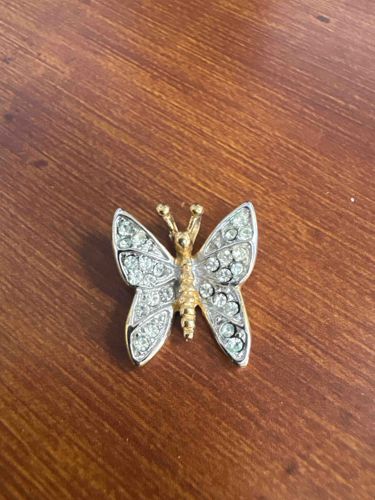
This is a butterfly-shaped brooch or pendant, crafted primarily from a gold-toned metal for the body and antennae, and a silver-toned metal for the wings. The wings are entirely encrusted with numerous small, round, clear rhinestones or crystals, which are individually set, likely in a pave or prong setting, giving the piece considerable sparkle. The arrangement of the stones on the wings appears systematic, with larger stones surrounded by smaller ones, suggesting attention to detail in their placement. The overall aesthetic is one of costume jewelry, likely from the mid to late 20th century. The metallic parts show some signs of wear, particularly the gold-toned body, which might indicate some tarnishing or loss of plating, though it could also be a patinated finish designed to look aged. The silver-toned wing edges are slightly raised, providing a bezel-like frame for the rhinestone-filled sections. Given the apparent age and materials, this piece is a good example of fashionable yet accessible jewelry of its era, often designed for visual impact rather than intrinsic material value. There are no visible maker's marks or signatures in the provided image.
AI Appraisal Report
Based on my visual examination of the provided image, this rhinestone butterfly brooch/pendant appears to be a piece of costume jewelry, likely from the mid to late 20th century. The intricate setting of numerous clear rhinestones on what appears to be silver-toned wings, contrasted with a gold-toned body and antennae, suggests a design focused on aesthetic appeal and sparkle. The stones appear systematically placed, which is a hallmark of decent quality costume jewelry from that era. I note some signs of wear, particularly on the gold-toned metal, which could be tarnishing, loss of plating, or an intentional patinated finish. The overall condition, while showing some age, seems consistent with a wearable accessory.
Authenticity, in the context of costume jewelry, typically refers to whether it is a genuine piece from the era it purports to be from and not a modern reproduction. From the image alone, it certainly appears period-appropriate. Market conditions for vintage costume jewelry are generally steady, driven by collectors and those seeking unique fashion accessories. Comparable items of similar quality, material, and age often retail in the $30-$70 range, depending on condition, design appeal, and vendor. Demand for specific butterfly motifs remains consistent.
Factors significantly impacting value include the material quality of the base metals (though likely non-precious), the security of the stone settings, and the overall design appeal. The absence of a visible maker's mark limits the potential for higher value, as signed pieces often command a premium. Rarity is low as similar rhinestone pieces were mass-produced.
It is crucial to note that my assessment is limited by the visual information available. For full authentication and a definitive condition report, an in-person examination would be necessary to assess the precise type of metal (e.g., base metal with plating), the security of each rhinestone setting, the integrity of the clasp/bail mechanism, and to definitively determine if the wear on the gold-toned areas is plating loss or patination. Provenance documentation, if available, could also add to its authenticated history, though it's less common for pieces of this value.