AI estimate as of October 14, 2025 · verify with a professional before acting
AI-Generated · Verify before acting
Everything on this page is generated by AI for informational purposes only. AI can make mistakes — the AI may misidentify items or misattribute them (artist, maker, brand, designer, origin, era). This is not an official valuation and should not be used for insurance, sale, tax, estate, legal, or lending purposes — or any decision requiring a certified appraisal. It is not an authoritative claim about any person, brand, or rights holder — do not share or rely on it as a factual statement about a third party. Always consult qualified professionals before making financial decisions.
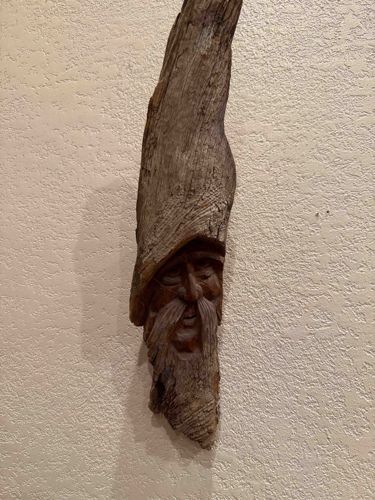
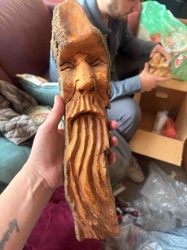
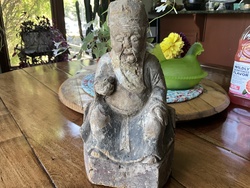
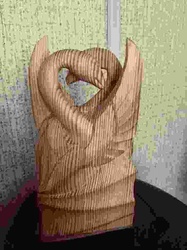
This item is a hand-carved wood sculpture, likely created from a piece of weathered wood, possibly driftwood or a section of bark, given its organic, irregular shape and rough texture. The carving depicts the face and upper torso of a bearded figure, strongly resembling a spirit or wizard, emerging from the wood. The face features carved eyes (closed or downcast), a prominent nose, and a detailed mustache and a long, flowing beard. The head is partially obscured by what appears to be a hood or pointed hat, formed by the natural curve and surface of the wood. The overall color is a natural, rustic brown to grey-brown, indicating either unfinished wood or a stain that maintains a natural aesthetic. The texture of the uncarved portions of the wood appears weathered with visible grain and rough, uneven surfaces, suggesting an aged or naturally distressed material. The carving itself shows attention to detail in the facial features, particularly the texture of the beard and mustache, suggesting a skilled artisan. There are no readily visible manufacturing marks, signatures, or stamps. The style is folk art or primitive, and the estimated age is difficult to ascertain without more information, but the weathered look suggests it could be contemporary folk art or a piece created at any time using naturally aged wood. The condition appears good for its style, with the natural aging and texture of the wood contributing to its aesthetic rather than detracting from it. There are no obvious signs of recent damage or repairs; the natural cracks and imperfections of the wood are integrated into the character of the piece.
AI Appraisal Report
I have examined the provided image of this hand-carved wood sculpture, depicting a bearded spirit or wizard emerging from weathered wood. Based on this visual examination, the condition appears good, with the natural aging and imperfections of the wood integral to its aesthetic. There are no obvious signs of recent damage or repairs. The carving displays a folk art or primitive style, with attention to detail in the facial features, particularly the texture of the beard and mustache, suggesting a skilled artisan. Authenticity, in terms of confirming it is a hand-carved piece as described, is supported by the visual evidence of tool marks and organic form. However, without in-person examination, I cannot definitively verify the specific wood type (e.g., driftwood vs. bark) or rule out subtle repairs. Signatures or other identifying marks are not visible in the image, limiting attribution to a specific artist or workshop. Market conditions for folk art carvings of this nature can be variable. Comparable pieces, often found in online marketplaces, artisan shops, or regional craft fairs, typically range from $100 to $500, with prices at the higher end usually reflecting established artists or unique, larger pieces. This piece has good detail and presence. Demand for such unique, handmade decorative items is steady within niche markets. Rarity is difficult to assess without knowing the artist; similar styles are created by numerous folk artists. Key factors impacting value include the skill evident in the carving, the overall aesthetic appeal, and the condition. Without physical inspection, I cannot conduct tests for wood age, specific species, or tool marks. Full authentication, including definitive age and artist attribution, would require in-person examination, potential provenance documentation (if available), and possibly technical analysis of the wood.