AI identification & appraisal estimate

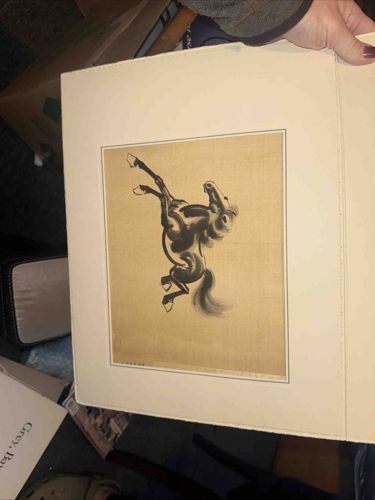
Ink Wash Painting of Rearing Horse on Silk

Submitted photo of Ink Wash Painting of Rearing Horse on Silk
Photo submitted by the user — not generated by AI

User's notes

Silk signed with stamp

These notes were written by the person who submitted this item. Appraiser.AI has not verified them, and the AI's identification and estimate may rely on them.

AI Estimated Value

Not an official valuation

$250-400

AI estimate as of December 2, 2025 · verify with a professional before acting

AI-Generated · Verify before acting

Everything on this page is generated by AI for informational purposes only. AI can make mistakes — the AI may misidentify items or misattribute them (artist, maker, brand, designer, origin, era). This is not an official valuation and should not be used for insurance, sale, tax, estate, legal, or lending purposes — or any decision requiring a certified appraisal. It is not an authoritative claim about any person, brand, or rights holder — do not share or rely on it as a factual statement about a third party. Always consult qualified professionals before making financial decisions.

This analysis also relies on unverified notes provided by the user, which may be incomplete or inaccurate and could affect the result.

Read the full disclaimer

AI Item Analysis

This item is an ink wash painting depicting a rearing horse, executed on a piece of silk fabric, and presented within a mat board. The dominant colors are black and various shades of grey for the horse, contrasted against the light tan or beige color of the silk background. The horse is dynamically rendered, with its front legs raised high and its body slightly contorted, suggesting movement and power. The ink wash technique creates a fluid and expressive quality, with visible brushstrokes contributing to the texture and form of the horse. The silk material provides a subtle sheen and fine, visible weave, which adds to the artwork's delicate appearance. The painting is framed by a thin, dark inner border, possibly an ink line or a very thin mat, and then by a wider, off-white or cream-colored mat board, indicating it was prepared for framing or presentation. There appears to be a red stamp or seal (chop mark) in the lower left quadrant of the painting, which is characteristic of traditional East Asian artwork and signifies the artist's signature or studio. The overall condition appears good, with no obvious tears, creases, or significant discoloration visible on the silk or the painting itself from the provided image, though detailed inspection would be needed to confirm. The edges of the mat board also appear clean. The style suggests an East Asian, likely Chinese or Japanese, origin, possibly from the mid to late 20th century given the mounting style and lack of heavy aging seen in the visible areas.

AI Appraisal Report

I have examined the provided image of this ink wash painting of a rearing horse on silk, presented within a mat board. The artwork demonstrates a dynamic composition and expressive brushwork characteristic of traditional East Asian ink wash techniques. The overall condition appears good from the image, with no visible tears, creases, or significant discoloration on the silk or the painting itself. The presence of a red chop mark (seal) in the lower left quadrant is consistent with artist signatures in this style. The silk medium, with its fine weave and subtle sheen, enhances the delicate aesthetic of the piece. Authenticity, based solely on visual examination of an image, is limited. While the style and chop mark suggest an East Asian origin, verifying the artist's identity, the age of the piece, and whether it is an original work or a later reproduction without physical inspection is challenging. Market comparables for unsigned or unattributed ink wash paintings on silk, especially those of good quality but without established provenance, typically fall within the $200-$500 range. Signed works by recognized artists command significantly higher values, but without confirmation of the artist's identity and oeuvre, this piece remains in a more accessible category. Demand for decorative East Asian art remains steady, but rarity is not a significant factor here without a known artist or unique historical context. To fully authenticate this piece, an in-person examination would be crucial to assess the physical properties of the silk, the precise nature of the ink application, and the age of the materials. Examination of the chop mark by an expert in East Asian seals could help identify the artist. Additionally, any provenance documentation, such as receipts or exhibition history, would greatly aid in confirming its authenticity and potentially increasing its value.

Keep exploring

More fine art print/painting appraisals

Get your items appraised

Instant AI-powered appraisal estimates from a photo

Browse More Appraisals