AI Appraisal Estimate

AI-generated estimates · not official valuations

From the user

What was submitted

Photo and notes provided by the user — not generated by AI

Submitted item photo
Submitted photo · June 30, 2026

User's notes

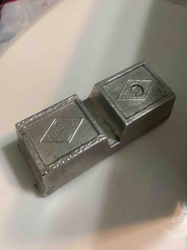
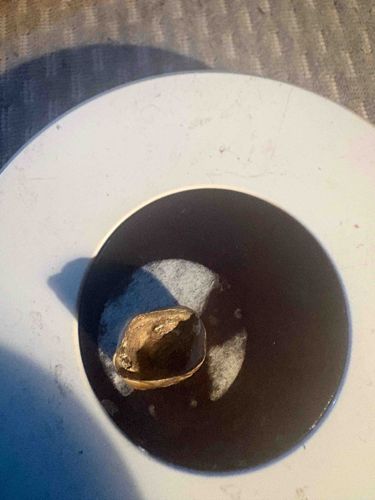
This is from a tooth has gold filling

AI analysis below

AI appraisal

AI analysis & estimate

AI-Generated · Verify before acting

Everything below is generated by AI for informational purposes only. AI can make mistakes — the AI may misidentify items or misattribute them (artist, maker, brand, designer, origin, era). This is not an official valuation and should not be used for insurance, sale, tax, estate, legal, or lending purposes — or any decision requiring a certified appraisal. It is not an authoritative claim about any person, brand, or rights holder — do not share or rely on it as a factual statement about a third party. Always consult qualified professionals before making financial decisions.

Note

This analysis also relies on unverified notes provided by the user, which may be incomplete or inaccurate and could affect the result.

Read the full disclaimer

AI Identification

·Not independently authenticated·Verify before acting

Gold Dental Inlay/Onlay

Dental/Medical Collectibles & Scrap Precious Metals

AI Estimated Value

·Not an official valuation·Verify before acting

$45.00 - $75.00

As of June 30, 2026

AI Item Analysis

·AI can make mistakes·Verify before acting
This item consists of a single gold dental restoration, specifically a filling or onlay crafted from a high-noble gold alloy. The piece exhibits a bright, yellowish metallic luster consistent with dental gold which typically ranges from 16 to 22 karats for durability and biocompatibility. The restoration features a complex, irregular anatomical shape designed to replicate the occlusal (surface) contours of a human molar or premolar. Its surface shows distinct indentations and ridges that align with natural tooth morphology. Regarding condition, the piece shows surface wear and abrasions consistent with long-term masticatory use. Small fragments of dark organic or cementation material are visible clinging to the underside where the inlay was originally bonded to the tooth structure. No specific maker's marks are visible, as these are custom-cast by dental technicians for individual patients. The craftsmanship indicates professional dental fabrication involving the 'lost wax' casting method. Based on the practice of using gold for permanent restorations, this item likely dates from the mid-to-late 20th century. The value of this item is primarily derived from its precious metal content rather than its function as a medical prosthetic.
AI Appraisal Report

·AI can make mistakes·Verify before acting
I have conducted a visual examination of the nineteenth or twentieth-century dental inlay. The item displays the characteristic anatomical morphology and bright yellow luster associated with high-noble dental alloys. Based on my assessment of the casting quality and the presence of residual dental cement, the piece is consistent with a custom-fabricated lost-wax casting. The item shows surface wear typical of several decades of masticatory use. The market for dental gold is driven almost exclusively by the spot price of precious metals. Dental inlays are generally composed of 'Type III' or 'Type IV' gold alloys, which typically contain between 60% to 78% pure gold (roughly 14k to 18k), alloyed with silver, copper, and platinum group metals for hardness. While the artistry of the dental technician is evident, it holds no collectible value as a medical artifact; its worth is calculated by multiplying its weight by the purity percentage and current market spot price, minus a refining fee (usually 10-20%). Demand for dental scrap remains high among smelters but non-existent among private collectors. Without a physical scale, I estimate the weight at 1 to 2 grams. For a definitive valuation, an in-person examination is required. Specifically, an X-ray Fluorescence (XRF) scan is necessary to determine the precise metallurgical composition, as 'low-gold' or 'white-gold' alternatives can visually mimic high-noble alloys. Furthermore, a calibrated electronic scale measurement is required to finalize the scrap value. The absence of dental records (provenance) does not significantly impact value for scrap purposes.

Get your items appraised

Instant estimates of your treasures with AI-powered appraisals

Browse More Appraisals