AI estimate as of September 29, 2025 · verify with a professional before acting
AI-Generated · Verify before acting
Everything on this page is generated by AI for informational purposes only. AI can make mistakes — the AI may misidentify items or misattribute them (artist, maker, brand, designer, origin, era). This is not an official valuation and should not be used for insurance, sale, tax, estate, legal, or lending purposes — or any decision requiring a certified appraisal. It is not an authoritative claim about any person, brand, or rights holder — do not share or rely on it as a factual statement about a third party. Always consult qualified professionals before making financial decisions.
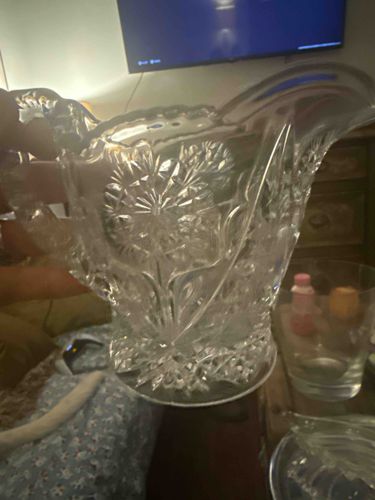
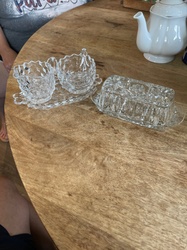
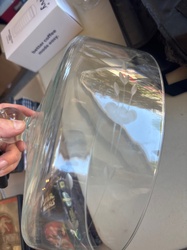
This appears to be a clear, colorless pressed glass creamer or small pitcher, likely part of an antique or vintage table setting. It features a decorative floral or botanical pattern, possibly a starburst or daisy-and-button type design, extensively covering its body. The pattern is characterized by deeply molded geometric cuts that give the glass a multifaceted, sparkling appearance, typical of pressed glass intended to mimic cut crystal. The handle is integrated seamlessly into the design, also made of clear glass with smooth, rounded edges for comfortable grip. The spout is well-defined and gently curved, suggesting it was designed for pouring liquids. The base of the pitcher is thick with a defined rim and also features a complementary geometric pattern, providing stability and enhancing the overall aesthetic. There are no visible chips, cracks, or repairs, indicating good preservation for its potential age. The glass appears clean and free from cloudiness or significant wear, though examining the base for shelf wear would be important in person. No manufacturing marks, signatures, or stamps are discernible from the provided images, which is common for many pressed glass pieces. Based on the style and typical patterns, this item could date from the late 19th century to the early 20th century (Victorian to Depression Era). The craftsmanship, while mass-produced through pressing, is still of good quality, evident in the clear definition of the patterns and the smooth finish of the glass. The intricate details of the pressed glass catch and refract light effectively, creating visual interest. It's a functional yet ornamental piece, demonstrating the aesthetic trends of its era.
AI Appraisal Report
Based on my visual examination of the provided image, this clear, colorless pressed glass creamer or small pitcher appears to be in excellent condition. I observe no chips, cracks, or repairs, and the glass presents as clean and free from cloudiness or significant wear, which is positive for its value. The extensive floral/geometrically patterned design, typical of late 19th to early 20th-century pressed glass (specifically Victorian to Depression Eras), is crisply defined, indicating good quality pressing. Its authenticity as a period pressed glass piece is highly probable based on the characteristic design and manufacturing style evident.
Market conditions for pressed glass creamer pitchers are generally modest. While collectible, these items are not exceedingly rare due to their mass-produced nature. Demand is steady among collectors of antique glassware and those seeking period-appropriate decorative items. Factors impacting value include the excellent condition and the attractive, well-executed pattern. However, the lack of a known manufacturer or pattern name, common for many such pieces, limits its upper value potential. It is a functional and ornamental piece demonstrating good craftsmanship from its era.
My assessment of authenticity and condition is based solely on the image. For full authentication and a definitive condition report, an in-person examination would be necessary to check for subtle nicks, internal flaws, cloudiness not visible in the photo, and especially shelf wear on the base. Provenance documentation, though rarely available for such common items, could add to its story but not significantly to its monetary value in this category.