AI estimate as of August 6, 2025 · verify with a professional before acting
AI-Generated · Verify before acting
Everything on this page is generated by AI for informational purposes only. AI can make mistakes — the AI may misidentify items or misattribute them (artist, maker, brand, designer, origin, era). This is not an official valuation and should not be used for insurance, sale, tax, estate, legal, or lending purposes — or any decision requiring a certified appraisal. It is not an authoritative claim about any person, brand, or rights holder — do not share or rely on it as a factual statement about a third party. Always consult qualified professionals before making financial decisions.
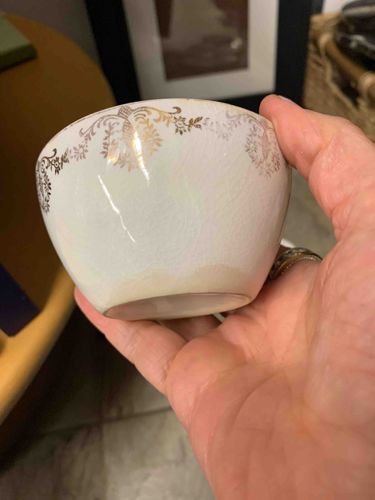
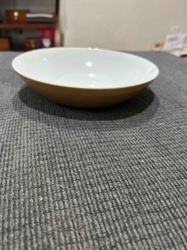
This item is a small, possibly handle-less bowl or a cup lacking its handle, crafted from ceramic material, likely porcelain or fine china, given its delicate appearance and white color. The primary color of the body is an off-white or cream, exhibiting a subtle iridescent sheen, which suggests a mother-of-pearl or lusterware glaze. A prominent feature is the extensive crazing visible across the surface, indicating fine crackling of the glaze, which is a common characteristic of older ceramic pieces and suggests its age or manufacturing process rather than outright damage. The rim of the vessel is adorned with an ornate gold-colored decorative band, featuring a repeating pattern of stylized foliage, scrolls, and possibly floral motifs. This gilding shows some wear, with areas of loss and fading, consistent with age and use. The vessel has a gently flared or tapered shape towards the top, with a slightly rounded profile. The base appears to be a small, flat unglazed or lightly glazed foot rim. The quality of the decoration, a transfer print or hand-gilded detail, points to a mid-20th century aesthetic, likely from the 1940s to 1960s. There are no visible maker's marks from the provided image, which would typically be on the underside of the base. The overall impression is one of an elegant, vintage piece that has been used but cared for, with the crazing adding to its antique appeal rather than detracting from it, unless it affects structural integrity (which cannot be determined from the image). The size appears to be suitable for individual portions, such as a teacup (without handle), bouillon cup, or small dessert bowl.
AI Appraisal Report
Upon visual examination of this ceramic cup, identified as a bouillon cup or handle-less teacup, I assess it to be a mid-20th century piece, likely dating from the 1940s to 1960s. The piece is crafted from a white ceramic, possibly fine china, and features a lustrous, iridescent glaze. The extensive crazing across the surface is consistent with its age and is considered a characteristic feature rather than damage, adding to its vintage appeal. The gold gilt decorative band around the rim, displaying a stylized foliate pattern, shows noticeable wear and fading, which is typical for an item of this vintage that has seen use.
The value of this item is primarily decorative. The market for individual, unmarked ceramic cups is limited. While the piece is elegant, comparable single bouillon cups from known mid-century manufacturers (like Haviland or Noritake) often sell for modest prices, typically in the $8-$20 range, especially without a matching saucer. The lack of a visible maker's mark significantly impacts its value, as its origin and manufacturer cannot be ascertained. Demand is low for single, non-collectible pieces, as most buyers seek complete sets.
It is crucial to note the limitations of this appraisal, as it is based solely on images. A physical examination is necessary to confirm the material, identify any hidden maker's marks, and assess the structural integrity, particularly concerning the crazing. Final authentication would require identifying the maker's mark or, in its absence, comparative analysis against documented patterns from the era. Without such information, its specific origins and rarity remain speculative.