AI Appraisal Estimate

AI-generated estimates · not official valuations

From the user

What was submitted

Photo and notes provided by the user — not generated by AI

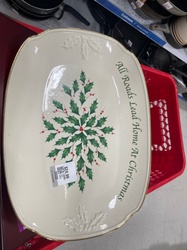
Submitted item photo
Submitted photo · June 2, 2026

User's notes

No additional notes provided.

AI analysis below

AI appraisal

AI analysis & estimate

AI-Generated · Verify before acting

Everything below is generated by AI for informational purposes only. AI can make mistakes — the AI may misidentify items or misattribute them (artist, maker, brand, designer, origin, era). This is not an official valuation and should not be used for insurance, sale, tax, estate, legal, or lending purposes — or any decision requiring a certified appraisal. It is not an authoritative claim about any person, brand, or rights holder — do not share or rely on it as a factual statement about a third party. Always consult qualified professionals before making financial decisions.

Read the full disclaimer

AI Identification

·Not independently authenticated·Verify before acting

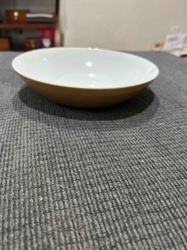
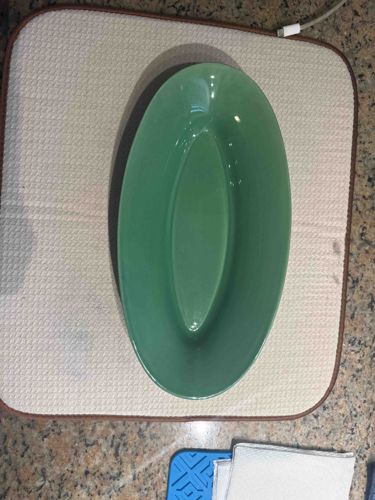
Green Ceramic Oval Serving Dish

Dinnerware/Serveware

AI Estimated Value

·Not an official valuation·Verify before acting

$15-30

As of June 2, 2026

AI Item Analysis

·AI can make mistakes·Verify before acting
This item is a modern, monochromatic green oval-shaped ceramic serving dish or platter. The dish features a smooth, glossy glaze that reflects light, suggesting a well-fired and finished surface. Its color is a distinct medium to dark sage green, consistent across the entire visible surface. The form is a shallow oval with a gently curved, slightly deeper indentation in the center, providing a well for liquids or smaller food items, characteristic of a relish tray or olive dish. The edges are softly rounded, indicating a comfortable handling experience. The construction appears to be molded ceramic, likely stoneware or porcelain due to its smooth finish and uniform color. No visible manufacturing marks, signatures, or stamps are discernible from the provided image. The overall condition appears excellent, with no obvious chips, cracks, or significant wear visible, and the glaze maintains its original luster. Minimal reflections on the surface may indicate slight surface abrasions or dust, but these are not clearly identifiable as damage. The style is contemporary and minimalist, prioritizing functionality and clean aesthetics, suggesting an estimated age from the late 20th century to the present. The craftsmanship appears to be of good quality, given the uniform glaze and absence of obvious imperfections in the molding.
AI Appraisal Report

·AI can make mistakes·Verify before acting
I have virtually examined this green ceramic oval serving dish. Based on the provided image, the item appears to be in excellent condition, with a uniform, glossy glaze and no visible chips, cracks, or significant wear. Its contemporary, minimalist aesthetic suggests it’s a modern piece, likely from the late 20th century to the present. The uniform color and smooth finish indicate good quality craftsmanship. However, a serving dish of this nature is generally mass-produced, and without any discernible maker's marks or unique artistic qualities, its value remains primarily utilitarian and decorative. The market for generic ceramic serveware is quite saturated. Comparable new items in this style can be found at home goods stores for $20-40, while secondhand examples typically fetch $10-25. There is no particular rarity or high demand for this specific design beyond its functional use. As such, the primary value drivers are its condition and aesthetic appeal, rather than provenance or unique artistic merit. Limitations: My assessment of condition and authenticity is based solely on the image. An in-person examination would be crucial to confirm the absence of hairline cracks, fleabites, or glaze inconsistencies not visible in the photograph. I would also look for any hidden maker's marks or stamps on the base that could indicate a specific manufacturer or designer, potentially impacting its value. Without physical inspection or provenance documentation, it's impossible to definitively authenticate the material beyond visual cues (e.g., stoneware vs. porcelain) or rule out manufacturing flaws beyond the visible surface. Scientific testing would be needed to precisely identify ceramic composition.

Get your items appraised

Instant estimates of your treasures with AI-powered appraisals

Browse More Appraisals