AI Appraisal Estimate

AI-generated estimates · not official valuations

From the user

What was submitted

Photo and notes provided by the user — not generated by AI

Submitted item photo
Submitted photo · May 27, 2026

User's notes

Money

AI analysis below

AI appraisal

AI analysis & estimate

AI-Generated · Verify before acting

Everything below is generated by AI for informational purposes only. AI can make mistakes — the AI may misidentify items or misattribute them (artist, maker, brand, designer, origin, era). This is not an official valuation and should not be used for insurance, sale, tax, estate, legal, or lending purposes — or any decision requiring a certified appraisal. It is not an authoritative claim about any person, brand, or rights holder — do not share or rely on it as a factual statement about a third party. Always consult qualified professionals before making financial decisions.

Note

This analysis also relies on unverified notes provided by the user, which may be incomplete or inaccurate and could affect the result.

Read the full disclaimer

AI Identification

·Not independently authenticated·Verify before acting

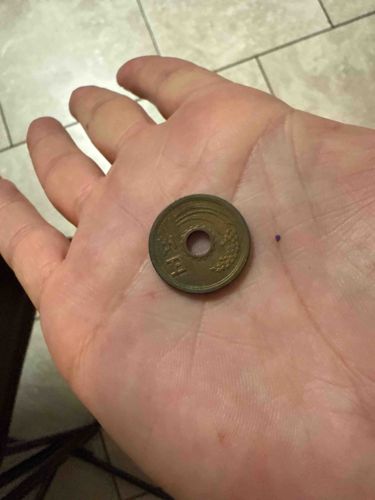
Japanese 5 Yen Coin (Go-en)

Numismatics / Currency

AI Estimated Value

·Not an official valuation·Verify before acting

$0.04 - $0.50

As of May 27, 2026

AI Item Analysis

·AI can make mistakes·Verify before acting
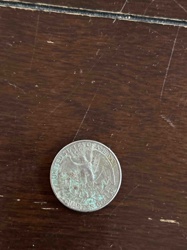
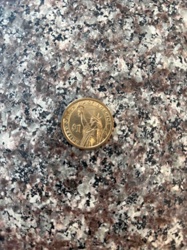
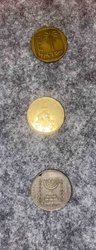
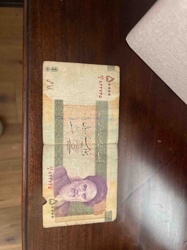
This item is a circulation-standard Japanese 5 Yen coin, frequently referred to as a 'Go-en' coin. It is characterized by its distinctive circular shape with a central hole, a design feature intended to save on raw materials and make the coin easily identifiable by touch. The coin is minted from a brass alloy (60-70% copper and 30-40% zinc), giving it a characteristic golden hue that has aged into a muted, dark brownish-gold patina in this specific specimen. The obverse side (visible) features a highly symbolic design including an ear of rice representing agriculture, horizontal lines at the top representing water or fisheries, and a gear around the central hole symbolizing industry. The denomination 'Five Yen' is written in kanji (五円) at the bottom. The reverse side, though not fully visible, typically bears the name of the issuing authority 'Japan' and the year of reign in kanji. Measuring 22mm in diameter and weighing approximately 3.75 grams, this coin shows evidence of significant circulation, including surface grime, localized darkening from oxidation, and softened detail on the rice stalks. The craftsmanship follows the standard high-precision mechanized minting of the Japan Mint. Given the Kaisho script style, this coin likely dates from the Showa era (1949-1958) or the later Heisei/Reiwa eras (1959-present), though the heavy oxidation suggests an older specimen from the mid-20th century.
AI Appraisal Report

·AI can make mistakes·Verify before acting
Upon visual examination of this Japanese 5 Yen (Go-en) coin, I find it to be a standard circulation strike minted from a brass alloy. The specimen exhibits a deep, darkened patina consistent with heavy oxidation and prolonged circulation. The presence of surface grime and the softening of the high-relief elements on the rice stalks indicate a grade of 'Fine' to 'Very Fine' by numismatic standards. Authenticity appears consistent with the mechanized minting processes of the Japan Mint; however, the heavy oxidation masks some of the finer diagnostic markers of the dies. From a market perspective, this coin is exceptionally common. Billions of these coins have been produced since the current design was introduced in 1949. While the 'Kaisho' (block script) variety minted between 1949 and 1958 carries a slight premium over modern 'Gothic' script issues, the value remains negligible in circulated condition. Comparables for such pieces typically sell in bulk lots where individual value rarely exceeds their face value (approx. $0.035 USD) or a nominal collector value of fifty cents. Factors limiting the value include the high mintage numbers and the lack of 'uncirculated' luster. Significant limitations exist in this digital appraisal: I cannot verify the exact weight to the hundredth of a gram, nor can I perform a ring test to confirm the alloy's resonance. A full authentication would require a physical inspection to check for 'altered holes'—a common deception in numismatics—and a definitive reading of the regnal date on the reverse to ensure it is not a rare key-date year. Absent these factors, this remains a low-value, high-utility specimen of Japanese currency.

Get your items appraised

Instant estimates of your treasures with AI-powered appraisals

Browse More Appraisals