AI estimate as of July 13, 2025 · verify with a professional before acting
AI-Generated · Verify before acting
Everything on this page is generated by AI for informational purposes only. AI can make mistakes — the AI may misidentify items or misattribute them (artist, maker, brand, designer, origin, era). This is not an official valuation and should not be used for insurance, sale, tax, estate, legal, or lending purposes — or any decision requiring a certified appraisal. It is not an authoritative claim about any person, brand, or rights holder — do not share or rely on it as a factual statement about a third party. Always consult qualified professionals before making financial decisions.
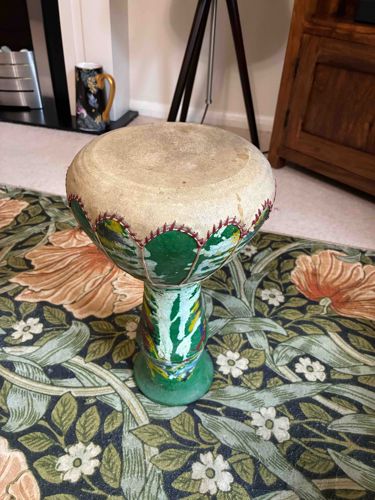
This item is an ornately decorated djembe drum, characterized by its goblet shape. The drum features a natural or animal hide skin head, likely goat or cowhide, which appears tautly stretched over the top opening. The skin exhibits a light, almost off-white or beige color with some visible patina and light discoloration from use or age, including minor surface scuffs. The edge of the skin head is secured to the drum body with what appears to be a distinctive, reddish-brown or dark sienna-colored lacing or stitching, forming a decorative zig-zag pattern around the circumference, contributing to its artisanal aesthetic. The body of the drum, from its wide upper section narrowing down to a flared base, is visually striking with its hand-painted design. The dominant color on the body is a vibrant, deep green, adorned with what looks like abstract or stylized natural motifs in various lighter greens, yellows, and possibly some blues and reds. The paint shows evidence of wear, with some areas appearing faded or chipped, particularly on raised surfaces or edges, suggesting age and handling. The overall construction appears solid, indicating it's likely crafted from wood or a similar resonant material beneath the painted exterior. The bottom rim of the drum also appears to be painted green. The craftsmanship, particularly the intricate lacing and hand-painted details, suggests it is either a traditional ethnic instrument or a decorative piece made in a similar style, possibly from West Africa where djembe drums originated. No obvious maker's marks or signatures are discernible from the image. Its visible wear and unique decoration suggest it might be an older, used piece rather than a modern, mass-produced item.
AI Appraisal Report
Upon examining the provided image of this goblet-shaped djembe drum, I assess its condition as good, commensurate with age and use. The natural hide head shows expected patination and minor scuffs, remaining taut. The distinctive reddish-brown lacing is intact, contributing significantly to its aesthetic. The hand-painted green body, with its stylized motifs, exhibits visible wear, including fading and chipping, which I consider typical for an item of this nature that has seen active use or display. This wear, in my opinion, enhances its character and suggests authenticity rather than detracting from it. The craftsmanship, particularly the lacing and detailed painting, strongly suggests it is an artisanal or traditional ethnic instrument, likely originating from West Africa, where djembe drums are culturally significant. This is not a mass-produced item. While decorative, its construction implies it is fully functional.
Market conditions for authentic, hand-crafted djembe drums vary. This particular drum's ornate decoration and apparent age make it more desirable than plain, mass-produced examples. Demand exists among collectors of ethnic musical instruments, world music enthusiasts, and those seeking unique decorative arts. Its rarity stems from its unique hand-painted design and likely individual craftsmanship. Factors significantly impacting its value include its presumed age, the intricate artistry, and its cultural significance.
My assessment of authenticity is based solely on visual cues from the image. Limitations exist; I cannot definitively verify the wood type, the exact age, or the precise origin without an in-person examination. For full authentication, I would require a physical inspection to assess the sound quality (if functional), the internal construction, and examine for any hidden marks. Provenance documentation, such as records of its acquisition or origin, would be invaluable. Scientific testing, like carbon dating for the wood or precise paint analysis, could further confirm its age and materials if required for a higher-value authentication.