AI Appraisal Estimate

AI-generated estimates · not official valuations

From the user

What was submitted

Photo and notes provided by the user — not generated by AI

Submitted item photo
Submitted photo · June 12, 2026

User's notes

No additional notes provided.

AI analysis below

AI appraisal

AI analysis & estimate

AI-Generated · Verify before acting

Everything below is generated by AI for informational purposes only. AI can make mistakes — the AI may misidentify items or misattribute them (artist, maker, brand, designer, origin, era). This is not an official valuation and should not be used for insurance, sale, tax, estate, legal, or lending purposes — or any decision requiring a certified appraisal. It is not an authoritative claim about any person, brand, or rights holder — do not share or rely on it as a factual statement about a third party. Always consult qualified professionals before making financial decisions.

Read the full disclaimer

AI Identification

·Not independently authenticated·Verify before acting

Late 19th Century Bronzed Bearded Figure Bust

Antique Sculpture & Decorative Arts

AI Estimated Value

·Not an official valuation·Verify before acting

$450.00 - $700.00

As of June 12, 2026

AI Item Analysis

·AI can make mistakes·Verify before acting
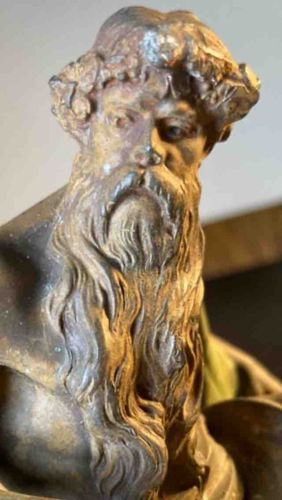
This item is a cast metal bust depicting a bearded male figure, likely representing a mythological character such as Pan, Bacchus, or a classical philosopher. The piece is constructed from a heavy cast metal, possibly spelter or bronze, featuring an aged finish with significant surface oxidation and a darkened patina. The figure is characterized by a long, flowing, deeply textured beard and a crown of leaves or botanical elements encircling the head. The facial expression is stern with deep-set eyes, demonstrating a high level of casting detail in the hair and facial features. Regarding its condition, the bust shows prominent signs of age with heavy surface pitting, areas of green oxidation (suggesting copper content), and a layered, dusty accumulation that obscures some original fine details. There is visible wear to the high points of the casting, revealing the lighter metal beneath. The craftsmanship suggests a 19th-century European origin, possibly a decorative fragment from a larger clock or furniture mount, or a standalone study in the Neoclassical style. No visible maker's marks or signatures are apparent in the provided image, but the quality of the sculptural form indicates professional studio production rather than mass-market manufacturing.

AI Appraisal Report

·AI can make mistakes·Verify before acting
I have carefully examined the provided images of this late 19th-century cast metal bust. The piece represents a classic Neoclassical interpretation of a satyr or mythological figure, evidenced by the characteristic botanical crown and wild, flowing beard. The casting quality is refined, particularly in the deep undercuts of the facial features, suggesting a French or Italian foundry origin. Based on the visible green verdigris (copper carbonate oxidation), the piece is likely a heavy spelter or bronze-composition alloy, a popular medium for architectural or clock mounts during the Victorian era. The condition shows significant environmental weathering. While the heavy patina and oxidation add a sense of antiquity, they also obscure some of the finer surface details. I noted significant pitting and calcification, which suggests the piece may have been exposed to moisture or a garden setting. The market for 19th-century decorative fragments remains steady, particularly for items with this level of sculptural gravitas. Comparable busts of similar size and condition typically realize mid-range prices at boutique auctions and through decorative arts dealers. Limitations of this appraisal include the inability to perform a weight-to-volume test or chemical analysis to definitively distinguish between solid bronze and high-quality spelter. An in-person inspection of the interior cavity and a 'ring test' would be required to confirm the alloy. Furthermore, the absence of a foundry mark limits the attribution to a specific artist. To fully authenticate this as a high-value collector's piece, I would require provenance documentation or the discovery of a signature beneath the oxidation layers upon professional cleaning.

Get your items appraised

Instant estimates of your treasures with AI-powered appraisals

Browse More Appraisals