Vintage Bottle Green Glass Cruet
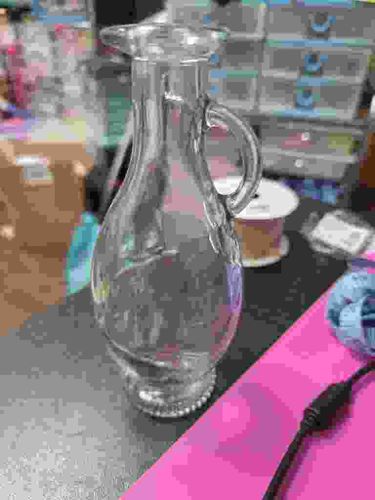
This item is an 8-inch tall glass cruet, likely intended for serving liquids such as oil or vinegar. Historically described as 'bottle green,' the glass in the image appears to have a subtle tint rather than a deeply saturated color, potentially consistent with mid-20th-century pressed or blown glass manufacturing. The piece features a classic pyriform or pear-shaped body that tapers upward into a slender neck, terminating in a flared rim with an integrated pouring spout. A simple looped glass handle is applied to the side, extending from the upper neck to the shoulder of the vessel. The base is notably decorative, featuring a beaded or 'hobnail' textured footring which adds stability and visual interest. In terms of condition, the glass retains a high degree of transparency with no immediately visible chips, cracks, or heavy clouding from mineral deposits. The craftsmanship suggests a utilitarian yet elegant design, typical of American or European tabletop glass from the 1940s through the 1960s. While no specific maker's mark is visible through the image, the bead-trimmed base is a common motif used by glass manufacturers like Fenton or Anchor Hocking during various production periods.
AI-Generated Appraisal Disclaimer
Estimated Value
$25.00-$45.00
Basic Information
Category
Vintage Glassware/Kitchenware
Appraised On
March 7, 2026
Estimated Value
$25.00-$45.00
Additional Details Provided By Owner
User Provided Information
8 inch tall bottle green cruet
Item Description
This item is an 8-inch tall glass cruet, likely intended for serving liquids such as oil or vinegar. Historically described as 'bottle green,' the glass in the image appears to have a subtle tint rather than a deeply saturated color, potentially consistent with mid-20th-century pressed or blown glass manufacturing. The piece features a classic pyriform or pear-shaped body that tapers upward into a slender neck, terminating in a flared rim with an integrated pouring spout. A simple looped glass handle is applied to the side, extending from the upper neck to the shoulder of the vessel. The base is notably decorative, featuring a beaded or 'hobnail' textured footring which adds stability and visual interest. In terms of condition, the glass retains a high degree of transparency with no immediately visible chips, cracks, or heavy clouding from mineral deposits. The craftsmanship suggests a utilitarian yet elegant design, typical of American or European tabletop glass from the 1940s through the 1960s. While no specific maker's mark is visible through the image, the bead-trimmed base is a common motif used by glass manufacturers like Fenton or Anchor Hocking during various production periods.
Get Your Items Appraised
Instant estimates of your treasures with AI-powered instant appraisals