AI estimate as of October 12, 2025 · verify with a professional before acting
AI-Generated · Verify before acting
Everything on this page is generated by AI for informational purposes only. AI can make mistakes — the AI may misidentify items or misattribute them (artist, maker, brand, designer, origin, era). This is not an official valuation and should not be used for insurance, sale, tax, estate, legal, or lending purposes — or any decision requiring a certified appraisal. It is not an authoritative claim about any person, brand, or rights holder — do not share or rely on it as a factual statement about a third party. Always consult qualified professionals before making financial decisions.
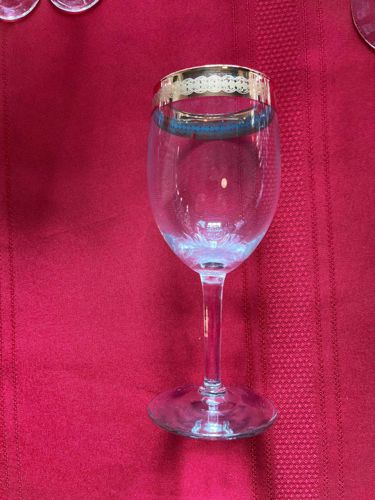
This item is a clear glass wine goblet, likely intended for serving wine, though its precise capacity is not discernable from the image. The glass features a classic stemmed design, comprising a round base, a slender stem, and a bowl-shaped top. The overall transparency of the glass material suggests it could be crystal or high-quality glass, designed to showcase the color of the beverage within. A prominent decorative element is a wide gold band encircling the rim of the bowl. This band is approximately a quarter to half-inch wide and features an intricate, repeating white or possibly frosted glass, lace-like or floral pattern against the gold background. Below this main gold band, there's a thinner, solid gold line. The area immediately beneath the gold rim and extending into the bowl appears to have a subtle blue-green tint, which might be an intentional design feature, a reflection, or possibly an enameling detail. The glass appears to be in good condition, with no visible chips, cracks, or significant wear to the gold decoration. The craftsmanship indicates a manufactured piece, possibly from the mid to late 20th century, given the style of the gold embellishment. The intricate pattern on the gold rim suggests a decorative, possibly formal, or celebratory use case for this glassware, indicating a moderate level of quality and design intent.
AI Appraisal Report
I have examined the provided image of this decorated wine glass. Visually, the glass appears to be in good condition, with no overt chips, cracks, or significant wear to the gold decoration discernible from the photograph. The style, featuring a classic stemmed form with a prominent, intricately patterned gold rim, suggests a manufactured piece likely from the mid to late 20th century. The subtle blue-green tint below the rim is an interesting detail that could be an intentional design choice, a reflection, or possibly an enamel application. Authenticity for general glassware of this type is usually not a primary concern, as counterfeiting is rare; however, without a physical inspection, I cannot confirm the exact material (e.g., crystal vs. high-quality glass) or detect hairline flaws or micro-abrasions that might impact value.
Market conditions for decorated glassware are moderate. While elegant, this style isn't currently a high-demand collectible, nor is it particularly rare. Comparables for similar gold-rimmed wine glasses, especially those from reputable but not high-end manufacturers, typically sell in the range of $15-30 per glass, depending on the pattern's desirability and overall condition, often sold in sets. Factors influencing value include the quality of the gold application, the intricacy of the pattern, and the glass manufacturer (if identifiable). Without manufacturer marks or provenance documentation, it's difficult to pinpoint a specific maker, which limits the upper end of its valuation. For a full authentication and definitive assessment of condition, an in-person examination is necessary to inspect for makers' marks, material quality, and any subtle damage not visible in the image.