AI estimate as of September 29, 2025 · verify with a professional before acting
AI-Generated · Verify before acting
Everything on this page is generated by AI for informational purposes only. AI can make mistakes — the AI may misidentify items or misattribute them (artist, maker, brand, designer, origin, era). This is not an official valuation and should not be used for insurance, sale, tax, estate, legal, or lending purposes — or any decision requiring a certified appraisal. It is not an authoritative claim about any person, brand, or rights holder — do not share or rely on it as a factual statement about a third party. Always consult qualified professionals before making financial decisions.
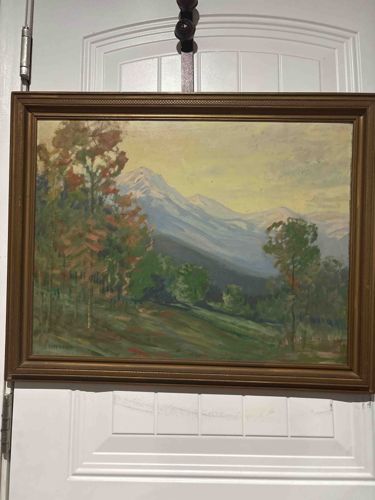
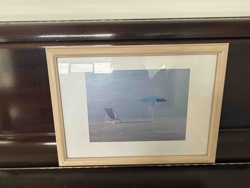
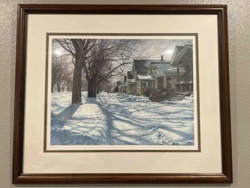
This item is an oil on canvas or board painting depicting a scenic mountain landscape, possibly in an Impressionistic or Tonalist style. The artwork is housed within a traditional, possibly gilded, wooden frame. The painting features a prominent mountain range in the background, rendered with cool blue and white tones suggesting snow-capped peaks or a misty atmosphere. The sky above is a soft yellow or pale orange, transitioning downwards, indicating either a sunrise, sunset, or simply a bright, diffused light source. In the midground and foreground, lush green hills and a scattering of trees are visible. The trees to the left exhibit autumnal colors, with hues of red, orange, and brown dominating, suggesting a seasonal depiction. The brushstrokes appear relatively loose and visible, contributing to a sense of texture and immediacy. The overall palette is muted but rich, with a focus on natural colors. The frame itself is a classic design, likely made of wood, with a gold or brass-toned finish. It features a finely detailed inner border with a patterned relief, possibly a rope or beaded motif, adding to its decorative appeal. The visible condition appears good, with no obvious signs of significant damage such such as cracks, chips, or major discoloration on the painting surface or the frame, although a closer inspection would be required to confirm. The style suggests it could date from the late 19th to mid-20th century, a common period for such landscape compositions. The craftsmanship of both the painting and the frame indicates a commercially produced artistic piece rather than a casual study.
AI Appraisal Report
Upon visual examination of this Mountain Landscape Painting in Gilt Frame, I assess its condition as good. The painting itself shows no immediately apparent signs of significant damage such as tears, punctures, or extensive paint loss. The colors appear vibrant, consistent with a well-preserved piece. The gilt frame also seems to be in good order, free from major chips, cracks, or significant gesso loss based on the provided image. The visible brushstrokes and overall aesthetic lean towards a commercially produced landscape piece from the late 19th to mid-20th century, a common period for Tonalist or Impressionistic-influenced landscapes. This suggests it is likely an unsigned or decoratively signed work rather than a piece by a highly recognized artist.
Market conditions for this type of decorative landscape painting are generally steady, particularly for well-maintained examples like this one. Comparables in the current market, often found in regional auctions or online art marketplaces, typically fall within a modest range. Demand for such pieces is present for interior decor, but they are not considered rare. Factors impacting value include the absence of an identifiable, documented artist and the decorative rather than fine art classification. Had an artist's signature been clear and attributable to a known hand, the value would, of course, be significantly higher. Authentication is limited through images alone; an in-person examination would be crucial to inspect for repairs, true canvas/board type, pigment analysis, and to thoroughly check the frame's integrity and material. Provenance documentation, such as prior ownership records or exhibition history, would be essential for full authentication and to potentially elevate its appraisal if a significant artist or history were associated.