AI Appraisal Estimate

AI-generated estimates · not official valuations

From the user

What was submitted

Photo and notes provided by the user — not generated by AI

Submitted item photo
Submitted photo · June 6, 2026

User's notes

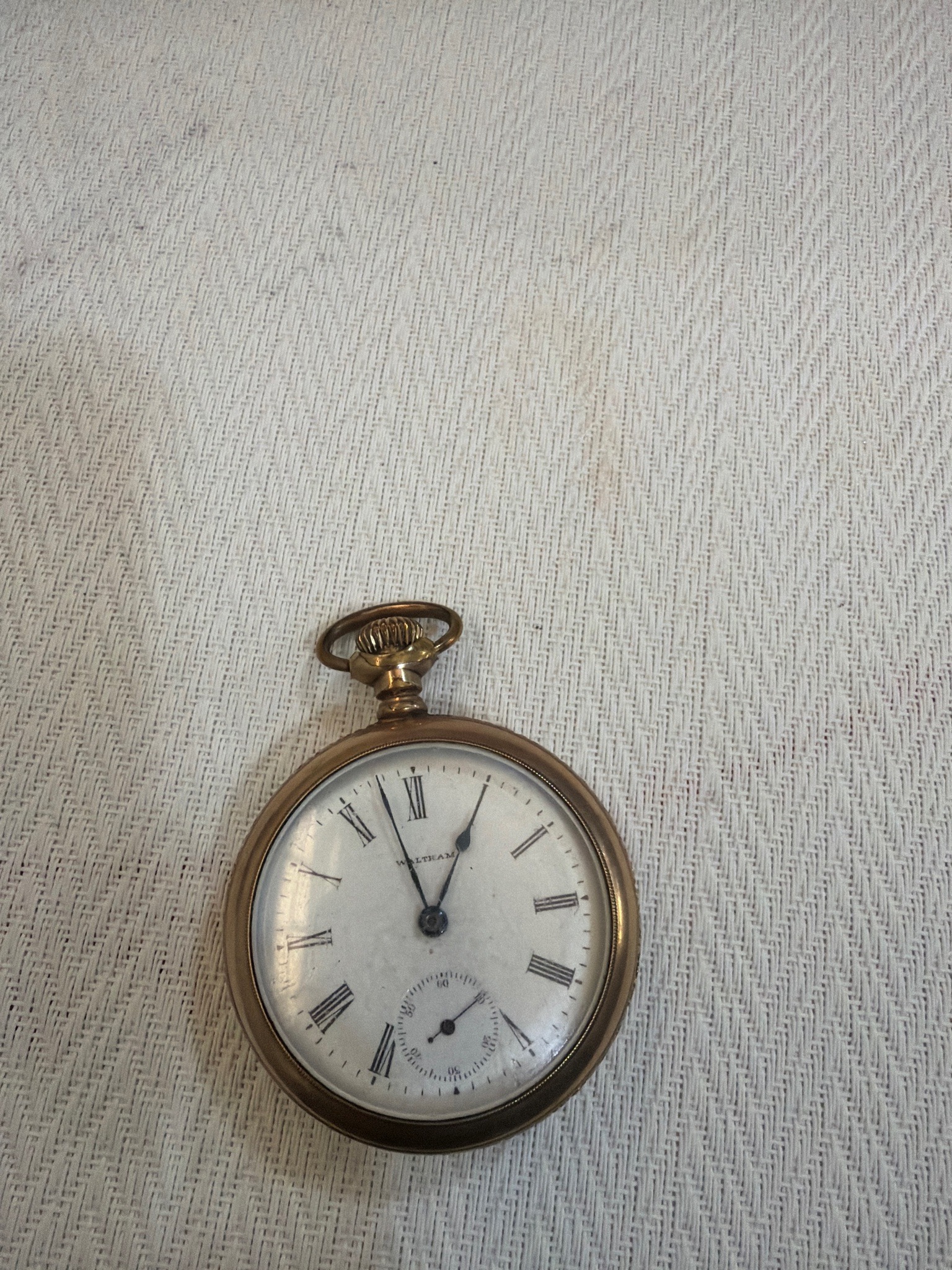
Waltham train pocket watch

AI analysis below

AI appraisal

AI analysis & estimate

AI-Generated · Verify before acting

Everything below is generated by AI for informational purposes only. AI can make mistakes — the AI may misidentify items or misattribute them (artist, maker, brand, designer, origin, era). This is not an official valuation and should not be used for insurance, sale, tax, estate, legal, or lending purposes — or any decision requiring a certified appraisal. It is not an authoritative claim about any person, brand, or rights holder — do not share or rely on it as a factual statement about a third party. Always consult qualified professionals before making financial decisions.

Note

This analysis also relies on unverified notes provided by the user, which may be incomplete or inaccurate and could affect the result.

Read the full disclaimer

AI Identification

·Not independently authenticated·Verify before acting

Antique Waltham Open-Face Railroad Grade Style Pocket Watch

Horology / Antique Timepieces

AI Estimated Value

·Not an official valuation·Verify before acting

$150 - $250

As of June 6, 2026

AI Item Analysis

·AI can make mistakes·Verify before acting
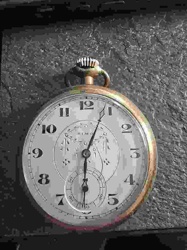
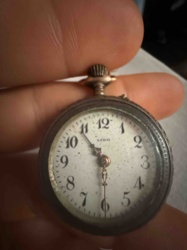
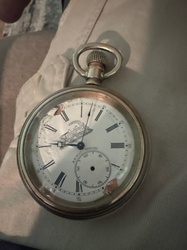
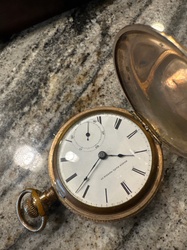
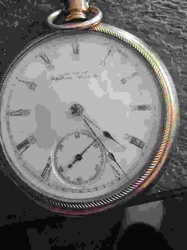
This is a classic American antique pocket watch manufactured by the Waltham Watch Company. The timepiece features an open-face design housed in a round, gold-toned metal case, likely gold-filled or brass. The watch possesses a white porcelain enamel dial with radial black Roman numeral hour markers and a subsidiary seconds sub-dial located at the 6 o'clock position. The brand 'WALTHAM' is printed clearly below the 12 o'clock position. The hands appear to be blue-steeled spade and whip hands, showing some oxidation typical of age. The crystal is present but displays significant scratching and surface wear, particularly around the edges. The gold-toned case shows a heavy patina and visible brassing, where the surface gold layer has worn away to reveal the base metal underneath, especially on the bezel and the knurled crown. The watch includes a sturdy bow for chain attachment. Stylistically, this piece dates from the late 19th to the early 20th century (circa 1890-1920), a period when Waltham was a premier manufacturer for railroad employees. There are notable hairline cracks visible on the enamel dial near the 5 and 7 o'clock markers, which is common in antique porcelain dials. The overall craftsmanship reflects the high industrial standards of the American horological golden age, though the item shows significant signs of use and historical wear.
AI Appraisal Report

·AI can make mistakes·Verify before acting
Based on my examination of this Waltham open-face pocket watch, I have identified it as a classic early 20th-century American timepiece. The white porcelain enamel dial, spade and whip hands, and Roman numerals are characteristic of Waltham’s production between 1890 and 1915. While the owner identifies this as a 'train' or 'railroad' watch, my inspection suggests it is likely a standard grade rather than a certified Railroad Grade movement, as it lacks the Arabic minute indicators and lever-set mechanism typically required for official rail service during that era. The condition is 'fair to good.' The heavy brassing on the case indicates significant wear to the gold-fill, and the hairline cracks at the 5 and 7 o’clock positions on the dial are permanent defects that reduce value among high-end horology collectors. The scratched crystal further suggests a need for servicing. In the current market, standard Waltham 18 or 16-size gold-filled watches are common; value is driven primarily by the internal movement's jewel count and 'bridge' decoration, which cannot be seen here. Critically, this appraisal is based on visual surface details. A physical inspection is required to determine the movement's serial number for precise dating and to verify the jewel count (e.g., 7 vs. 21 jewels). To confirm full authenticity and functional value, a horologist must check the balance wheel and mainspring. Without opening the case back to inspect the 'heart' of the watch, the provided valuation assumes a standard, non-running or service-requiring movement. High-grade movements or solid gold cases would significantly increase these figures.

Get your items appraised

Instant estimates of your treasures with AI-powered appraisals

Browse More Appraisals