AI estimate as of October 22, 2025 · verify with a professional before acting
AI-Generated · Verify before acting
Everything on this page is generated by AI for informational purposes only. AI can make mistakes — the AI may misidentify items or misattribute them (artist, maker, brand, designer, origin, era). This is not an official valuation and should not be used for insurance, sale, tax, estate, legal, or lending purposes — or any decision requiring a certified appraisal. It is not an authoritative claim about any person, brand, or rights holder — do not share or rely on it as a factual statement about a third party. Always consult qualified professionals before making financial decisions.
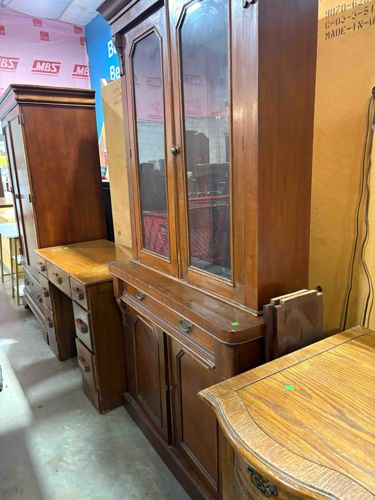
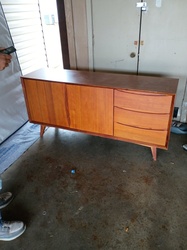
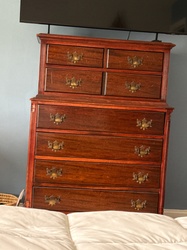
The item is a classic two-piece china cabinet constructed of what appears to be a medium to dark-stained hardwood, possibly oak or mahogany, given its warm reddish-brown hue and visible grain patterns. The upper section features two glass-paned doors with arched top edges, allowing for display of contents. The glass panes are framed by relatively narrow wooden mullions. A single spherical wooden knob is visible on the right door, suggesting a simple closure mechanism. The top of the upper section is capped with a decorative, stepped cornice. The lower section functions as a credenza or buffet, featuring a flat top surface with a slightly curved or rounded edge, below which there are two small drawers with what appear to be brass or bronze drop pull handles. Below the drawers are two solid wooden cabinet doors, likely offering enclosed storage. The doors are recessed panels, adding a touch of traditional design. The overall construction suggests a solid, well-built piece of furniture. There are no obvious visible manufacturer's marks or signatures in the provided image. The style points towards late 19th to early 20th century, possibly Federal or Edwardian-era influence, characterized by its sturdy construction and decorative but not overly ornate detailing. The condition appears to be good overall, with some minor scuffs, scratches, and dust accumulation consistent with age and typical use, particularly on the top surfaces, as indicated by green stickers on the credenza top, likely indicating inventory or minor flaws. No significant damage such as large cracks, breaks, or missing components are evident. The wood exhibits a natural patina, enhancing its vintage appeal. The craftsmanship appears to be of standard quality for its presumed period, with joined construction visible on the doors and drawers.
AI Appraisal Report
Upon visual examination of the provided image, this two-piece china cabinet presents as a well-constructed traditional piece. The wood, likely oak or mahogany based on coloration and grain, exhibits a good natural patina. Condition appears good overall, with minor scuffs, scratches, and dust consistent with its presumed age (late 19th to early 20th century). The green stickers suggest inventory marking or minor noted flaws, which could slightly impact appeal but not structural integrity. No significant damage like breaks or missing components are evident.
Authenticity: Based solely on the image, the construction style (recessed panels, glass-paned doors with mullions, stepped cornice, drop pull handles) aligns with Federal or Edwardian influences. However, without in-person examination, it's impossible to definitively authenticate its precise age or origin. I cannot rule out a well-made reproduction from a later period. An in-person inspection would allow for examination of joinery, hardware attachments, and wood species identification.
Market Conditions & Demand: The market for traditional, large wooden furniture like this can vary. While solid, well-made pieces are always appreciated, contemporary trends often favor lighter, less formal styles. There is a steady demand among collectors or those furnishing period homes, but it's not a highly sought-after collectible in the general market. Its functionality as both display and storage adds to its practical value.
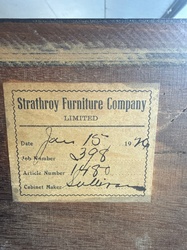
Factors impacting value: The good overall condition, solid construction, and classic design are positives. The minor cosmetic wear is expected for its age. The lack of distinct maker's marks, which could elevate value significantly if present, limits its potential as a rare collectible. The current value reflects its utility and aesthetic appeal as a functional antique rather than a premium art piece.