AI estimate as of November 11, 2025 · verify with a professional before acting
AI-Generated · Verify before acting
Everything on this page is generated by AI for informational purposes only. AI can make mistakes — the AI may misidentify items or misattribute them (artist, maker, brand, designer, origin, era). This is not an official valuation and should not be used for insurance, sale, tax, estate, legal, or lending purposes — or any decision requiring a certified appraisal. It is not an authoritative claim about any person, brand, or rights holder — do not share or rely on it as a factual statement about a third party. Always consult qualified professionals before making financial decisions.
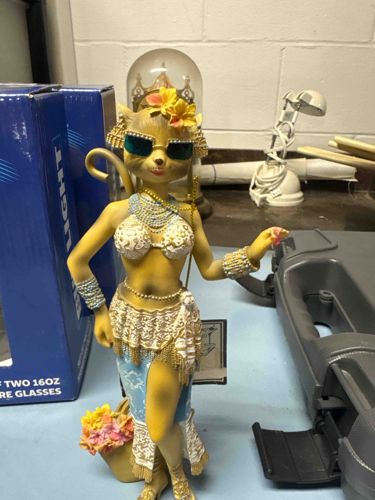
This is a whimsical figural sculpture depicting an anthropomorphic cat dressed as a belly dancer or an ancient Egyptian queen, reminiscent of the 'Cleocatra' series by artists like Laurel Burch or similar fantasy cat collectible lines. The figurine is crafted from what appears to be a resin or composite material, finished with vibrant, hand-painted details. The cat features a warm, sandy beige fur color, with delicate painting distinguishing its facial features such as pink inner ears, a small black nose, and a delicately painted mouth. Its eyes are obscured by a pair of teal-tinted sunglasses, framed by a golden, somewhat ornate browline decorated with small, possibly faux, jewels. Adorning its head is a golden crown or headdress, embellished with a prominent yellow flower and a pink flower, suggesting a tropical or exotic theme. The cat's body is adorned with intricate costume elements: a white and gold patterned bikini top, numerous golden and silver beaded necklaces layered around its neck, and matching armbands on both wrists. The skirt is particularly detailed, featuring a light blue underskirt peeking through a heavily embellished, white-and-gold patterned overskirt with dangling golden fringe. One leg is prominently displayed through a high slit in the skirt. The cat stands on a base that incorporates a small, woven-look basket filled with colorful flowers, primarily pink, yellow, and orange, further enhancing its playful and decorative appeal. The overall condition appears excellent with no visible chips, cracks, or significant wear. The paintwork is crisp, suggesting good preservation. The style is distinctly decorative and collectible, likely manufactured in the late 20th or early 21st century.
AI Appraisal Report
I have carefully examined the provided image of the "Cleocatra" or "Belly Dancer Cat" figurine. Based on my visual assessment, the item appears to be in excellent condition, showing no visible chips, cracks, or significant paint loss. The colors remain vibrant and the details crisp, suggesting good preservation.
This figurine is characteristic of decorative collectible items produced in the late 20th to early 21st century, often by companies specializing in whimsical and fantasy-themed resin sculptures. While the style is reminiscent of Laurel Burch's ‘Cleocatra’ series, without a clear hallmark or branding, definitive attribution is not possible from images alone. Many manufacturers created similar themed cat figurines during this period.
In terms of market conditions, items of this decorative nature generally appeal to collectors of cat-themed memorabilia or fantasy figurines. The demand tends to be steady but typically does not command high prices unless the piece is from a highly sought-after artist or a very limited edition series. Rarity is difficult to ascertain without knowing the manufacturer and production numbers, but similar mass-produced resin figurines are not usually considered rare.
Factors impacting value include its excellent condition and charming aesthetic. However, the lack of definitive artist or maker attribution, and the likelihood of it being a mass-produced item, cap its potential value. Its appeal is primarily decorative.
Limitations in authenticity verification are significant based solely on images. To fully authenticate and confirm the maker, an in-person examination would be required to search for manufacturer's marks, signatures, or production stickers on the base. Provenance documentation, such as original retail receipts or certificates of authenticity, would also be invaluable for confirming origin and potential artist attribution.