AI estimate as of August 27, 2025 · verify with a professional before acting
AI-Generated · Verify before acting
Everything on this page is generated by AI for informational purposes only. AI can make mistakes — the AI may misidentify items or misattribute them (artist, maker, brand, designer, origin, era). This is not an official valuation and should not be used for insurance, sale, tax, estate, legal, or lending purposes — or any decision requiring a certified appraisal. It is not an authoritative claim about any person, brand, or rights holder — do not share or rely on it as a factual statement about a third party. Always consult qualified professionals before making financial decisions.
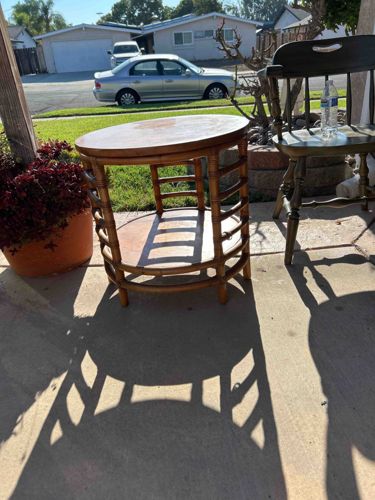
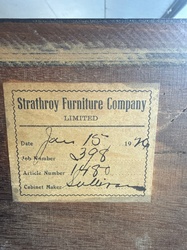
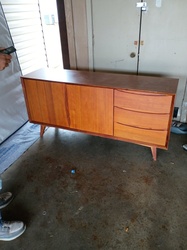
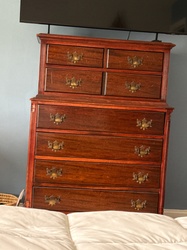
This is an oval shape side table, likely crafted from rattan or bamboo, given its natural light brown hue and the visible pattern of wrapped or bent elements forming its structure. The table features an oval top surface, which appears to be a solid piece of wood or a laminate material, showing some surface wear and minor discoloration consistent with age and use. Below the tabletop, the sides are constructed with vertical and horizontal elements that create a decorative openwork pattern. There is a secondary, smaller oval shelf positioned lower down, providing additional storage or display space. The table stands on four legs, which seem to be extensions of the main structural elements. The overall construction suggests a lightweight and possibly casual or tropical aesthetic. There are no obvious signs of major damage or repairs, but the top surface shows typical scuffs and possibly some ring marks. The craftsmanship appears to be a standard production for this style, not indicative of high-end custom work but well-suited for its purpose. The style points to a mid-20th century to contemporary period, popularized for sunrooms, patios, or casual living spaces. No maker's marks or specific signatures are visible from the provided image, so its origin or exact age cannot be precisely determined without further examination.
AI Appraisal Report
Upon examining the provided image of this Rattan/Bamboo Oval Side Table, I assess its condition as good, consistent with age and use. The natural light brown hue and the visible pattern of wrapped or bent elements suggest that the primary material is indeed rattan or bamboo. The oval top surface appears to be solid, showing typical surface wear, minor discoloration, and some scuffs and possible ring marks, all of which are common for furniture of this type and age. The construction with vertical and horizontal elements forming an openwork pattern, along with the secondary lower shelf, is structurally intact with no obvious signs of major damage or repairs. The aesthetic is characteristic of mid-20th century to contemporary casual or tropical styles.
In terms of market conditions, rattan and bamboo furniture have seen a resurgence in popularity, particularly for pieces that offer a light, organic, and bohemian aesthetic. Comparables for similar-sized oval side tables in good condition typically range from low-end mass-produced pieces to higher-quality vintage examples. This particular table appears to be a standard production piece rather than high-end custom work, which influences its market position. Demand for such pieces is moderate, driven by interior design trends favoring natural materials and a relaxed ambiance. Rarity is not a significant factor here; these styles were mass-produced. Factors significantly impacting value include the visible wear on the top surface, which detracts slightly, and the lack of a prominent maker's mark or design attribution.
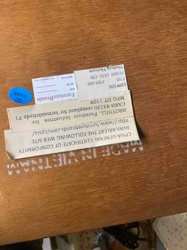
My primary limitation in full authentication is the reliance on images alone. To definitively confirm authenticity, material composition, and precise age, a physical examination would be crucial. This would allow for a tactile assessment of material quality, closer inspection of joints and construction techniques, and a more thorough search for any hidden maker's marks or identifying features that might provide provenance. Without in-person inspection, it is difficult to determine if any elements are replacements or if there are subtle structural weaknesses. Scientific testing of the wood or fibers could confirm precise species and age dating if high-level authentication were required, but for a piece of this type, it's generally not economical.