AI estimate as of October 2, 2025 · verify with a professional before acting
AI-Generated · Verify before acting
Everything on this page is generated by AI for informational purposes only. AI can make mistakes — the AI may misidentify items or misattribute them (artist, maker, brand, designer, origin, era). This is not an official valuation and should not be used for insurance, sale, tax, estate, legal, or lending purposes — or any decision requiring a certified appraisal. It is not an authoritative claim about any person, brand, or rights holder — do not share or rely on it as a factual statement about a third party. Always consult qualified professionals before making financial decisions.
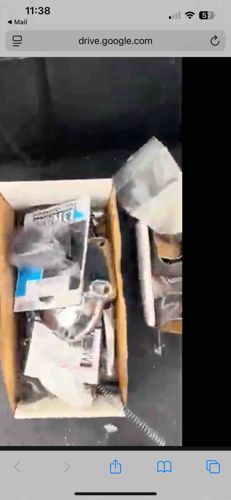
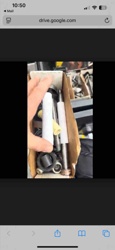
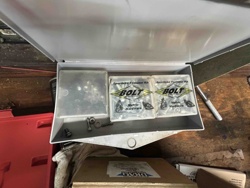
The item depicted is an open, rectangular cardboard box containing an assortment of various hardware components and small parts. The box itself appears to be a standard, utilitarian brown corrugated cardboard box, showing some signs of wear such as slight creasing or softening of the edges, indicative of prior use or handling. Inside, the contents are mixed and include items in their original retail packaging, some loose parts, and some items wrapped in clear plastic. Notable elements visible within the box include a package with blue and white branding, possibly related to plumbing fixtures or small electronics, and several metallic components that resemble faucet handles, escutcheons, or other plumbing hardware. There are also smaller, indistinct shiny metal pieces, possibly screws, washers, or decorative caps. One distinct item is a coiled cable, likely an electrical cord or a hose, suggesting a broader range of domestic or industrial parts. The overall condition of the individual items varies; some appear to be new in packaging, while others, particularly the loose metallic parts, may show minor scuffs or dust from storage. The collection lacks discernible manufacturing marks on the loose items due to the image resolution, but packaged items likely bear manufacturer information. The assortment suggests a mixture of functional components, potentially for repair, DIY projects, or assembly. The style is purely functional and contemporary, with no clear indication of a specific historical period beyond modern manufacturing. The craftsmanship varies by individual component but appears to be mass-produced. There are no outstanding unique or unusual aspects, rather it represents a typical collection of miscellaneous small hardware.
AI Appraisal Report
I have visually examined the provided image of the 'Assorted Hardware and Small Parts in Cardboard Box.' My assessment indicates this is a functional assortment of miscellaneous hardware components. The condition appears mixed; some items are new in packaging, while others are loose and may show minor scuffs, dust, or signs of handling associated with bulk storage. Authenticity, for a lot of this nature, is not typically a primary concern as these are common, mass-produced items. From the image, all items appear to be genuine hardware components, not replicas.
Market conditions for such mixed hardware are generally low. Value is derived primarily from utility rather than intrinsic worth or rarity. Comparables would include 'junk drawers,' 'miscellaneous hardware lots,' or 'parts bins' found at estate sales, garage sales, or surplus stores. Demand is typically from DIY enthusiasts or those needing specific small parts for repairs. There is no rarity associated with these common items, and uniqueness is absent.
Factors impacting value include the unknown quantity, specific identity, and new-old stock status of each item. The presence of some items in original packaging slightly boosts value, but the overall mixed nature keeps it low. Without a detailed inventory, it's difficult to ascertain specific value drivers. My valuation assumes a typical mix of useful but inexpensive items.
Limitations in authenticity verification from an image are minimal here, as these are not high-value collectibles. However, a physical in-person examination would allow for inventorying, inspection for specific manufacturer markings on loose components, full assessment of functionality, and confirmation of quantity and type (e.g., confirming if the coiled cable is electrical or plumbing). Provenance documentation is not applicable to a lot of this type. Scientific testing would be entirely unnecessary.