AI Appraisal Estimate

AI-generated estimates · not official valuations

From the user

What was submitted

Photo and notes provided by the user — not generated by AI

Submitted item photo
Submitted photo · June 17, 2026

User's notes

No additional notes provided.

AI analysis below

AI appraisal

AI analysis & estimate

AI-Generated · Verify before acting

Everything below is generated by AI for informational purposes only. AI can make mistakes — the AI may misidentify items or misattribute them (artist, maker, brand, designer, origin, era). This is not an official valuation and should not be used for insurance, sale, tax, estate, legal, or lending purposes — or any decision requiring a certified appraisal. It is not an authoritative claim about any person, brand, or rights holder — do not share or rely on it as a factual statement about a third party. Always consult qualified professionals before making financial decisions.

Read the full disclaimer

AI Identification

·Not independently authenticated·Verify before acting

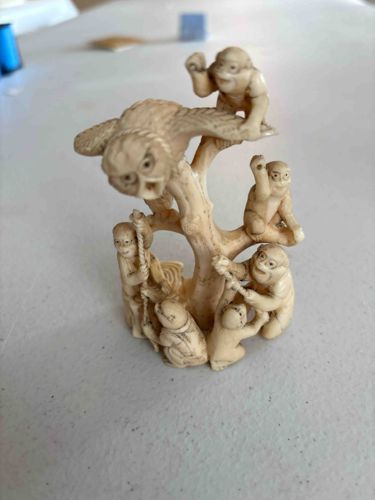
Intricately Carved Faux-Ivory Figurine of Owls and Monkeys

Collectibles / Decorative Sculptures

AI Estimated Value

·Not an official valuation·Verify before acting

$40-60

As of June 17, 2026

AI Item Analysis

·AI can make mistakes·Verify before acting
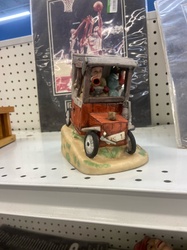
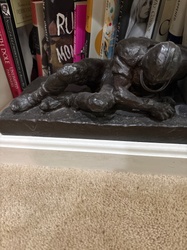
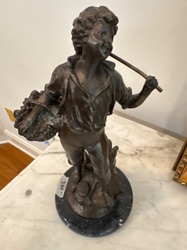
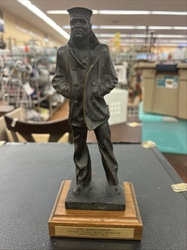
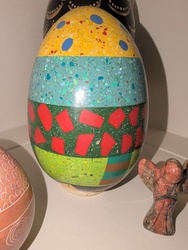
This decorative figurine depicts a whimsical scene of five monkeys interacting with a large central owl and a smaller owl perched upon a gnarled tree trunk. The piece is crafted from a cream-colored material intended to mimic elephant ivory, likely a type of molded resin or bone powder composite, as suggested by the uniform color and absence of diagnostic Schreger lines. The construction features a variety of textures, from the fine feathering on the primary owl's head to the smooth, rounded forms of the monkeys. The monkeys are shown in active poses: one atop the owl's wing, one mid-climb, and three at the base holding sticks or ropes. The scale is small, likely standing roughly 4 to 6 inches tall. The color is a consistent off-white or light cream with some artificial tea-staining or 'patina' concentrated in the recessed carved areas to add depth and aged character. The condition appears fair to good; there are no obvious structural breaks, though the material shows some light surface grime and minor casting seams consistent with a molded process rather than hand-carving. This style is reminiscent of Japanese Okimono or Netsuke but is likely a 20th-century mass-market reproduction intended for the curio or giftware market. The craftsmanship is decent for a decorative piece, conveying movement and character, but lacks the refinement found in authentic antique ivory carvings.
AI Appraisal Report

·AI can make mistakes·Verify before acting
Upon examining the images of this decorative figurine, I have identified it as a 20th-century mass-market reproduction, styled after traditional Japanese Okimono carvings. The subject matter—a whimsical interaction between monkeys and owls on a gnarled trunk—is charming and dynamic, but the material evidence points definitively away from antique ivory. The uniform cream coloration and, crucially, the presence of casting seams visible at the junction points of the figures indicate this is a molded piece, likely crafted from resin or a bone powder composite. The 'tea-staining' applied to the recesses is a standard technique used to artificially simulate age and depth. While the piece is in good decorative condition with no major breaks observed, it lacks the hand-carved precision and the cross-hatching (Schreger lines) inherent to genuine elephant ivory. Consequently, its value is derived strictly from its decorative appeal rather than investment-grade rarity. In the current market, collectors distinguish sharply between authentic Meiji-period carvings and these mid-to-late 20th-century molded curios; the demand for the latter is limited to casual home decor enthusiasts. Similar resin or 'faux-ivory' composite figurines of this complexity generally sell in the $40 to $60 USD range at secondary market venues like eBay or estate auctions. To be thorough, an in-person inspection would involve a 'hot pin test' or UV light examination to confirm the specific polymer composition, though given the visual evidence of molding lines, such testing would simply confirm its status as a synthetic reproduction.

Get your items appraised

Instant estimates of your treasures with AI-powered appraisals

Browse More Appraisals