AI Appraisal Estimate

AI-generated estimates · not official valuations

From the user

What was submitted

Photo and notes provided by the user — not generated by AI

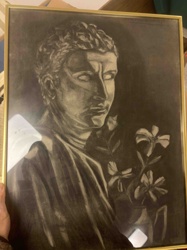
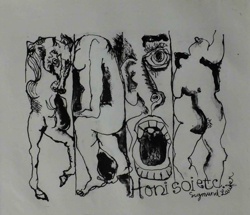
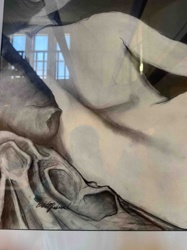
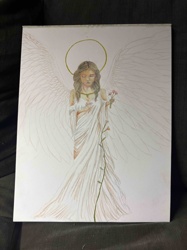
Submitted item photo
Submitted photo · June 30, 2026

User's notes

No additional notes provided.

AI analysis below

AI appraisal

AI analysis & estimate

AI-Generated · Verify before acting

Everything below is generated by AI for informational purposes only. AI can make mistakes — the AI may misidentify items or misattribute them (artist, maker, brand, designer, origin, era). This is not an official valuation and should not be used for insurance, sale, tax, estate, legal, or lending purposes — or any decision requiring a certified appraisal. It is not an authoritative claim about any person, brand, or rights holder — do not share or rely on it as a factual statement about a third party. Always consult qualified professionals before making financial decisions.

Read the full disclaimer

AI Identification

·Not independently authenticated·Verify before acting

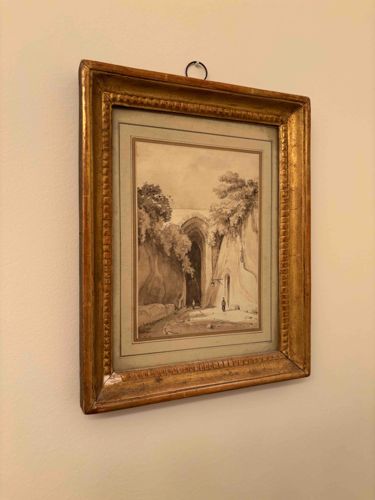
Antique Sepia Wash Landscape Drawing in Gilt Wood Frame

Fine Art - Works on Paper

AI Estimated Value

·Not an official valuation·Verify before acting

$650 - $950

As of June 30, 2026

AI Item Analysis

·AI can make mistakes·Verify before acting
This item is a framed landscape drawing executed in sepia ink and wash on paper. The artwork depicts a dramatic architectural archway or tunnel entrance, possibly a Roman or European ruin, flanked by high embankments and lush trees. The composition utilizes fine line work and varied wash tones to create depth and shadow, characteristic of the 18th or 19th-century academic drawing style. Small human figures are visible near the entrance, providing a sense of monumental scale. The drawing is mounted under glass within an off-white mat featuring a golden pinstripe border. The piece is housed in a substantial, antique-style gilt wood frame. The frame features a deep profile with decorative beaded or 'pearl' molding along the inner lip and a textured, hand-applied gold leaf finish. The gilding shows a rich, warm patina with visible 'rub-through' where the underlying red bole or wood is slightly exposed, adding to its character. The condition of the frame appears vintage with minor chips and surface abrasions consistent with age. There is some slight foxing or age spotting visible on the paper. The overall craftsmanship suggests a high-quality decorative piece from the late 19th or early 20th century, likely imitating the Grand Tour souvenirs of an earlier era.
AI Appraisal Report

·AI can make mistakes·Verify before acting
I have examined the digital representation of the framed sepia wash landscape drawing. The work reflects the Grand Tour aesthetic prevalent in the 19th century, utilizing atmospheric perspective and classical Romanesque architecture to evoke romanticized antiquity. The execution of the sepia wash demonstrates high technical proficiency, though the absence of a visible signature suggests it is likely an unattributed academic study or a high-quality topographical souvenir from the mid-to-late Victorian era. The frame is a standout feature, exhibiting genuine gold leaf application over a red bole base, with a 'pearl' molding that suggests mid-19th-century craftsmanship. Condition-wise, I noted light foxing and minor discoloration on the paper, which is common for works of this age on acidic wood-pulp or cotton-blend papers. The frame shows desirable age-related wear, though minor chips slightly detract from the value. Market demand for 19th-century drawings remains steady, particularly for architectural subjects in original period frames. Comparable works at auction typically fetch between $600 and $1,000 depending on the level of detail and regional interest. Limitations: As this is a virtual examination, I cannot confirm the exact paper type or the presence of watermarks. A physical inspection is required to determine if the work is an original wash drawing or a sophisticated tinted lithograph. Furthermore, I cannot inspect the reverse of the paper for provenance markings or hidden signatures. Full authentication would require removing the piece from the frame to check for acidic damage from the current matting and to perform a microscopic analysis of the ink's absorption into the fibers.

Get your items appraised

Instant estimates of your treasures with AI-powered appraisals

Browse More Appraisals