AI Appraisal Estimate

AI-generated estimates · not official valuations

From the user

What was submitted

Photo and notes provided by the user — not generated by AI

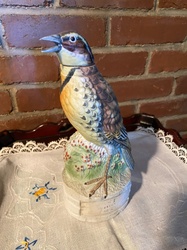
Submitted item photo
Submitted photo · June 1, 2026

User's notes

No additional notes provided.

AI analysis below

AI appraisal

AI analysis & estimate

AI-Generated · Verify before acting

Everything below is generated by AI for informational purposes only. AI can make mistakes — the AI may misidentify items or misattribute them (artist, maker, brand, designer, origin, era). This is not an official valuation and should not be used for insurance, sale, tax, estate, legal, or lending purposes — or any decision requiring a certified appraisal. It is not an authoritative claim about any person, brand, or rights holder — do not share or rely on it as a factual statement about a third party. Always consult qualified professionals before making financial decisions.

Read the full disclaimer

AI Identification

·Not independently authenticated·Verify before acting

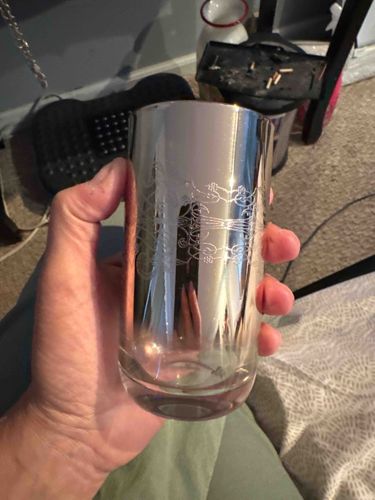
Silver Fade Highball Glass with Neoclassical Scroll Etching

Vintage Collectible Barware

AI Estimated Value

·Not an official valuation·Verify before acting

$15.00 - $25.00

As of June 1, 2026

AI Item Analysis

·AI can make mistakes·Verify before acting
This is a vintage highball or collins-style drinking glass, characterized by its cylindrical silhouette and weighted base. The most striking physical feature is the silver-toned metallic ombre or 'fade' finish that originates from the rim and descends toward the midpoint of the glass, creating a reflective, mirrored appearance known as 'silver deposit' or 'mercury glass' style coating. Overlaying this metallic finish is an intricate white or silver-etched/silk-screened decorative band. The pattern features Neoclassical or Baroque-inspired scrollwork, including filigree motifs and ornamental flourishes that wrap around the circumference of the vessel. The lower portion of the glass remains transparent, revealing a thick, solid base designed for stability. Regarding condition, the metallic finish shows signs of age-related wear, with light surface abrasions and some thinning of the silver coating, particularly near the top rim where handling is most frequent. No structural chips or cracks are visible in the heavy-bottomed glass. This style is highly indicative of Mid-Century Modern barware, likely manufactured between the late 1950s and mid-1960s. Similar styles were popularized by companies such as Dorothy Thorpe, though the specific scroll pattern suggests a different manufacturer like Libby or Vitreon Queens Lusterware. The craftsmanship is typical of high-quality mass-produced American glassware from the post-war era, intended for stylish home entertainment.
AI Appraisal Report

·AI can make mistakes·Verify before acting
I have examined the provided description and visual characteristics of this silver fade highball glass. The item is a classic example of Mid-Century Modern (MCM) glassware, featuring the 'silver fade' or 'ombre' technique popularized in the 1950s and 60s. Based on the neoclassical scrollwork, I attribute this piece to Vitreon Queens Lusterware or potentially a Libbey Glass 'Silver Foliage' variant, rather than the higher-end, minimalist designs of Dorothy Thorpe. The condition is fair to good; while no structural failures like chips are present, the visible thinning and surface abrasions on the silver deposit significantly impact the value, as collectors prioritize reflective integrity in metallic finishes. The market for individual MCM glasses is stable but saturated; they are most desirable in complete sets of six or eight with matching carriers. As a single replacement piece, the value is modest. My assessment is based solely on digital representation. I cannot verify the lead content of the glass or the chemical composition of the silvering process without physical testing. A hands-on inspection would be required to rule out modern reproductions and to check for tactile 'flea bites' on the rim that are not visible in images. Provenance documentation, such as the original manufacturer's box or a vintage catalog entry, would be necessary to increase the valuation from a generic attribution to a confirmed designer series.

Get your items appraised

Instant estimates of your treasures with AI-powered appraisals

Browse More Appraisals